


Share Post


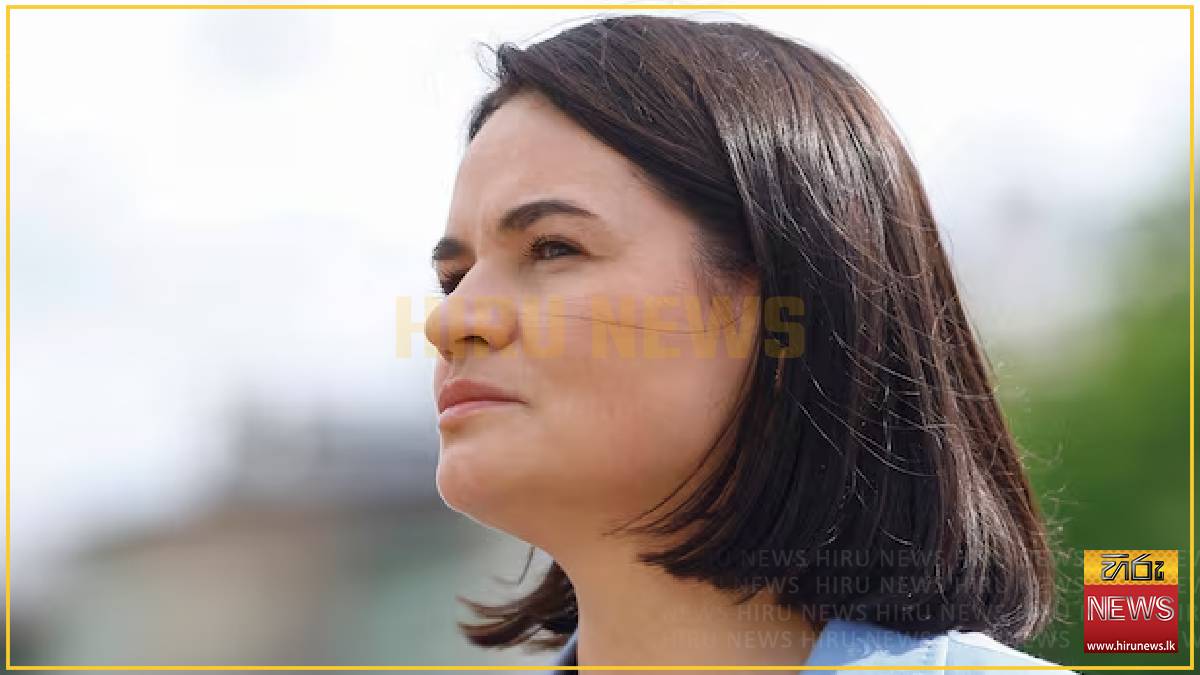
The Trump administration has told the exiled Belarus opposition of a delay in its efforts to get President Alexander Lukashenko to free more political prisoners, opposition leader Sviatlana Tsikhanouskaya told Reuters.
Her comments marked the first public acknowledgment of a slowing in the momentum of negotiations led by President Donald Trump's envoy John Coale that have persuaded Lukashenko to free more than 400 prisoners so far. Human rights group Viasna says nearly 870 remain in jail, including at least 170 who are "particularly vulnerable" due to age, sickness or harsh detention conditions.
Tsikhanouskaya told Reuters in an interview that she had been told by the U.S. side that "the next releases were postponed for a while" but she could not disclose why.
"Knowing the reason, it doesn't worry me. Of course, we want more people to be released as soon as possible, and any delay, it ruins health for many of them," she said, speaking in English. "But it's not the end of the process."
She pointed to upbeat comments by Coale, who posted on X on June 3: "We are not finished. Keep hope alive!"
Reuters requested comment from Coale and from Lukashenko's office. Neither responded.
The U.S. decision to enter talks with Lukashenko - a close ally of Russian President Vladimir Putin - represented a sharp departure from previous Western policy. For years, he had been treated as a pariah and hammered with U.S. and EU sanctions over his human rights record and backing for Moscow's war in Ukraine.
Tsikhanouskaya - considered by Western governments to be the rightful winner of a disputed 2020 election claimed by Lukashenko - has welcomed the U.S. engagement as an important humanitarian initiative, while warning against conferring legitimacy on the veteran authoritarian ruler.
She has made no secret of her discomfort at Trump's public flattery of Lukashenko, whom he has called "the Highly Respected President of Belarus", but acknowledges that the U.S. approach has been effective.
"Neither President Trump nor those around him are naive, they understand who they are dealing with, and they can make some tactical moves to free people," she said.
In a major shift, the U.S. announced in December it was lifting sanctions on potash fertiliser from Belarus, a leading global producer, as a reward for the prisoner releases.
But this has yet to translate into a significant revenue boost for Lukashenko because EU sanctions remain in place, forcing Belarus to send its exports through Russia instead of the more efficient route via Lithuania's port of Klaipeda.
Lithuania said last month that the U.S. was pressing it to restore Belarusian access to Klaipeda, but Vilnius would not discuss this while the EU sanctions remain in force until February 2027.
Pavel Slunkin, a former Belarusian diplomat now working as an independent political analyst in Warsaw, said Lukashenko's frustration with the inability of the U.S. to bring the Europeans on board was the likely reason for the delay in the prisoner talks.
"Probably the Americans delivered a promise (to Lukashenko) that they could not fulfil," he said in a telephone interview.
"The American sanctions have never been the biggest problem for the regime in Minsk. The toughest sanctions are the European ones."
Coale, 79, was appointed by Trump last year to head talks with Lukashenko. He has cultivated the former collective farm boss through long hours of talks and vodka-drinking sessions, quietly emptying his glass on the floor in order to stay sober.
Among the hundreds of prisoners to be freed are Nobel Peace Prize winner Ales Bialiatski and prominent opposition figures including Tsikhanouskaya's husband Siarhei Tsikhanouski.
On April 28, Coale told Reuters he expected to get more prisoners out in the next month. But six weeks later, that has yet to happen.
On June 4, Coale rejected an assertion on X by Valery Tsepkalo, a Belarusian opposition politician and former ambassador to the U.S., that Lukashenko had refused to meet him in May.
The stalling of talks coincides with an increase in tensions between Lukashenko and the West in recent weeks.
Belarus has conducted joint nuclear exercises with Russia, and Ukrainian President Volodymyr Zelenskiy has said he believes Moscow is trying to draw Belarus deeper into the war.
Arrests of Lukashenko critics have continued, even though Coale said the U.S. had told him this must cease.
Tsikhanouskaya said people were being arrested "every day" but accurate statistics were lacking because relatives feared reprisals from authorities.
Rights group Viasna has reported at least 50 prison sentences meted out since December that it considers politically motivated. Last month alone, it added 32 names to its list of political prisoners.
Tsikhanouskaya told Reuters that Lukashenko was operating a "revolving door" to replace old prisoners with new in order to maintain his bargaining power.
While praising Coale for a "fantastic job," she said she had shared her concern that Lukashenko was trying to play tricks.
"He wants to get a Lamborghini for the price of a bicycle. Take a lot while giving a little," she said.
"And now if the Americans and the Europeans don’t maintain a principled position, we will repeat the same cycle again: Lukashenko will deceive, the sanctions will be removed, and the regime will still be there, without systemic changes."
-Reuters
Her comments marked the first public acknowledgment of a slowing in the momentum of negotiations led by President Donald Trump's envoy John Coale that have persuaded Lukashenko to free more than 400 prisoners so far. Human rights group Viasna says nearly 870 remain in jail, including at least 170 who are "particularly vulnerable" due to age, sickness or harsh detention conditions.
Tsikhanouskaya told Reuters in an interview that she had been told by the U.S. side that "the next releases were postponed for a while" but she could not disclose why.
"Knowing the reason, it doesn't worry me. Of course, we want more people to be released as soon as possible, and any delay, it ruins health for many of them," she said, speaking in English. "But it's not the end of the process."
She pointed to upbeat comments by Coale, who posted on X on June 3: "We are not finished. Keep hope alive!"
Reuters requested comment from Coale and from Lukashenko's office. Neither responded.
The U.S. decision to enter talks with Lukashenko - a close ally of Russian President Vladimir Putin - represented a sharp departure from previous Western policy. For years, he had been treated as a pariah and hammered with U.S. and EU sanctions over his human rights record and backing for Moscow's war in Ukraine.
Tsikhanouskaya - considered by Western governments to be the rightful winner of a disputed 2020 election claimed by Lukashenko - has welcomed the U.S. engagement as an important humanitarian initiative, while warning against conferring legitimacy on the veteran authoritarian ruler.
She has made no secret of her discomfort at Trump's public flattery of Lukashenko, whom he has called "the Highly Respected President of Belarus", but acknowledges that the U.S. approach has been effective.
"Neither President Trump nor those around him are naive, they understand who they are dealing with, and they can make some tactical moves to free people," she said.
In a major shift, the U.S. announced in December it was lifting sanctions on potash fertiliser from Belarus, a leading global producer, as a reward for the prisoner releases.
But this has yet to translate into a significant revenue boost for Lukashenko because EU sanctions remain in place, forcing Belarus to send its exports through Russia instead of the more efficient route via Lithuania's port of Klaipeda.
Lithuania said last month that the U.S. was pressing it to restore Belarusian access to Klaipeda, but Vilnius would not discuss this while the EU sanctions remain in force until February 2027.
Pavel Slunkin, a former Belarusian diplomat now working as an independent political analyst in Warsaw, said Lukashenko's frustration with the inability of the U.S. to bring the Europeans on board was the likely reason for the delay in the prisoner talks.
"Probably the Americans delivered a promise (to Lukashenko) that they could not fulfil," he said in a telephone interview.
"The American sanctions have never been the biggest problem for the regime in Minsk. The toughest sanctions are the European ones."
Coale, 79, was appointed by Trump last year to head talks with Lukashenko. He has cultivated the former collective farm boss through long hours of talks and vodka-drinking sessions, quietly emptying his glass on the floor in order to stay sober.
Among the hundreds of prisoners to be freed are Nobel Peace Prize winner Ales Bialiatski and prominent opposition figures including Tsikhanouskaya's husband Siarhei Tsikhanouski.
On April 28, Coale told Reuters he expected to get more prisoners out in the next month. But six weeks later, that has yet to happen.
On June 4, Coale rejected an assertion on X by Valery Tsepkalo, a Belarusian opposition politician and former ambassador to the U.S., that Lukashenko had refused to meet him in May.
The stalling of talks coincides with an increase in tensions between Lukashenko and the West in recent weeks.
Belarus has conducted joint nuclear exercises with Russia, and Ukrainian President Volodymyr Zelenskiy has said he believes Moscow is trying to draw Belarus deeper into the war.
Arrests of Lukashenko critics have continued, even though Coale said the U.S. had told him this must cease.
Tsikhanouskaya said people were being arrested "every day" but accurate statistics were lacking because relatives feared reprisals from authorities.
Rights group Viasna has reported at least 50 prison sentences meted out since December that it considers politically motivated. Last month alone, it added 32 names to its list of political prisoners.
Tsikhanouskaya told Reuters that Lukashenko was operating a "revolving door" to replace old prisoners with new in order to maintain his bargaining power.
While praising Coale for a "fantastic job," she said she had shared her concern that Lukashenko was trying to play tricks.
"He wants to get a Lamborghini for the price of a bicycle. Take a lot while giving a little," she said.
"And now if the Americans and the Europeans don’t maintain a principled position, we will repeat the same cycle again: Lukashenko will deceive, the sanctions will be removed, and the regime will still be there, without systemic changes."
-Reuters
Latest News
Six countries sanction enablers of settler violence in occupied West Bank
Local
09 June 2026
SpaceX's lofty valuation set to put 'Elon premium' to test
Local
09 June 2026

Shackled, bleeding, raped: Palestinians describe abuse in Israel’s prisons
Local
09 June 2026

India raises jet fuel price for local airlines
Local
09 June 2026

Iran’s late supreme leader funeral could take place in June
Local
09 June 2026
Denmark grants cement producer $2.6bn for carbon capture and storage
Local
09 June 2026
Ukraine, Latvia sign drone deal
Local
09 June 2026
Could humanoid robots be heading for the battlefield?
Local
09 June 2026
Iran gains confidence despite Trump’s regime change push
Local
09 June 2026
10 arrested over alleged organised crime links
Local
09 June 2026