



Share Post


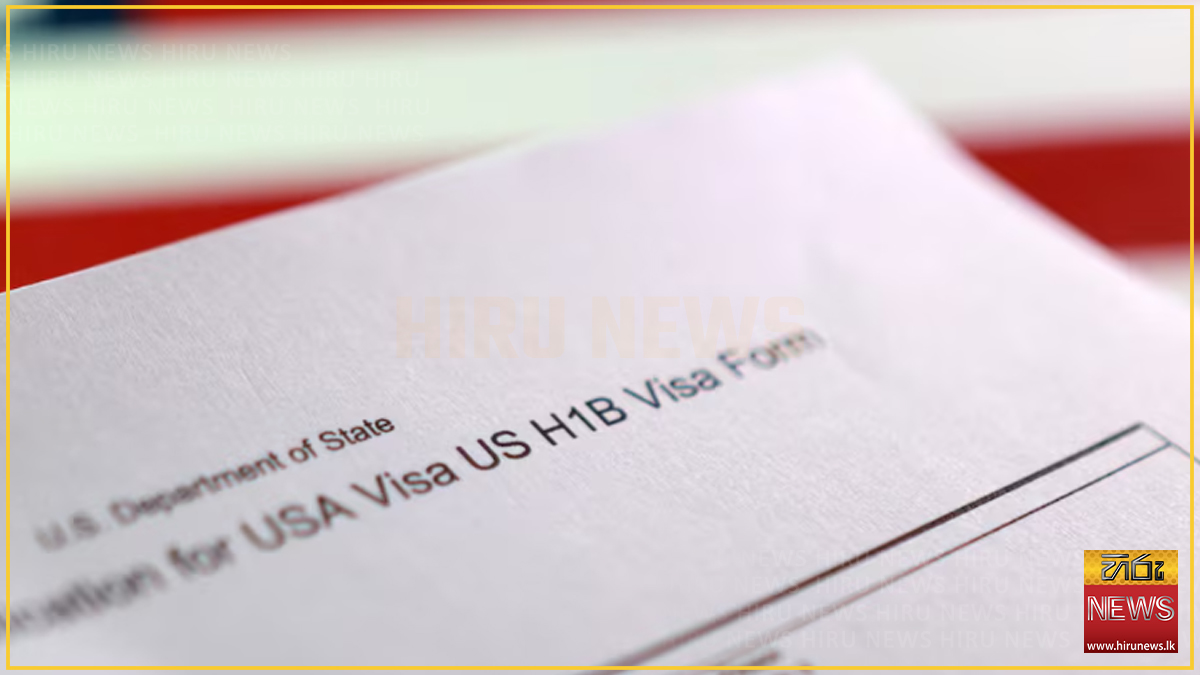
A federal judge on Monday struck down a $100,000 fee U.S. President Donald Trump imposed on new H-1B visas for highly skilled foreign workers, concluding that it constituted an unlawful tax Congress never authorized.
U.S. District Judge Leo Sorokin in Boston issued the ruling, in a lawsuit filed by 20 Democratic state attorneys general challenging a fee Trump announced in September that dramatically raised the cost of obtaining H-1B visas, which tech companies in particular rely heavily on to bring on foreign workers.
The administration argued the fee constituted a lawful monetary penalty that the president was authorized to impose under federal immigration law, which gives him the power to restrict the entry of certain foreign nationals when he deems it "detrimental to the interests of the United States."
But Sorokin concluded that the fee was not a penalty but a tax that the Republican president lacked any authorization from Congress to issue and that the U.S. State Department and U.S. Citizenship and Immigration Services could not implement.
"Here, the substance and application of the $100,000 payment reveal that it is a tax, regardless of what the payment is called," wrote Sorokin, who was appointed by Democratic President Barack Obama.
The judge cited the U.S. Supreme Court's February ruling striking down Trump's sweeping tariffs he pursued under a law meant for use in national emergencies. Under the logic of the justices' decision in that case, Trump similarly had no authority under immigration law to levy a tax, Sorokin said.
White House spokeswoman Taylor Rogers in a statement said the Trump administration is confident Sorokin's order will be reversed on appeal.
"President Trump has clear legal authority to restrict entry of any class of aliens he determines is not in America’s best interests, and that is exactly what he did," she said.
The H-1B program offers 65,000 visas annually, with another 20,000 visas for workers with advanced degrees, approved for three to six years. Employers seeking a visa for a foreign worker before Trump's proclamation typically paid about $2,000 to $5,000 in fees depending on various factors.
Trump, in imposing the hefty new fee, in a proclamation said the H-1B program "has been deliberately exploited to replace, rather than supplement, American workers with lower-paid, lower-skilled labor."
The fee does not apply to visas granted to foreign citizens already in the United States on student visas, who generally make up a large share of new H-1B recipients.
Few employers have paid Trump's fee since it was instituted. As of February 15, USCIS had received just 85 payments of the $100,000 fee, an agency official said in a March filing.
The Trump administration has also ordered enhanced vetting of H-1B applicants and proposed a new visa selection process that would favor higher-skilled and better-paid workers.
The $100,000 fee prompted at least three different lawsuits challenging its implementation, including a case by the U.S. Chamber of Commerce, which is appealing a December decision by a judge in Washington, D.C., who rejected its claims that Trump had no authority to set the fee.
California Attorney General Rob Bonta, a Democrat who led the multi-state coalition that filed the case before Sorokin, hailed his ruling for striking down Trump's "unlawful and costly $100,000 tax."
"This tax was an attack on America's ability to attract and retain the high-skilled talent that strengthens our economy and helps us meet critical workforce needs,” he said.
-Reuters
U.S. District Judge Leo Sorokin in Boston issued the ruling, in a lawsuit filed by 20 Democratic state attorneys general challenging a fee Trump announced in September that dramatically raised the cost of obtaining H-1B visas, which tech companies in particular rely heavily on to bring on foreign workers.
The administration argued the fee constituted a lawful monetary penalty that the president was authorized to impose under federal immigration law, which gives him the power to restrict the entry of certain foreign nationals when he deems it "detrimental to the interests of the United States."
But Sorokin concluded that the fee was not a penalty but a tax that the Republican president lacked any authorization from Congress to issue and that the U.S. State Department and U.S. Citizenship and Immigration Services could not implement.
"Here, the substance and application of the $100,000 payment reveal that it is a tax, regardless of what the payment is called," wrote Sorokin, who was appointed by Democratic President Barack Obama.
The judge cited the U.S. Supreme Court's February ruling striking down Trump's sweeping tariffs he pursued under a law meant for use in national emergencies. Under the logic of the justices' decision in that case, Trump similarly had no authority under immigration law to levy a tax, Sorokin said.
White House spokeswoman Taylor Rogers in a statement said the Trump administration is confident Sorokin's order will be reversed on appeal.
"President Trump has clear legal authority to restrict entry of any class of aliens he determines is not in America’s best interests, and that is exactly what he did," she said.
The H-1B program offers 65,000 visas annually, with another 20,000 visas for workers with advanced degrees, approved for three to six years. Employers seeking a visa for a foreign worker before Trump's proclamation typically paid about $2,000 to $5,000 in fees depending on various factors.
Trump, in imposing the hefty new fee, in a proclamation said the H-1B program "has been deliberately exploited to replace, rather than supplement, American workers with lower-paid, lower-skilled labor."
The fee does not apply to visas granted to foreign citizens already in the United States on student visas, who generally make up a large share of new H-1B recipients.
Few employers have paid Trump's fee since it was instituted. As of February 15, USCIS had received just 85 payments of the $100,000 fee, an agency official said in a March filing.
The Trump administration has also ordered enhanced vetting of H-1B applicants and proposed a new visa selection process that would favor higher-skilled and better-paid workers.
The $100,000 fee prompted at least three different lawsuits challenging its implementation, including a case by the U.S. Chamber of Commerce, which is appealing a December decision by a judge in Washington, D.C., who rejected its claims that Trump had no authority to set the fee.
California Attorney General Rob Bonta, a Democrat who led the multi-state coalition that filed the case before Sorokin, hailed his ruling for striking down Trump's "unlawful and costly $100,000 tax."
"This tax was an attack on America's ability to attract and retain the high-skilled talent that strengthens our economy and helps us meet critical workforce needs,” he said.
-Reuters
Latest News
Trump insists Netanyahu didn't defy him
Local
09 June 2026
What is the China-North Korea Treaty?
Local
09 June 2026
China and North Korea share common destiny
Local
09 June 2026
West Ham co-owner accused of preying on women for sex
Local
09 June 2026
Public warned over rising extortion scam involving fake police profiles
Local
09 June 2026

Somali World Cup referee denied entry into the US
Local
09 June 2026

US will declare total victory over Iran in 2 weeks
Local
09 June 2026
Verdict on four cases against Sarana Gunawardena scheduled today
Local
09 June 2026

Former SIS chief Suresh Sallay still refusing food and water
Local
09 June 2026

Senior artist Iranganie Serasinghe steps into her 99th year
Local
09 June 2026