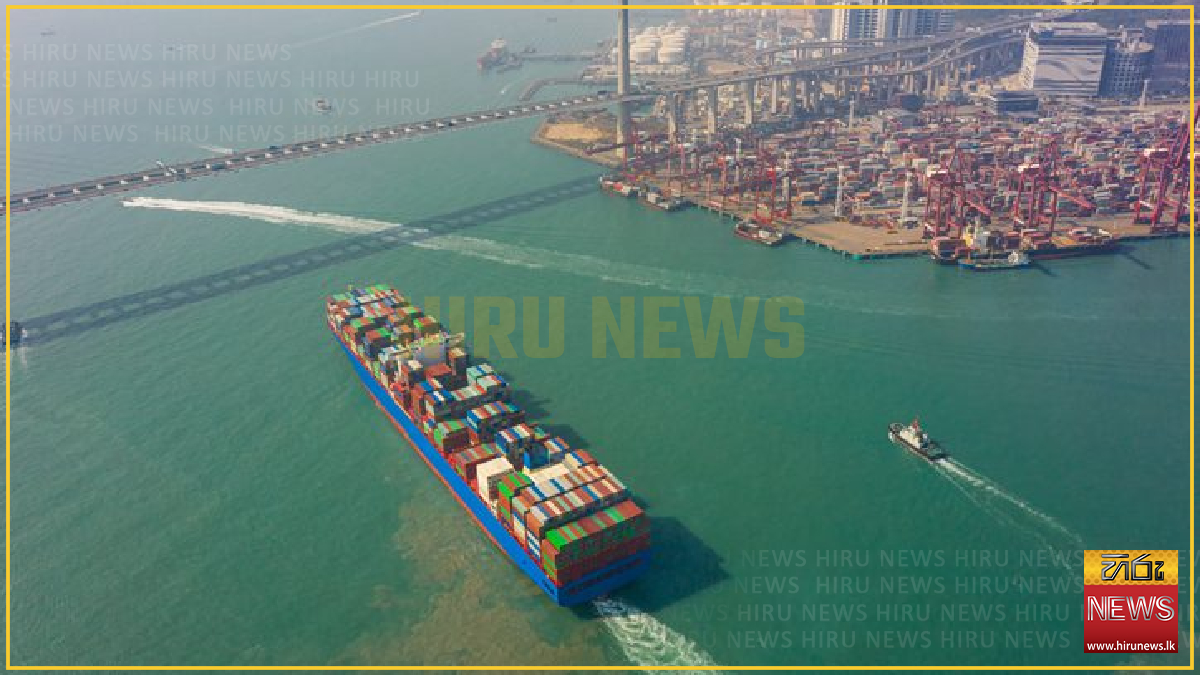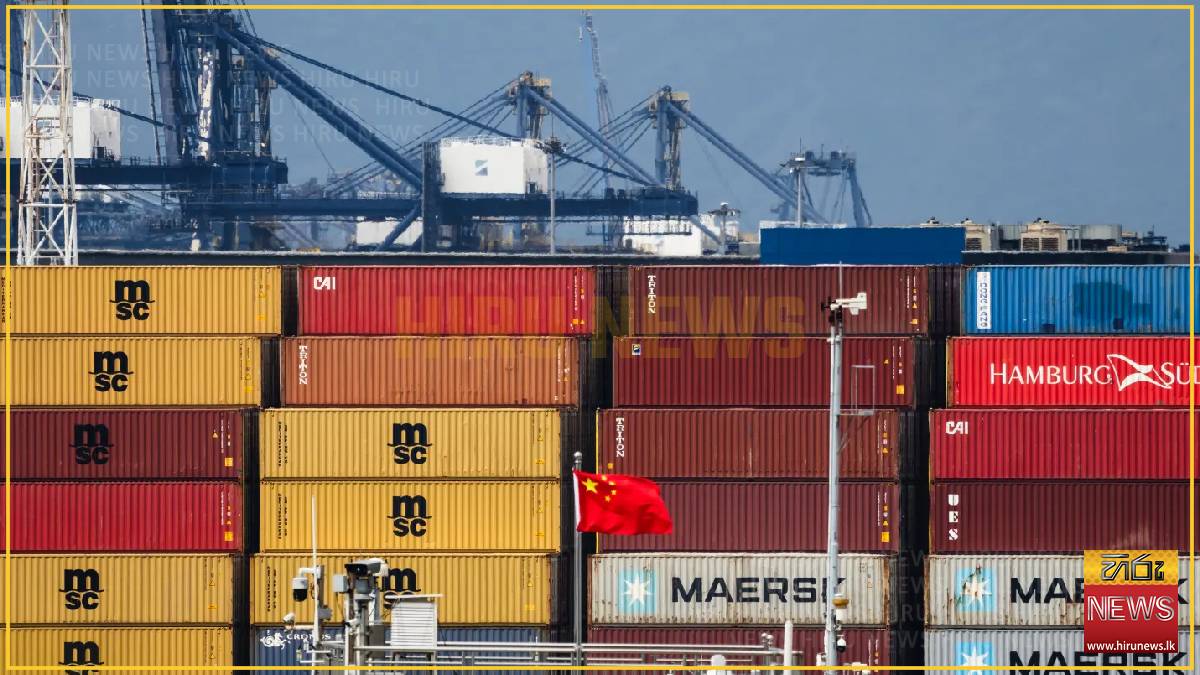
China’s trade growth held up better than expected in May, as surging AI-related exports helped buffer the economy against disruption from the Iran war, with U.S.-bound shipment logging the strongest jump in five years.
Overall exports rose 19.4% from a year earlier in U.S. dollar value terms, customs data showed Tuesday, accelerating from the 14.1% gain in April. Economists polled by Reuters had pegged growth at 15%.
Shipments to the U.S. soared nearly 35.4% in May from a year earlier, the highest growth since March 2021, according to Wind Information, extending a rebound following a long streak of double-digit declines for the most of last year, pressured by President Donald Trump’s tariffs.
Imports growth momentum continued to build, expanding 27.4% in May, the outpacing from 25.3% in April, beating economists’ forecast for a 25% growth. That boosted the trade surplus to $105.4 billion in May.
In the first five months this year, China’s import growth has accelerated sharply, rising 24.5% from a year earlier, outpacing 15.5% exports over the same period, narrowing the trade surplus from a year earlier.
The import surge has largely been driven by higher input costs and narrowly concentrated in select categories, particularly semiconductor chips and gold, and “hardly a sign of rebalancing,” according to economists at Bank of America Global Research.
“With weak overall demand and ongoing domestic substitution, genuine trade rebalancing remains distant,” BofA economists said, adding that the export boom has reduced Beijing’s urgency for meaningful policy stimulus.
China’s economy has shown signs of faltering following a strong first-quarter. Growth slowed across the board in April, with industrial production and retail sales posting their weakest gains in years. In May, the official gauge on manufacturing activity also slowed to 50, the threshold separating expansion from contraction.
Stockpiling and AI boost
Chinese exporters have so far weathered the fallout from the Middle East conflict, with overseas buyers rushing to lock in supplies before energy costs climb further. But economists have warned the tailwind may be short-lived — once overseas stockpiling momentum fades, sluggish domestic consumption will be unable to fill the gap.
“We expect the AI boom to support production and trade,” said Xiangrong Yu, chief China economist at Citi Bank, as higher prices for tech and semiconductor goods boost headline growth. “Domestic demand could show continued weakness,” Yu added.
Yu anticipates retail sales growth, a gauge on consumption, may fall to zero in May on fading impact from trade-in subsidies, further slowing from the three-year low of 0.2% growth in April.
A persistently weak jobs market has also compounded the pressure on consumer spending. “Despite soaring exports, the number of manufacturing jobs continues to contract,” said Frederic Neumann, chief Asia economist at HSBC Bank, as productivity gains from automation reduce demand for workers.
Chinese yuan’s sustained strength this year has led to some pressure on the country’s exporters — who have amassed large dollar holdings over the years — as mounting foreign-exchange losses have started to weigh on profits.
“China delivered strong export growth despite global economic uncertainty and appreciation of the renminbi this year,” said Zhiwei Zhang, president and chief economist at Pinpoint Asset Management, adding that robust export growth may reinforce policymakers’ inclination to hold off on meaningful stimulus until July.
The offshore yuan has strengthened 2.8% this year to 6.7802 against the U.S. dollar while the onshore yuan appreciated 3% to 6.7787, according to LSEG data. Both were little moved after the release of Tuesday trade data. The CSI 300 index rose 0.6%.
Uneven growth
China’s economy has developed into what economists called “K-speed” growth paradigm, with booming manufacturing and export sectors contrasting persistent weakness in property markets and consumer spending.
Exports have remained the bright spot for the world’s second-largest economy, driven by robust global demand for AI technology and renewable-energy products.
While demand remains weak, rising commodity costs from disruption to energy flows through the Strait of Hormuz have helped to alleviate deflationary pressures that have plagued Chinese economy for years.
Economists expect the country’s producer inflation, due Wednesday, to accelerate to 3.8% in May, the strongest level in nearly four years, as manufacturers absorb the higher input costs, according to a Reuters poll. Consumer inflation is expected to rise by a modest 1.3%.
China, holding roughly 15% of global oil stocks before the war broke out, could run through its oil reserves by late October if forced to draw down inventories to cover any supply shortfall, according to Fitch Ratings.
“Though China’s stable power supply could provide a buffer, the supply shock as a result of the energy crisis will still inflict pain on China’s economy via shortages and higher prices,” said Jing Wang, China Economist at Nomura.
-CNBC
Overall exports rose 19.4% from a year earlier in U.S. dollar value terms, customs data showed Tuesday, accelerating from the 14.1% gain in April. Economists polled by Reuters had pegged growth at 15%.
Shipments to the U.S. soared nearly 35.4% in May from a year earlier, the highest growth since March 2021, according to Wind Information, extending a rebound following a long streak of double-digit declines for the most of last year, pressured by President Donald Trump’s tariffs.
Imports growth momentum continued to build, expanding 27.4% in May, the outpacing from 25.3% in April, beating economists’ forecast for a 25% growth. That boosted the trade surplus to $105.4 billion in May.
In the first five months this year, China’s import growth has accelerated sharply, rising 24.5% from a year earlier, outpacing 15.5% exports over the same period, narrowing the trade surplus from a year earlier.
The import surge has largely been driven by higher input costs and narrowly concentrated in select categories, particularly semiconductor chips and gold, and “hardly a sign of rebalancing,” according to economists at Bank of America Global Research.
“With weak overall demand and ongoing domestic substitution, genuine trade rebalancing remains distant,” BofA economists said, adding that the export boom has reduced Beijing’s urgency for meaningful policy stimulus.
China’s economy has shown signs of faltering following a strong first-quarter. Growth slowed across the board in April, with industrial production and retail sales posting their weakest gains in years. In May, the official gauge on manufacturing activity also slowed to 50, the threshold separating expansion from contraction.
Stockpiling and AI boost
Chinese exporters have so far weathered the fallout from the Middle East conflict, with overseas buyers rushing to lock in supplies before energy costs climb further. But economists have warned the tailwind may be short-lived — once overseas stockpiling momentum fades, sluggish domestic consumption will be unable to fill the gap.
“We expect the AI boom to support production and trade,” said Xiangrong Yu, chief China economist at Citi Bank, as higher prices for tech and semiconductor goods boost headline growth. “Domestic demand could show continued weakness,” Yu added.
Yu anticipates retail sales growth, a gauge on consumption, may fall to zero in May on fading impact from trade-in subsidies, further slowing from the three-year low of 0.2% growth in April.
A persistently weak jobs market has also compounded the pressure on consumer spending. “Despite soaring exports, the number of manufacturing jobs continues to contract,” said Frederic Neumann, chief Asia economist at HSBC Bank, as productivity gains from automation reduce demand for workers.
Chinese yuan’s sustained strength this year has led to some pressure on the country’s exporters — who have amassed large dollar holdings over the years — as mounting foreign-exchange losses have started to weigh on profits.
“China delivered strong export growth despite global economic uncertainty and appreciation of the renminbi this year,” said Zhiwei Zhang, president and chief economist at Pinpoint Asset Management, adding that robust export growth may reinforce policymakers’ inclination to hold off on meaningful stimulus until July.
The offshore yuan has strengthened 2.8% this year to 6.7802 against the U.S. dollar while the onshore yuan appreciated 3% to 6.7787, according to LSEG data. Both were little moved after the release of Tuesday trade data. The CSI 300 index rose 0.6%.
Uneven growth
China’s economy has developed into what economists called “K-speed” growth paradigm, with booming manufacturing and export sectors contrasting persistent weakness in property markets and consumer spending.
Exports have remained the bright spot for the world’s second-largest economy, driven by robust global demand for AI technology and renewable-energy products.
While demand remains weak, rising commodity costs from disruption to energy flows through the Strait of Hormuz have helped to alleviate deflationary pressures that have plagued Chinese economy for years.
Economists expect the country’s producer inflation, due Wednesday, to accelerate to 3.8% in May, the strongest level in nearly four years, as manufacturers absorb the higher input costs, according to a Reuters poll. Consumer inflation is expected to rise by a modest 1.3%.
China, holding roughly 15% of global oil stocks before the war broke out, could run through its oil reserves by late October if forced to draw down inventories to cover any supply shortfall, according to Fitch Ratings.
“Though China’s stable power supply could provide a buffer, the supply shock as a result of the energy crisis will still inflict pain on China’s economy via shortages and higher prices,” said Jing Wang, China Economist at Nomura.
-CNBC