Sri Lanka Customs has said that vehicle imports have remained broadly stable despite a temporary surcharge imposed earlier this year, with the sector continuing to generate about one-third of total Customs revenue.
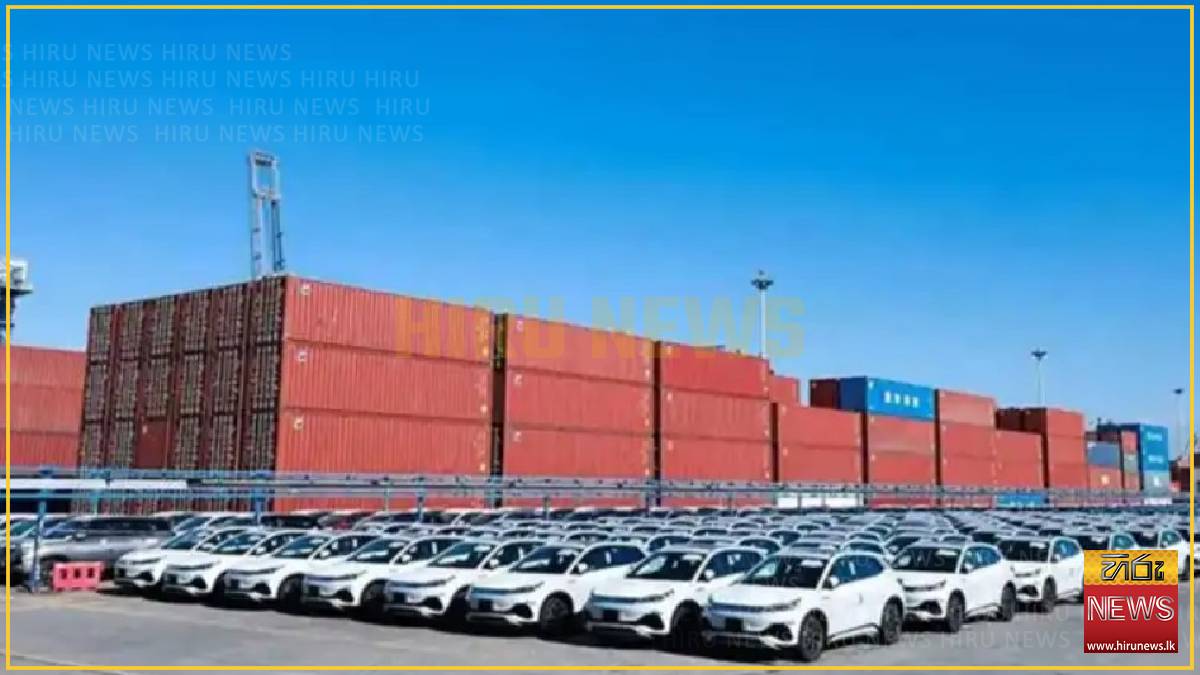
Speaking to the media, Customs Spokesperson and Additional Director General Chandana Punchihewa said the expected downturn in vehicle imports had not materialised, even amid reports of rising unsold inventories in the market.
Customs data shows that vehicle-related taxes contributed Rs. 91 billion out of total revenue of Rs. 235 billion in January, Rs. 75 billion out of Rs. 215 billion in February, Rs. 77 billion out of Rs. 231.9 billion in March, and Rs. 84 billion out of Rs. 242.9 billion in April. By 28 May, total Customs revenue stood at Rs. 212 billion, of which Rs. 76 billion was derived from vehicle imports.
Punchihewa said vehicle imports have consistently accounted for around 30% of Customs revenue, broadly in line with last year’s range of 30% to 35%.
He noted that while import volumes had eased slightly following the surcharge, this had not translated into a proportional decline in revenue collections.
He also pointed to the depreciation of the rupee against the US dollar as a supporting factor for revenue growth, noting that a weaker currency increases the rupee value of import duties and taxes.
“Despite the surcharge, no reduction has been reported as previously expected,” he said.
The Government imposed a 50% surcharge on Customs Import Duty on vehicle imports in May as part of measures aimed at managing foreign exchange outflows and curbing import demand.
Meanwhile, the Central Bank of Sri Lanka (CBSL) recorded net foreign exchange sales of USD 211.3 million in May, marking a second consecutive month of net selling amid rupee volatility driven by global supply shocks linked to Middle East tensions.
The CBSL purchased USD 12 million and sold USD 223.3 million during the month, marking a shift from its earlier position as a net buyer of foreign exchange under the IMF-supported programme to rebuild reserves.
Despite the May outflows, the Central Bank remained a net buyer of USD 485.9 million in the first five months of 2026, following net purchases of USD 2 billion in 2025.
April marked the first month of net dollar sales since June 2024, signalling renewed pressure on foreign exchange markets.
However, gross official reserves rose 1.7% to USD 6.87 billion by end-May from USD 6.76 billion in April, supported by inflows and other reserve-building measures.
Analysts note that stabilising the rupee will require either tighter monetary policy to curb credit demand or allowing further currency depreciation, as continued dollar sales from reserves risk weakening external buffers and heightening balance of payments pressures.
Speaking to the media, Customs Spokesperson and Additional Director General Chandana Punchihewa said the expected downturn in vehicle imports had not materialised, even amid reports of rising unsold inventories in the market.
Customs data shows that vehicle-related taxes contributed Rs. 91 billion out of total revenue of Rs. 235 billion in January, Rs. 75 billion out of Rs. 215 billion in February, Rs. 77 billion out of Rs. 231.9 billion in March, and Rs. 84 billion out of Rs. 242.9 billion in April. By 28 May, total Customs revenue stood at Rs. 212 billion, of which Rs. 76 billion was derived from vehicle imports.
Punchihewa said vehicle imports have consistently accounted for around 30% of Customs revenue, broadly in line with last year’s range of 30% to 35%.
He noted that while import volumes had eased slightly following the surcharge, this had not translated into a proportional decline in revenue collections.
He also pointed to the depreciation of the rupee against the US dollar as a supporting factor for revenue growth, noting that a weaker currency increases the rupee value of import duties and taxes.
“Despite the surcharge, no reduction has been reported as previously expected,” he said.
The Government imposed a 50% surcharge on Customs Import Duty on vehicle imports in May as part of measures aimed at managing foreign exchange outflows and curbing import demand.
Meanwhile, the Central Bank of Sri Lanka (CBSL) recorded net foreign exchange sales of USD 211.3 million in May, marking a second consecutive month of net selling amid rupee volatility driven by global supply shocks linked to Middle East tensions.
The CBSL purchased USD 12 million and sold USD 223.3 million during the month, marking a shift from its earlier position as a net buyer of foreign exchange under the IMF-supported programme to rebuild reserves.
Despite the May outflows, the Central Bank remained a net buyer of USD 485.9 million in the first five months of 2026, following net purchases of USD 2 billion in 2025.
April marked the first month of net dollar sales since June 2024, signalling renewed pressure on foreign exchange markets.
However, gross official reserves rose 1.7% to USD 6.87 billion by end-May from USD 6.76 billion in April, supported by inflows and other reserve-building measures.
Analysts note that stabilising the rupee will require either tighter monetary policy to curb credit demand or allowing further currency depreciation, as continued dollar sales from reserves risk weakening external buffers and heightening balance of payments pressures.