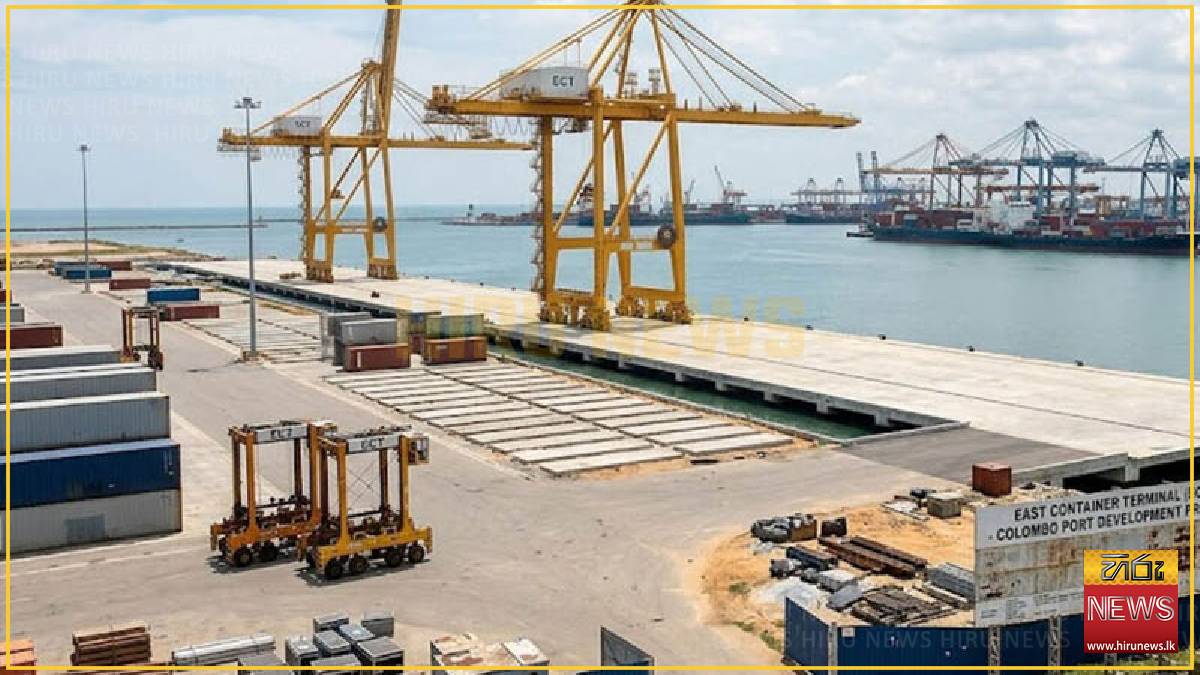
The government will bring private investors into the management of the East Container Terminal (ECT), President Anura Kumara Dissanayake announced during the inauguration session of the Sri Lanka Economic Summit 2026. He revealed a Cabinet decision to sell shares in a proposed management company while retaining full state ownership of the terminal itself.
Discussions are already underway with several major international shipping companies regarding the terminal's management. The government aims to maximise utilisation of the asset, which currently handles around 500,000 containers against a total potential capacity of 3.2 million.
Responding to a question from Ceylon Chamber of Commerce Vice Chairperson Bingumal Thewarathanthri regarding the economic contribution of local ports, the President emphasised that ports form a vital component of the national economic strategy, making the gap between ECT's current volumes and capacity a key priority.
The President did not specify the exact shareholding percentage to be offered, name the interested shipping lines, or provide a specific timeline. This initiative forms part of a broader government plan to expand port capacity and improve logistics alongside maritime services.
The next project in line is the second phase of the West Container Terminal, which requires a breakwater with an estimated cost that rose from US$1.1 billion to US$1.4 billion. Constructing this breakwater will enable the West Container Terminal to handle 3.2 million containers as well.
Preliminary study funds will be allocated in the upcoming Budget, while the Asian Development Bank prepares a feasibility study, with an interim report expected by December and the final report due next April. President Dissanayake also called for expanding port activities beyond container transhipment into a fully developed logistics hub.
Legal disputes over tenders for a logistics project reached court but were resolved through a compensation agreement with the affected companies.
Additionally, the Government is taking steps to build a container yard at Kerawalapitiya to ease port congestion.
On bunkering, authorities are examining a tax-related issue with hopes of offering relief in the forthcoming Budget, ensuring taxation aligns with international trade standards.