Sri Lanka plans to establish a logistics centre inside the Port of Colombo, targeting an investment between 350 million and 400 million US dollars to expand integrated supply chain operations.
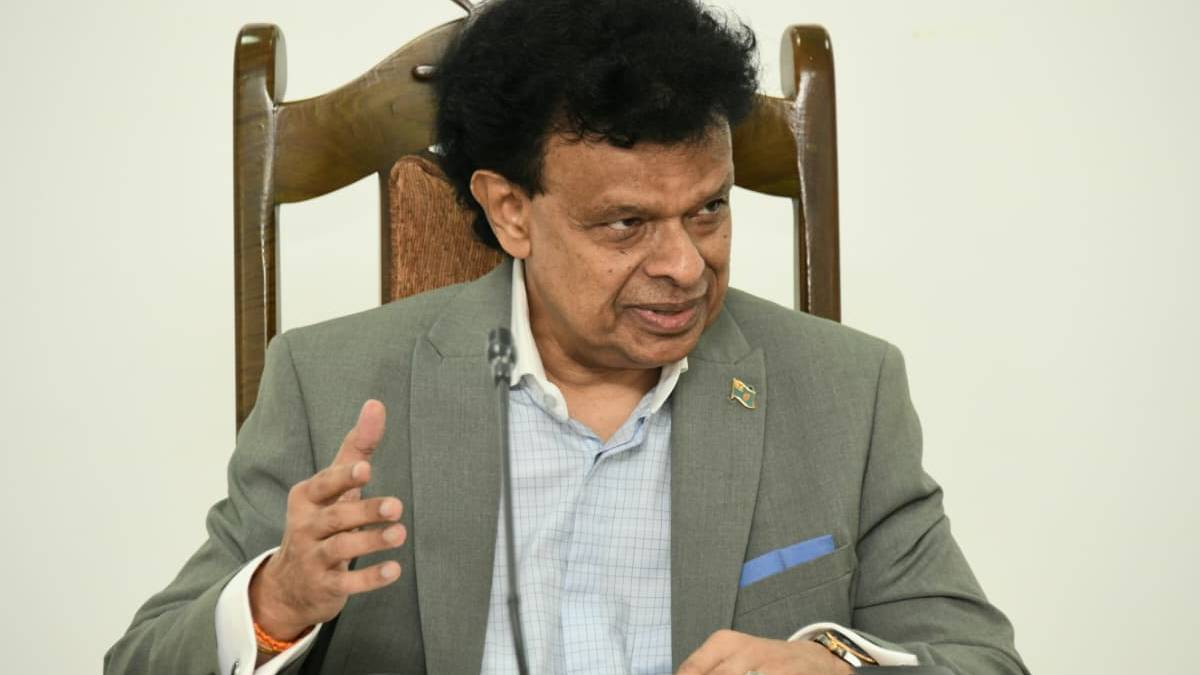
Sri Lanka Ports Authority Chairman Dr Mahinda Parakrama Dissanayake stated that the proposed facility will occupy a 14-acre site inside the port, with a request for proposals expected within two months.
The chairman disclosed the project while addressing the Sri Lanka Economic and Investment Summit 2026 organized by the Ceylon Chamber of Commerce in Colombo, noting it will enhance end-to-end logistics solutions for shipping lines.
The planned facility aims to broaden port services beyond standard container handling by integrating logistics operations and bolstering supply chain support for maritime operators.
This investment aligns with a wider scheme to elevate capacity and competitiveness at the Port of Colombo, which aims to manage up to 14 million twenty-foot equivalent units by early 2028.
Projected demand stands at approximately 10 million twenty-foot equivalent units, whilst additional projects undergo planning to accommodate future trade volume expansion.
A separate breakwater development will contribute an extra 3.2 million twenty-foot equivalent units in capacity, requiring an estimated investment between 1.6 billion and 1.7 billion US dollars for the associated port development programme.
Studies for the proposed Colombo North Port reached nearly 90 percent completion, with that project set to add another 11 million twenty-foot equivalent units in capacity.
Financial feasibility studies for the North Port project are scheduled to conclude by April 2027.
The proposed logistics hub supports national ambitions to solidify Sri Lanka as a regional maritime and logistics hub by drawing investment into high-value services.
Progress on the facility will rely on submitted proposals, chosen investment frameworks, and the establishment of commercially viable operations.
Authorities are also evaluating Galle for investments in floating docks, shipbuilding, and ship-repair operations, with potential project values ranging between 300 million and 1 billion US dollars.
These proposed developments could assist Sri Lanka in expanding maritime services while generating opportunities across ship maintenance, repairs, and industrial sectors.
Meanwhile, discussions progress with the Indian government regarding development plans for Kankesanthurai Port.
India offered a grant up to 61.5 million US dollars to assist in developing Kankesanthurai Port.
Dr Dissanayake mentioned that marine services operating outside the Port of Colombo, including activities around Galle and other coastal regions, currently service around 500 vessels monthly.
However, spatial limitations inside the Port of Colombo restrict further expansion of these activities, emphasizing the potential role of regional ports in housing extra maritime operations.
Constructing specialized facilities outside Colombo could spread port-related investments across the island while generating new avenues for regional enterprises and job growth.
The implementation of these initiatives will depend on comprehensive planning, feasibility evaluations, secured capital, and successful private-sector involvement.