Pan Asia Bank is supporting small-scale farmers in the North Central Province to access solar-powered irrigation facilities through its Sustainable Agricultural Lending Initiative 2026, launched in collaboration with Our Movement of Lanka (OML).
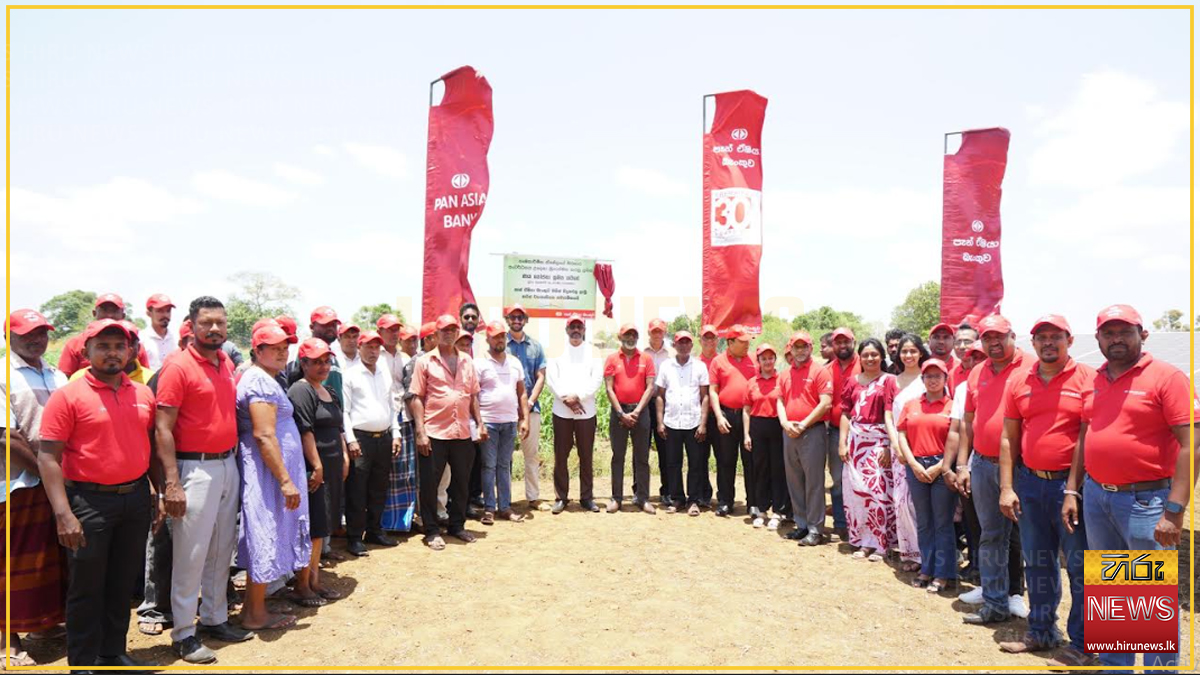
The initiative was highlighted at a customer outreach event held on September 11 in Galenbindunuwewa, Anuradhapura, bringing together farmers and community leaders to raise awareness of solar-powered irrigation and the financing available through the bank.
The initiative aims to help farmers reduce their dependence on fossil fuels, lower irrigation costs and improve agricultural productivity through more sustainable and affordable water management solutions. It also forms part of the bank’s wider efforts to promote financial inclusion in the agriculture sector.
“Farmers need financial solutions that respond to the realities of agriculture. Through this initiative, we are helping make solar-powered irrigation more accessible while supporting farmers to reduce costs, improve efficiency and build more sustainable livelihoods. Our partnership with OML enables us to take this opportunity directly to farming communities in the North Central Province,” said Naleen Edirisinghe, Director/CEO of Pan Asia Bank.
OML works with more than 5,000 active member farmers in the North Central Province, including growers of chilli, melon, brinjal, capsicum, tomato and cantaloupe.
Through the partnership, Pan Asia Bank has assumed the risks associated with agricultural financing under concessionary terms and conditions, helping make solar-powered water pumps more accessible to small-scale farmers.
Nimal Ratnayake, Assistant General Manager, Branch Credit at Pan Asia Bank, said the initiative aimed to make sustainable irrigation financially accessible to small-scale farmers.
“By providing financing on concessionary terms, we are helping farmers adopt solar-powered technology while improving the efficiency and sustainability of their farming operations,” he said.
A beneficiary of the project said the solar-powered pump had made irrigation easier and reduced dependence on fuel, adding that access to financing had made the technology a practical option for farmers.
Approximately 50 farmers and community leaders attended the event, which also showcased the successful implementation of a solar water pump project and promoted sustainable agricultural practices.