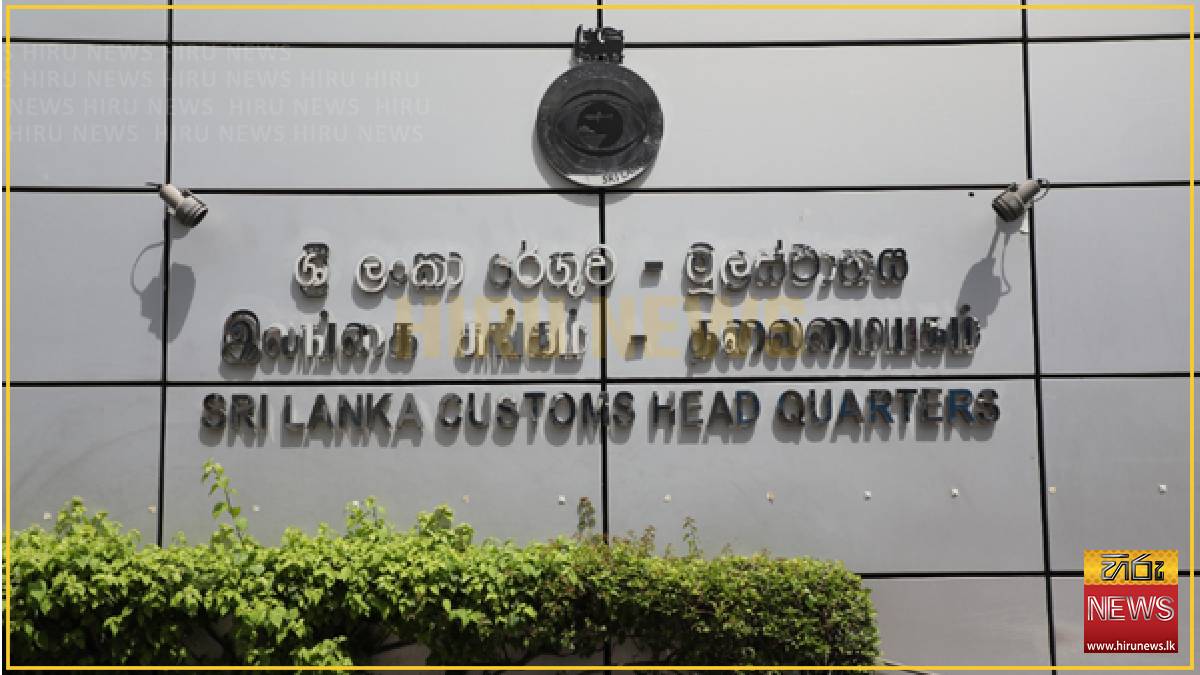
Sri Lanka Customs is set to introduce new regulations governing e-commerce imports within weeks to curb revenue losses and illegal trading, a senior official said.
Customs Director and Media Spokesperson Chandana Punchihewa announced that officials met with major e-commerce platforms on Monday to outline the upcoming changes. He cited a surge in imports driven by the de minimis rule—which exempts small, low-value shipments from duties—as a primary reason for the crackdown.
"We observed that e-commerce imports had become an illegal channel to import goods," Punchihewa said. "Once the volumes reached the current levels, it became impossible to allow this to continue considering the scale of the revenue leakage."
He noted that the de minimis facility was being abused to bring in high-value goods, bypassing standard taxes. Following the recent removal of this rule, revenue from e-commerce imports has reportedly quadrupled, jumping from Rs. 150 billion in 2024 to around Rs. 600 billion in 2025.
The new regulations are expected to be issued internally within two weeks. In addition, Customs plans to recommend broader policy measures to the Ministry of Finance, though these will require Cabinet approval and may take longer to implement.
The move comes as digital adoption grows among Sri Lankan consumers, prompting authorities to formalize a sector that has rapidly expanded beyond traditional regulatory frameworks.
Customs Director and Media Spokesperson Chandana Punchihewa announced that officials met with major e-commerce platforms on Monday to outline the upcoming changes. He cited a surge in imports driven by the de minimis rule—which exempts small, low-value shipments from duties—as a primary reason for the crackdown.
"We observed that e-commerce imports had become an illegal channel to import goods," Punchihewa said. "Once the volumes reached the current levels, it became impossible to allow this to continue considering the scale of the revenue leakage."
He noted that the de minimis facility was being abused to bring in high-value goods, bypassing standard taxes. Following the recent removal of this rule, revenue from e-commerce imports has reportedly quadrupled, jumping from Rs. 150 billion in 2024 to around Rs. 600 billion in 2025.
The new regulations are expected to be issued internally within two weeks. In addition, Customs plans to recommend broader policy measures to the Ministry of Finance, though these will require Cabinet approval and may take longer to implement.
The move comes as digital adoption grows among Sri Lankan consumers, prompting authorities to formalize a sector that has rapidly expanded beyond traditional regulatory frameworks.