The US Senate has voted to advance a stalled immigration spending bill after Republicans removed $1bn (£745m) in funding for President Donald Trump's new White House ballroom.
The $1bn was intended for US Secret Service security upgrades as part of the construction, a request following April's shooting at a gala Trump attended at a hotel.
Trump has argued the new addition is necessary to host official state functions and update security facilities. He repeatedly said it would be funded by private donations.
The reconciliation bill will provide roughly $72bn for immigration agencies, and Democrats had argued the security funds shouldn't be attached. The Senate rule-keeper agreed.
In a 53-45 vote on Wednesday, senators agreed to move forward on the legislation funding agencies, including Immigration and Customs Enforcement (ICE) and Border Patrol. The chamber will now debate the measure and introduce amendments before taking a final vote on it - a saga that is likely to go on for hours, possibly even into Thursday.
If passed, it will then head to the House of Representatives before it can be sent to President Donald Trump for signature.
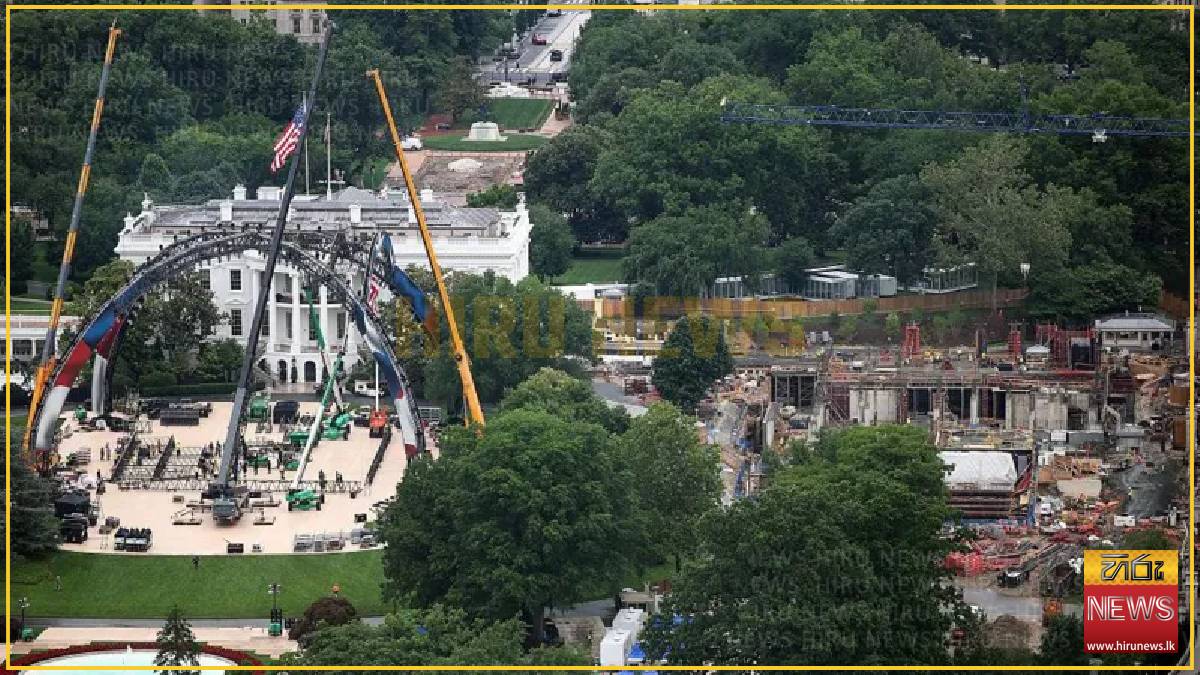
Democrats have opposed Trump's attempts to build a massive ballroom on the site of the demolished White House East Wing. The decision to strip funds from the immigration bill marks a setback to Trump's plans, though it's unclear how it might impact the construction project.
Progress on the bill, which had stalled for months, was further delayed after Republicans objected to the Department of Justice's attempt to establish an "anti-weaponisation fund" to provide $1.8bn to people allegedly harmed by government overreach.
Critics had said the money was a slush fund to pay out to Trump's allies, including the rioters who attacked the US Capitol in 2021 in an attempt to prevent former President Joe Biden from taking office.
Testifying to lawmakers on Tuesday, Acting Attorney General Todd Blanche confirmed that the Department of Justice was dropping its plans to set up the fund, but declined to put it in writing.
But speaking to reporters later, Trump suggested the plan was not entirely dead, saying he would "have to ask the lawyers".
Republican North Carolina Senator Thom Tillis said he plans to introduce legislation that would ban the creation of such a fund.
Other Republicans have also harshly criticised the proposed fund, and Democrats have said they also plan to create laws that would block it.
-BBC
The $1bn was intended for US Secret Service security upgrades as part of the construction, a request following April's shooting at a gala Trump attended at a hotel.
Trump has argued the new addition is necessary to host official state functions and update security facilities. He repeatedly said it would be funded by private donations.
The reconciliation bill will provide roughly $72bn for immigration agencies, and Democrats had argued the security funds shouldn't be attached. The Senate rule-keeper agreed.
In a 53-45 vote on Wednesday, senators agreed to move forward on the legislation funding agencies, including Immigration and Customs Enforcement (ICE) and Border Patrol. The chamber will now debate the measure and introduce amendments before taking a final vote on it - a saga that is likely to go on for hours, possibly even into Thursday.
If passed, it will then head to the House of Representatives before it can be sent to President Donald Trump for signature.
Democrats have opposed Trump's attempts to build a massive ballroom on the site of the demolished White House East Wing. The decision to strip funds from the immigration bill marks a setback to Trump's plans, though it's unclear how it might impact the construction project.
Progress on the bill, which had stalled for months, was further delayed after Republicans objected to the Department of Justice's attempt to establish an "anti-weaponisation fund" to provide $1.8bn to people allegedly harmed by government overreach.
Critics had said the money was a slush fund to pay out to Trump's allies, including the rioters who attacked the US Capitol in 2021 in an attempt to prevent former President Joe Biden from taking office.
Testifying to lawmakers on Tuesday, Acting Attorney General Todd Blanche confirmed that the Department of Justice was dropping its plans to set up the fund, but declined to put it in writing.
But speaking to reporters later, Trump suggested the plan was not entirely dead, saying he would "have to ask the lawyers".
Republican North Carolina Senator Thom Tillis said he plans to introduce legislation that would ban the creation of such a fund.
Other Republicans have also harshly criticised the proposed fund, and Democrats have said they also plan to create laws that would block it.
-BBC