The Government of Japan and the Food and Agriculture Organization (FAO) of the United Nations, in collaboration with the Government of Sri Lanka, have launched a joint initiative to restore inland fisheries livelihoods and strengthen the resilience of cyclone-affected fishing communities in the Eastern Province.
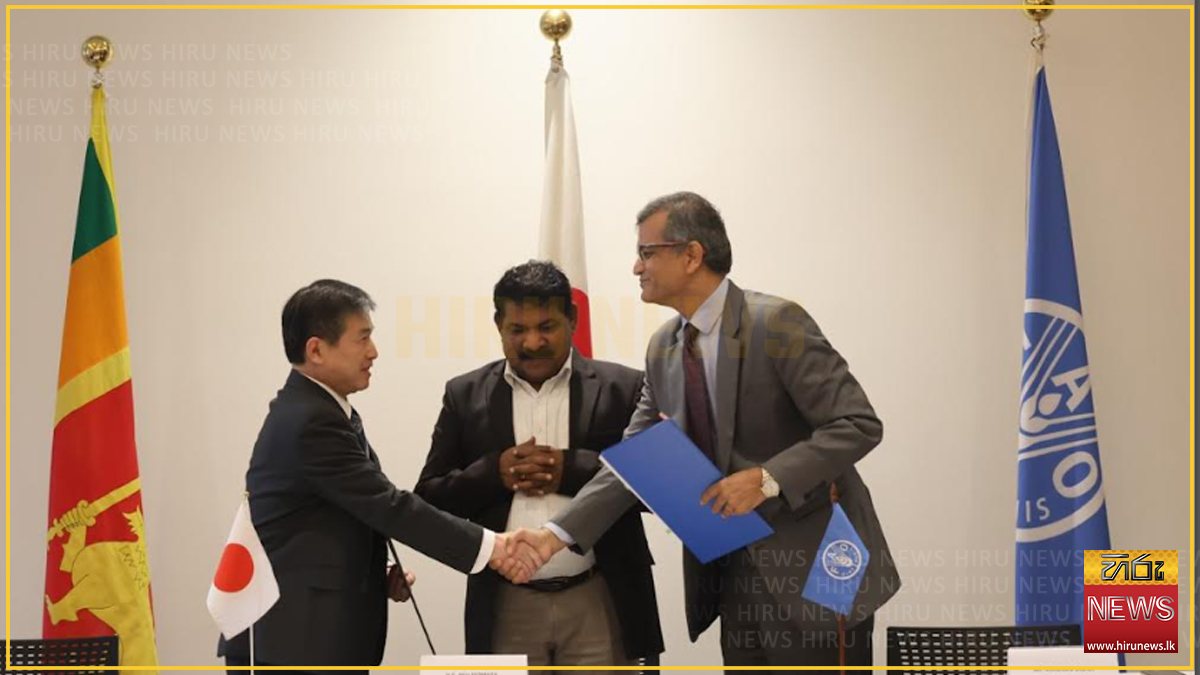
The initiative was formally signed by Japanese Ambassador Akio Isomata and FAO Representative for Sri Lanka and the Maldives Vimlendra Sharan, in the presence of Minister of Fisheries, Aquatic and Ocean Resources Ramalingam Chandrasekar at the Embassy of Japan in Colombo.
Funded by the Government of Japan with a total allocation of US$ 1.33 million, the project will be implemented from June 2026 to November 2027 across Ampara, Batticaloa, and Trincomalee districts, targeting fishing communities and Culture-Based Fisheries Organisations affected by Cyclone Ditwah.
Cyclone Ditwah caused extensive flooding in Sri Lanka’s Eastern Province, severely damaging inland fisheries systems. Floodwaters and emergency reservoir releases led to large-scale loss of stocked fish fingerlings and market-size fish, destruction of barrier nets and infrastructure, and disruption of breeding and stocking cycles.
The project aims to restore inland fisheries production and livelihoods through large-scale reservoir restocking, provision of floating rearing cages, procurement of fish breeding hormones, and installation of barrier nets to reduce future fish losses during floods and reservoir overflows.
It is expected to directly benefit 1,504 fishers across 30 reservoirs, while indirectly supporting more than 6,000 household members through improved food security, nutrition, and income stability. The initiative will also boost fish production through the stocking of 5.48 million fingerlings and the establishment of community-managed cage systems capable of producing around 16 million fingerlings annually.
Minister Ramalingam Chandrasekar highlighted the importance of restoring livelihoods in cyclone-affected communities, noting the urgency of rebuilding fisheries infrastructure and production capacity.
Japanese Ambassador Akio Isomata said the project represents not only recovery support but also a long-term investment in climate resilience.
“The new project launched today, while it aims to restore fisheries resources lost due to the cyclone, also constitutes a strategic investment in the future, namely the construction of resilient fishery communities capable of withstanding future climate-related shocks,” he said.
FAO Representative Vimlendra Sharan said the initiative goes beyond immediate recovery, focusing on rebuilding sustainable and climate-resilient inland fisheries systems.
“Through reservoir restocking, improved fingerling production, protective infrastructure, and community capacity building, FAO is supporting affected fishers to restore livelihoods, improve food security, and strengthen resilience to future climate shocks,” he said.