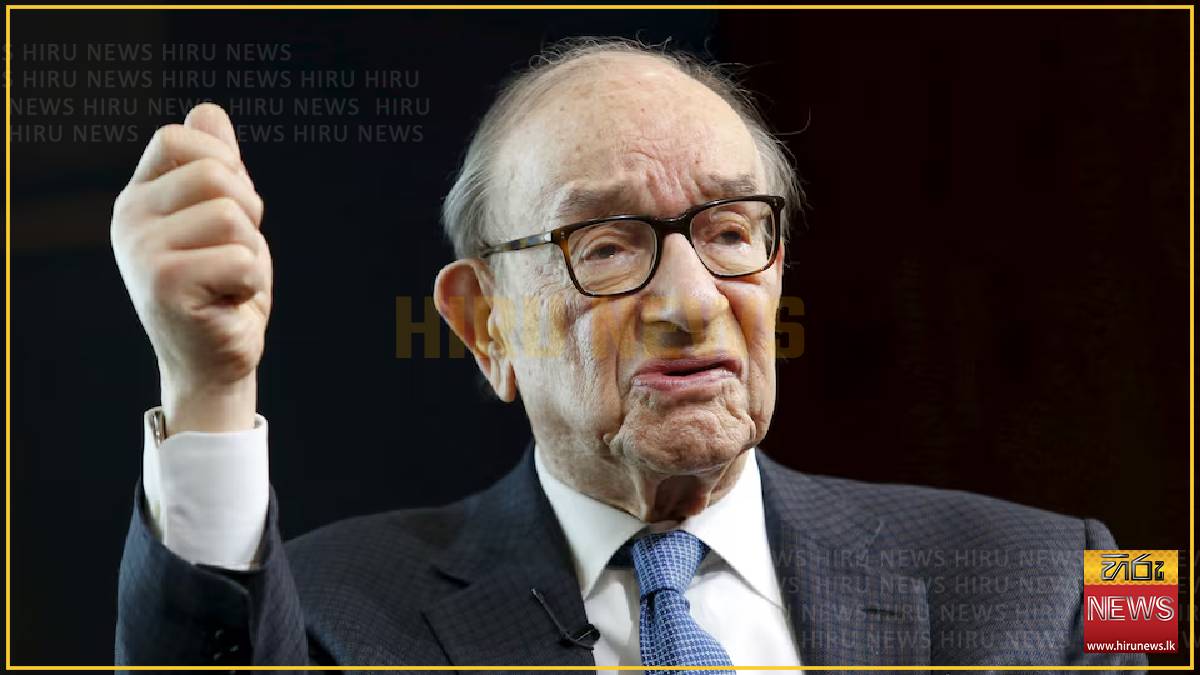
Alan Greenspan, hailed as the greatest Federal Reserve chairman when he retired in 2006 but derided for a severe financial crisis that followed barely two years later, died on Monday aged 100, NBC News reported.
Greenspan, who exerted a powerful influence on the U.S. economy during his tenure at the helm of the Fed from August 1987 to January 2006, died at his home from complications of Parkinson’s Disease, NBC reported, citing his wife Andrea Mitchell, who is the outlet's chief Washington correspondent.
Greenspan oversaw the second-longest economic expansion in U.S. history, an uninterrupted decade of growth from March 1991 to March 2001. His decision to let the economy run - despite pressure to raise interest rates against an inflation threat that never materialized - helped foster years of U.S. prosperity and earned him rock star status as an economic "maestro."
The era was marked by his prescient judgment that a productivity surge in the mid-1990s would keep inflation contained.
His intuition in that moment is still a touchstone for policymakers, and has been referred to by former Fed Chair Jerome Powell as an example of how judgment can sometimes outperform technical models of the economy.
However, the one-time jazz musician's monetary policy acumen later came into question as critics attacked his policies for fueling a series of asset price bubbles and laying the groundwork for the 2007-2009 financial crisis.
"I think the deification that came just before the financial crisis was never really deserved, and I think the lambasting that he took after he left was never fully deserved either," said Stephen Oliner, a former senior Fed official.
Greenspan, who fell in love with math through an obsession with baseball statistics, won quick plaudits for a strong response to the Black Monday stock market crash of 1987, just two months after he took office.
He also steered the U.S. economy through the 1990-91 recession, the 1997-1998 Asian and Russian financial contagion, the collapse of the dot-com stocks bubble in 2000, and the turbulent economic aftermath of the Sept. 11, 2001, attacks.
Along the way, biographer Sebastian Mallaby detailed, he became a consummate Washington power player able to maneuver presidents and cabinet secretaries into making the decisions he felt were best, sometimes without them realizing who pulled the strings.
-Reuters
Greenspan, who exerted a powerful influence on the U.S. economy during his tenure at the helm of the Fed from August 1987 to January 2006, died at his home from complications of Parkinson’s Disease, NBC reported, citing his wife Andrea Mitchell, who is the outlet's chief Washington correspondent.
Greenspan oversaw the second-longest economic expansion in U.S. history, an uninterrupted decade of growth from March 1991 to March 2001. His decision to let the economy run - despite pressure to raise interest rates against an inflation threat that never materialized - helped foster years of U.S. prosperity and earned him rock star status as an economic "maestro."
The era was marked by his prescient judgment that a productivity surge in the mid-1990s would keep inflation contained.
His intuition in that moment is still a touchstone for policymakers, and has been referred to by former Fed Chair Jerome Powell as an example of how judgment can sometimes outperform technical models of the economy.
However, the one-time jazz musician's monetary policy acumen later came into question as critics attacked his policies for fueling a series of asset price bubbles and laying the groundwork for the 2007-2009 financial crisis.
"I think the deification that came just before the financial crisis was never really deserved, and I think the lambasting that he took after he left was never fully deserved either," said Stephen Oliner, a former senior Fed official.
Greenspan, who fell in love with math through an obsession with baseball statistics, won quick plaudits for a strong response to the Black Monday stock market crash of 1987, just two months after he took office.
He also steered the U.S. economy through the 1990-91 recession, the 1997-1998 Asian and Russian financial contagion, the collapse of the dot-com stocks bubble in 2000, and the turbulent economic aftermath of the Sept. 11, 2001, attacks.
Along the way, biographer Sebastian Mallaby detailed, he became a consummate Washington power player able to maneuver presidents and cabinet secretaries into making the decisions he felt were best, sometimes without them realizing who pulled the strings.
-Reuters