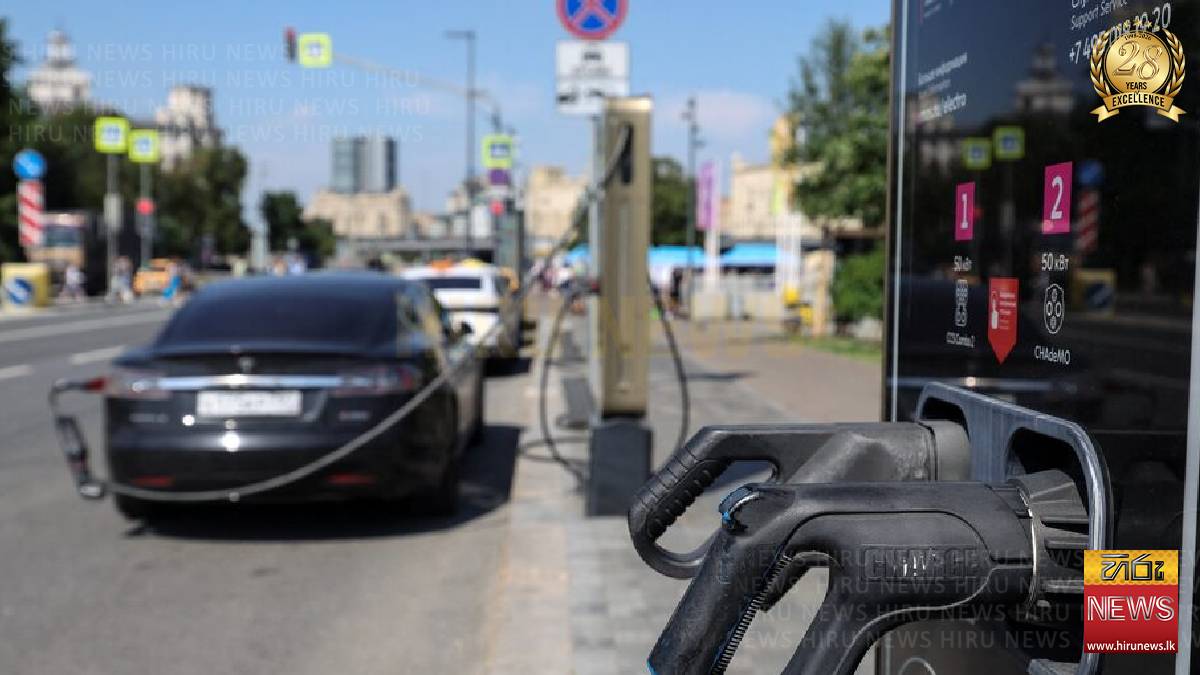
A Moscow car dealership is struggling to keep up with demand for new electric vehicles as drivers look to sidestep a fuel crisis that has led to long queues and soaring prices across much of Russia.
Escalating Ukrainian strikes on Russian energy infrastructure have squeezed gasoline and diesel supplies in recent weeks, prompting restrictions in most regions.
Retail gasoline prices in some areas have climbed to among the highest levels in Europe, according to Reuters calculations.
Russia's vast distances, harsh climate, and limited charging network have curbed the growth of its EV market.
But the mounting fuel challenges are leading some motorists to make the switch.
EN Cars, which specialises in Chinese brands, is selling two to three EVs per day, compared with two to three a month just a few weeks ago, founder Yevgeniy Zabelin told Reuters on Wednesday.
"Since the fuel situation became complicated, demand has grown many times over," he said, adding that interest was rising in both budget and premium models.
In the showroom, prospective buyers inspected electric SUVs made by Chinese automaker Geely.
With fuel prices up more than 12% year-on-year between January and May, demand for EVs was already increasing.
About 24,600 new plug-in hybrids were sold in the first five months of the year, up 125% year-on-year, while sales of new fully electric cars rose 19% to 4,460, according to analytical agency Autostat and the Ministry of Industry and Trade.
Sales accelerated further in June as fuel shortages hit.
Last week, 1,754 new plug-in hybrids were registered, up nearly a third from the previous week and nearly 50% above the average weekly pace this year, according to Autostat chief Sergei Tselikov.
The number of charging stations in Russia increased 20% in the year to July 2026, according to digital map service 2GIS.
-Reuters
Escalating Ukrainian strikes on Russian energy infrastructure have squeezed gasoline and diesel supplies in recent weeks, prompting restrictions in most regions.
Retail gasoline prices in some areas have climbed to among the highest levels in Europe, according to Reuters calculations.
Russia's vast distances, harsh climate, and limited charging network have curbed the growth of its EV market.
But the mounting fuel challenges are leading some motorists to make the switch.
EN Cars, which specialises in Chinese brands, is selling two to three EVs per day, compared with two to three a month just a few weeks ago, founder Yevgeniy Zabelin told Reuters on Wednesday.
"Since the fuel situation became complicated, demand has grown many times over," he said, adding that interest was rising in both budget and premium models.
In the showroom, prospective buyers inspected electric SUVs made by Chinese automaker Geely.
With fuel prices up more than 12% year-on-year between January and May, demand for EVs was already increasing.
About 24,600 new plug-in hybrids were sold in the first five months of the year, up 125% year-on-year, while sales of new fully electric cars rose 19% to 4,460, according to analytical agency Autostat and the Ministry of Industry and Trade.
Sales accelerated further in June as fuel shortages hit.
Last week, 1,754 new plug-in hybrids were registered, up nearly a third from the previous week and nearly 50% above the average weekly pace this year, according to Autostat chief Sergei Tselikov.
The number of charging stations in Russia increased 20% in the year to July 2026, according to digital map service 2GIS.
-Reuters