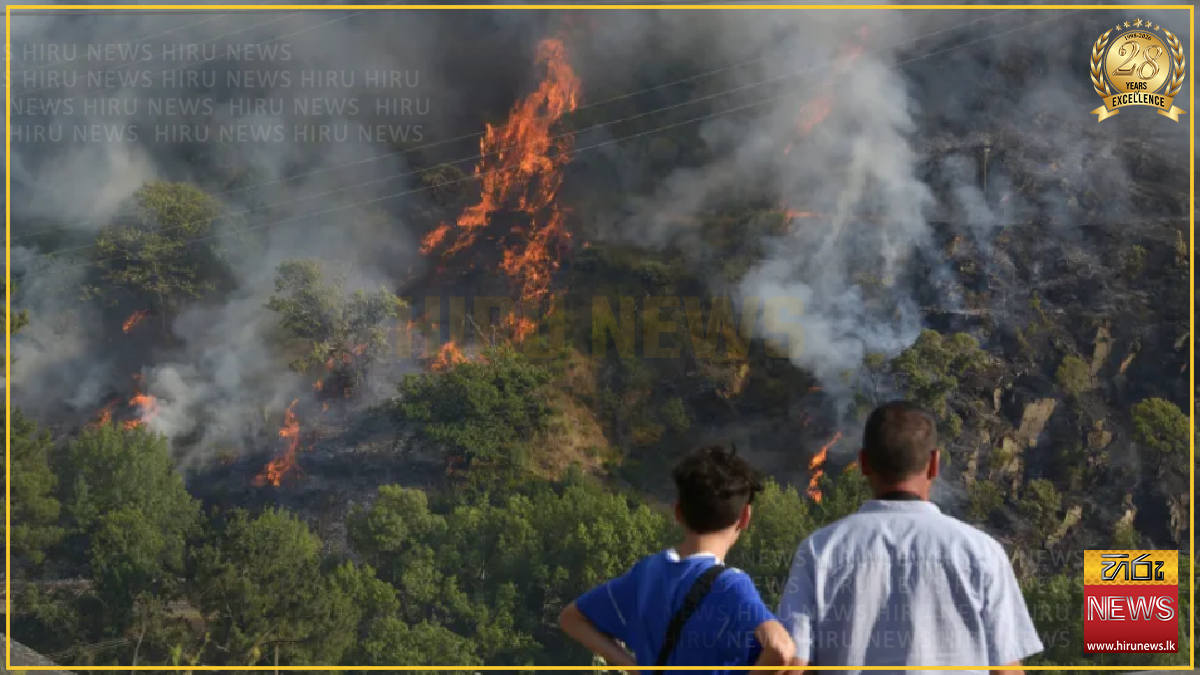
French firefighters are battling a huge blaze in a forest just south of Paris as a devastating heatwave extends its deadly sweep across Europe.
More than 3 square miles (800 hectares) of the Fontainebleau forest have been burned, CNN affiliate BFMTV reported on Monday, and fire-fighting aircraft have been scooping up water from the River Seine as part of efforts to get the fire under control.
French Interior Minister Laurent Nuñez told reporters police are investigating whether the fire was started deliberately. Wildfires had also broken out in other parts of the country, Nuñez said in a post on X on Sunday.
Wildfires are not unusual in Europe, but the climate crisis is driving hotter, drier weather, which is setting the stage for fiercer fire seasons. They are also happening earlier in the year and are of growing intensity.
In much of France and Spain, an exceptionally wet winter left a lot of vegetation that quickly turned to tinder as three successive heatwaves sent temperatures into the high-30s Celsius.
That has led to a spike in the number of larger fires, according to data from the European Forest Fire Information System.
Extreme heat can also be deadly. More than 10,000 excess deaths were recorded during late June’s heatwave in western Europe, according to data from EuroMOMO, a network of researchers backed by the European Centre for Disease Prevention and Control and the World Health Organization.
Of that total, more than 9,000 were among people aged 65 and over.
Extreme heat can lead to death by heat stroke or worsen existing cardiovascular and respiratory conditions, with older people more vulnerable.
And this trend is likely to continue in the coming years as Europe is the world’s fastest-warming continent, with temperatures increasing more than twice as fast as the global average, according to the EU’s Copernicus Climate Change Service.
-CNN
More than 3 square miles (800 hectares) of the Fontainebleau forest have been burned, CNN affiliate BFMTV reported on Monday, and fire-fighting aircraft have been scooping up water from the River Seine as part of efforts to get the fire under control.
French Interior Minister Laurent Nuñez told reporters police are investigating whether the fire was started deliberately. Wildfires had also broken out in other parts of the country, Nuñez said in a post on X on Sunday.
Wildfires are not unusual in Europe, but the climate crisis is driving hotter, drier weather, which is setting the stage for fiercer fire seasons. They are also happening earlier in the year and are of growing intensity.
In much of France and Spain, an exceptionally wet winter left a lot of vegetation that quickly turned to tinder as three successive heatwaves sent temperatures into the high-30s Celsius.
That has led to a spike in the number of larger fires, according to data from the European Forest Fire Information System.
Extreme heat can also be deadly. More than 10,000 excess deaths were recorded during late June’s heatwave in western Europe, according to data from EuroMOMO, a network of researchers backed by the European Centre for Disease Prevention and Control and the World Health Organization.
Of that total, more than 9,000 were among people aged 65 and over.
Extreme heat can lead to death by heat stroke or worsen existing cardiovascular and respiratory conditions, with older people more vulnerable.
And this trend is likely to continue in the coming years as Europe is the world’s fastest-warming continent, with temperatures increasing more than twice as fast as the global average, according to the EU’s Copernicus Climate Change Service.
-CNN