When natural disasters strike, pets are often among the most vulnerable and overlooked victims.
Following Tuesday’s powerful magnitude 7.1 earthquake that shook Kumamoto at around 4:30 p.m., private shelters, volunteer organisations, and online communities are racing against time to locate runaway animals frightened by the tremors.
Among them is Go, a 2-year-old Shiba Inu wearing a blue collar, who has been missing since he panicked and bolted from his home in Minami Ward just after the main quake.
“I was out working, but when my mother opened the door to escape, he was so terrified by the shaking that he just ran off, and we haven’t seen him since,” his owner, Yosuke Matsuda, said.
“We adopted him less than a year ago. We think he was abused before, so he’s very easily frightened — I just want him to be found.”
For some owners, social media has already brought quick relief.
In the same ward on Tuesday, a Chihuahua named Leo was safely reunited with his owners around 10 p.m. — about six hours after disappearing — after a local resident spotted an online alert on Instagram and found him 1.3 kilometers away from home.
Central to these online rescue efforts are lost pet dissemination networks like “Maigo Ken no Keijiban” (Lost Dog Bulletin Board). As a certified nonprofit organization backed by a community of 150,000 dog lovers on social media, the organization specializes in spreading and amplifying missing pet alerts during emergencies.
Following Go’s disappearance, the organization’s Kyushu regional account posted his photo and details to its thousands of followers, drawing immediate attention and shares across Kumamoto and beyond. For owners like Matsuda, that widespread visibility provides a crucial lifeline while searching under worsening conditions.
Despite the digital push, Go remains missing — with only a single reported sighting so far.
His story is part of a larger, growing tally across the region; according to combined figures from the Kumamoto Prefectural Government and Kumamoto City animal welfare units, around 80 pets have been reported missing in the wake of the earthquake as of Thursday.
As search efforts continue on the ground, dedicated physical shelters are also stepping up to accommodate displaced families and their animals.
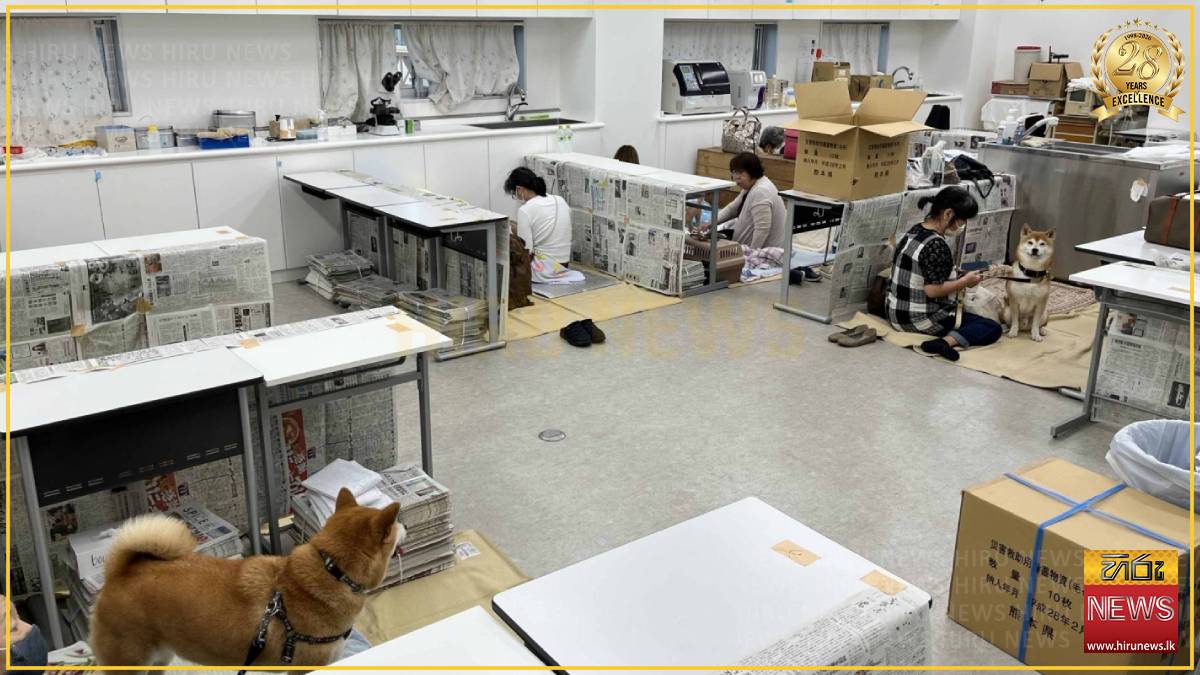
One prominent refuge is the Kyushu Animal Academy, a vocational college in Kumamoto specialising in animal care. The institution has a record of stepping up during disasters — when a deadly earthquake sequence struck Kumamoto in April 2016, it voluntarily created a pet-friendly shelter that housed roughly 1,500 evacuees and 1,000 animals in about a month.
Today, the academy has once again opened its classrooms, where indoor tents have been pitched to allow displaced owners to stay directly alongside their pets. About 20 evacuees and pets in total are currently staying at the facility, which has capacity for up to 100, according to its head, Ryunosuke Tokuda.
“Most public evacuation centers aren’t set up to house animals indoors — Japan is still behind on pet disaster management, and that needs to change,” Tokuda said. “I think having animals with us helps keep spirits up. Pets are family, and having them close makes a huge difference.”
While some evacuees return to their homes during the day to clean up the damage and come back to spend the night with their pets, others leave their pets safely in the academy’s care while they take care of necessary recovery tasks and errands.
Tokuda noted that the shelter has seen a wave of sick animals showing symptoms like vomiting, diarrhea, and refusal to eat. The problem has been compounded by widespread blackouts, which have left families without air conditioning and caused a sharp rise in heatstroke and hyperventilation among pets.
“We can’t use the school as an evacuation center forever, so we’ll see how things go over the next few days until the local government takes over,” he said. “We welcome foreigners, too. Even if you don’t speak Japanese, if you and your pet need help, please feel free to reach out.”
Yet for owners whose pets remain lost in the aftermath of the quake, temporary shelters offer little comfort while their companions are still missing. As rising temperatures make conditions increasingly perilous for pets stranded outdoors, the race to bring them home grows more urgent by the hour.
For Matsuda, the struggle is both a race against time and a test of endurance as he waits for any news on Go’s whereabouts.
“With the weather getting hotter, the thought of him out there frightened and terrified breaks my heart. I just want to find him as quickly as possible,” Matsuda said.
“I’m also deeply grateful to my friends, acquaintances, and strangers all across the country who have taken the time to share and spread information on social media during such a difficult time.”
-The Japan Times
Following Tuesday’s powerful magnitude 7.1 earthquake that shook Kumamoto at around 4:30 p.m., private shelters, volunteer organisations, and online communities are racing against time to locate runaway animals frightened by the tremors.
Among them is Go, a 2-year-old Shiba Inu wearing a blue collar, who has been missing since he panicked and bolted from his home in Minami Ward just after the main quake.
“I was out working, but when my mother opened the door to escape, he was so terrified by the shaking that he just ran off, and we haven’t seen him since,” his owner, Yosuke Matsuda, said.
“We adopted him less than a year ago. We think he was abused before, so he’s very easily frightened — I just want him to be found.”
For some owners, social media has already brought quick relief.
In the same ward on Tuesday, a Chihuahua named Leo was safely reunited with his owners around 10 p.m. — about six hours after disappearing — after a local resident spotted an online alert on Instagram and found him 1.3 kilometers away from home.
Central to these online rescue efforts are lost pet dissemination networks like “Maigo Ken no Keijiban” (Lost Dog Bulletin Board). As a certified nonprofit organization backed by a community of 150,000 dog lovers on social media, the organization specializes in spreading and amplifying missing pet alerts during emergencies.
Following Go’s disappearance, the organization’s Kyushu regional account posted his photo and details to its thousands of followers, drawing immediate attention and shares across Kumamoto and beyond. For owners like Matsuda, that widespread visibility provides a crucial lifeline while searching under worsening conditions.
Despite the digital push, Go remains missing — with only a single reported sighting so far.
His story is part of a larger, growing tally across the region; according to combined figures from the Kumamoto Prefectural Government and Kumamoto City animal welfare units, around 80 pets have been reported missing in the wake of the earthquake as of Thursday.
As search efforts continue on the ground, dedicated physical shelters are also stepping up to accommodate displaced families and their animals.
One prominent refuge is the Kyushu Animal Academy, a vocational college in Kumamoto specialising in animal care. The institution has a record of stepping up during disasters — when a deadly earthquake sequence struck Kumamoto in April 2016, it voluntarily created a pet-friendly shelter that housed roughly 1,500 evacuees and 1,000 animals in about a month.
Today, the academy has once again opened its classrooms, where indoor tents have been pitched to allow displaced owners to stay directly alongside their pets. About 20 evacuees and pets in total are currently staying at the facility, which has capacity for up to 100, according to its head, Ryunosuke Tokuda.
“Most public evacuation centers aren’t set up to house animals indoors — Japan is still behind on pet disaster management, and that needs to change,” Tokuda said. “I think having animals with us helps keep spirits up. Pets are family, and having them close makes a huge difference.”
While some evacuees return to their homes during the day to clean up the damage and come back to spend the night with their pets, others leave their pets safely in the academy’s care while they take care of necessary recovery tasks and errands.
Tokuda noted that the shelter has seen a wave of sick animals showing symptoms like vomiting, diarrhea, and refusal to eat. The problem has been compounded by widespread blackouts, which have left families without air conditioning and caused a sharp rise in heatstroke and hyperventilation among pets.
“We can’t use the school as an evacuation center forever, so we’ll see how things go over the next few days until the local government takes over,” he said. “We welcome foreigners, too. Even if you don’t speak Japanese, if you and your pet need help, please feel free to reach out.”
Yet for owners whose pets remain lost in the aftermath of the quake, temporary shelters offer little comfort while their companions are still missing. As rising temperatures make conditions increasingly perilous for pets stranded outdoors, the race to bring them home grows more urgent by the hour.
For Matsuda, the struggle is both a race against time and a test of endurance as he waits for any news on Go’s whereabouts.
“With the weather getting hotter, the thought of him out there frightened and terrified breaks my heart. I just want to find him as quickly as possible,” Matsuda said.
“I’m also deeply grateful to my friends, acquaintances, and strangers all across the country who have taken the time to share and spread information on social media during such a difficult time.”
-The Japan Times