



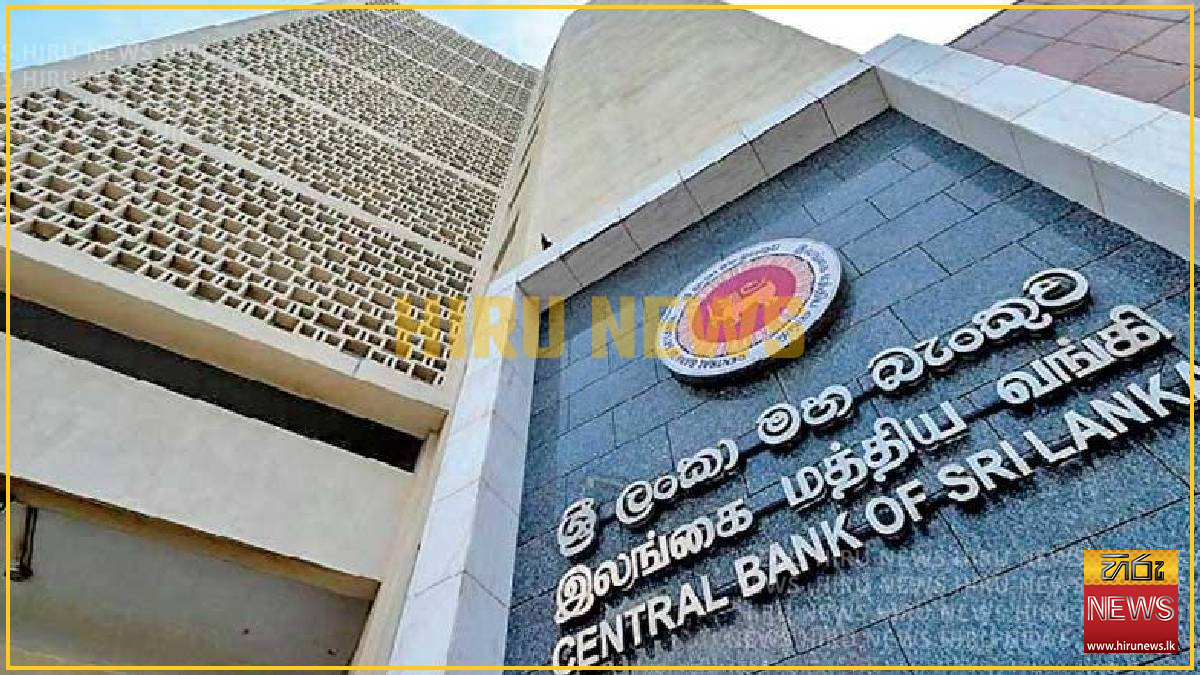


The domestic financial system preserved its stability through the first quarter of 2026 despite global and domestic headwinds stemming from escalating Middle East tensions and geopolitical fluidity, according to the Central Bank.
In its Finance Sector Performance in the First Quarter of 2026, the CBSL noted that broadly supportive macrofinancial conditions prevailed during the quarter, characterised by an acceleration in credit growth.
Total financing extended by Licensed Banks and Finance Companies expanded, led primarily by robust demand from the private sector, while credit allocations to the Government and public corporations experienced a minor moderation.
The sovereign-bank nexus persisted, reflecting entrenched operational interlinkages between the state and banking institutions.
Financial intermediation metrics strengthened as the banking sector credit-to-deposit ratio climbed past 70% for the first time in three years, signalling a recovery in credit deployment.
However, the credit-to-GDP gap extended further into positive territory, highlighting a potential accumulation of systemic risk.
Looking ahead, macrofinancial conditions face potential strain from heightened international headwinds, including elevated energy and commodity prices, exchange rate volatility, adverse weather patterns, and rising inflationary trends.
Sustaining fiscal consolidation, reinforcing external capital buffers, and maintaining vigilant oversight of emerging risks remain essential to protect overall system stability.
Commercial bank lending growth accelerated by 24.4% year-on-year at the end of the first quarter of 2026, compared to the 7.9% growth recorded over the corresponding period in 2025.
This credit expansion, coupled with a nominal drop in non-performing loans, reduced the sector's Stage 3 loans ratio to 9.4% from the previous year's 12.7%.
Concurrently, the impairment coverage ratio for Stage 3 loans improved to 59.5% from 54.1%.
This heightened lending velocity drew down liquidity cushions, causing the Rupee and all-currency liquidity coverage ratios to ease to 267.9% and 234.7%, respectively, down from 342.4% and 310.6% in the prior year, though both metrics finished comfortably above the 100% regulatory baseline.
Higher operating costs pulled post-tax profits down by a slight 7.1% year-on-year, lowering the return on equity to 14.8% and return on assets to 2.2%.
The total capital adequacy ratio moderated to 18.3% from 19.4% due to an increase in risk-weighted assets from credit expansion, remaining well above minimum statutory thresholds.
The recent depreciation of the Sri Lankan rupee alongside higher secondary market yields may place further pressure on bank capital via asset revaluation, while digital transaction security and potential exposure to cyber incidents require ongoing administrative vigilance.
Finance companies maintained their upward credit momentum during the quarter, driven heavily by vehicle and gold-backed financing.
Overall sector credit jumped 52.4% year-on-year, compared to 26.9% in the first quarter of 2025, with vehicle lending rising 52.8% and gold-backed loans expanding by 69.2%.
Future expansion in vehicle lending may face cooling pressures from higher import duties, exchange rate depreciation, tighter monetary policies, and macroprudential restrictions.
The sector's Stage 3 loans ratio dropped to 4.4% from 8.6%, though the corresponding impairment coverage ratio softened slightly to 45.1% from 47.4%.
Total liquid assets rose 9.7% year-on-year, keeping sector liquidity well above minimum regulatory requirements. Post-tax profits for the 2025/26 financial year climbed 28.8% year-on-year, lifting the return on equity to 17.2% while the return on assets softened slightly to 6.2%. The total capital adequacy ratio adjusted downwards to 18.4% from 20.9% as a direct consequence of the rapid credit expansion.
Domestic financial markets experienced visible pressure during the first five months of 2026, influenced by external vulnerabilities, regional geopolitical friction, and speculative trading behaviour.
The Colombo Stock Exchange witnessed higher volatility and dampened investor sentiment, leading the All Share Price Index to finish down 1.4%, while the S&P SL20 Index flattened with a nominal 0.03% gain by the end of May 2026.
Market operations encountered variable liquidity conditions and sustained foreign capital withdrawals driven by global risk aversion, domestic inflation expectations, and external shocks, culminating in net foreign equity outflows of USD 103.4 million.
Government securities experienced upward pressure on yields from March 2026 onward, a trend reinforced by a policy interest rate hike in late May 2026.
Secondary market trade volumes slowed moderately, and foreign inflows remained uneven amid international uncertainty.
The Sri Lankan rupee experienced ongoing volatility in the foreign exchange market due to external pressures, while the domestic money market maintained a liquidity surplus, prompting the Central Bank to absorb excess funds through open market operations.
The Central Bank of Sri Lanka implemented targeted stability measures on May 25, 2026, in response to the sharp expansion in collateral-based lending and asset-price volatilities caused by geopolitical and exchange rate fluctuations.
A maximum Loan-to-Value (LTV) ratio of 70% was established for credit facilities backed by gold, while existing maximum LTV caps on motor vehicle credit financing were tightened by 10 percentage points.
Latest News
GTA 6 gameplay videos, full map leaked

Taxi passengers urged to take safety precautions

Ebola cases in Congo exceed 5,000, government data shows

Oil extends climb on prolonged Hormuz export uncertainty

Sampath Bank partners with GV Auto on EV financing

Hemas makes first overseas acquisition with $16.2m Kenya deal

India’s buffalo meat exports cross 5 billion dollars as global demand climbs

Wife of former Cabinet Minister dies following tragic incident

Three Port City firms set for strategic enterprise status

Charles Spencer to tell Diana’s story in new book