




Share Post


Through September 14, 2026, ordinary passport holders from 93 countries and territories can enter Thailand without a visa for stays of up to 60 days.
Starting September 15, 2026, the visa exemption scheme introduced in July 2024 will be replaced by a revised system. Under the new rules, 60 countries and territories will qualify for visa-free stays of up to 30 days, alongside separate bilateral agreements and other specific arrangements.
As VisasNews reported when the reform was officially confirmed, the changes will not simply shorten the visa-free stay from 60 to 30 days. For 21 nationalities, visa-free entry will disappear altogether.
Thailand: 21 nationalities are being removed from the visa exemption scheme
Starting September 15, 2026, ordinary passport holders from the following 21 countries will need to obtain a visa before traveling to Thailand for tourism:
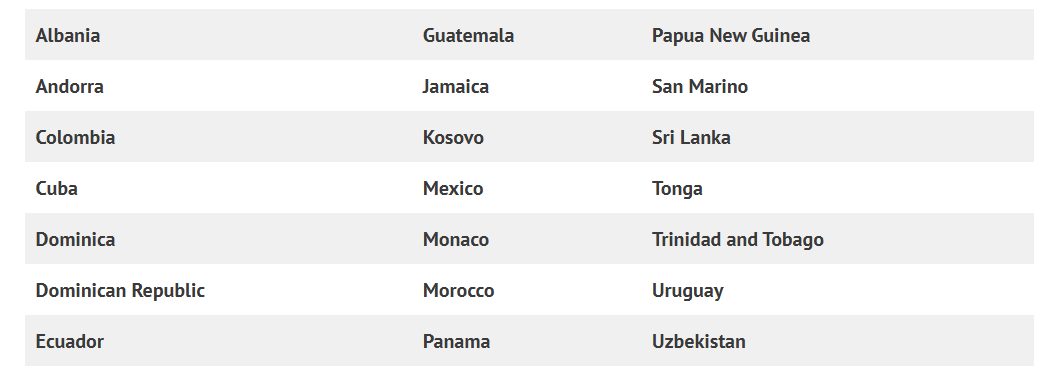
All of these countries are currently included among the 93 nationalities eligible for Thailand’s 60-day visa exemption, but they are no longer included in the new system taking effect September 15, 2026.
The reduction from 93 to 60 countries does not, however, mean that every nationality removed from the main list will suddenly require a visa.
Some travelers will continue to qualify for visa-free entry under separate bilateral agreements, including nationals of China, Hong Kong, Kazakhstan, Laos, Macao, Mongolia, Russia and Vietnam. Other countries also have bilateral arrangements allowing visa-free stays of varying lengths. Mauritius, meanwhile, will benefit from a new 15-day tourist visa exemption.
Once these separate arrangements are taken into account, 21 nationalities that are currently allowed to stay in Thailand visa-free for up to 60 days will need a visa for entries made on or after September 15, 2026.
The e-Visa will become the main option for tourist travel to Thailand
For affected travelers, the reform does not necessarily mean a return to traditional in-person visa applications at Thai embassies or consulates.
Since January 1, 2025, Thailand has expanded its Thai e-Visa system worldwide across its diplomatic network. Foreign nationals can submit their applications online while outside Thailand through the Thai Ministry of Foreign Affairs’ official portal: thaievisa.go.th.
The process involves creating an account, completing the online application, uploading the required supporting documents, paying the applicable fee when online payment is available, and submitting the application for review by the relevant Thai authorities.
Once approved, the e-Visa confirmation is sent by email. Thailand’s official e-Visa portal states that travelers can print the document and present it to their airline and Thai immigration authorities when required.
Exact requirements, supporting documents, visa fees and processing times may vary depending on where the traveler applies and which Thai diplomatic mission is responsible for processing the application.
Thailand’s TR tourist visa allows stays of up to 60 days
For a standard leisure trip, the single-entry TR Tourist Visa is one of the main options available to travelers who will no longer qualify for visa-free entry.
The Royal Thai Embassy in London states that the single-entry TR Tourist Visa is valid for three months from the date of issuance and allows travelers to stay in Thailand for up to 60 days from the date of entry. A further 30-day extension may be requested from Thai immigration authorities, currently subject to a fee of 1,900 baht.
Because it is a single-entry visa, travelers who leave Thailand will generally need a new visa to re-enter if they are no longer eligible for visa-free entry.
For travelers planning several trips to Thailand, the country also offers a Multiple-Entry Tourist Visa (METV). The METV is valid for six months and allows stays of up to 60 days per entry, provided the applicant meets the applicable eligibility requirements.
Travelers entering before September 15 can still benefit from the current rules
The key date is the date of entry into Thailand.
The Thai Ministry of Foreign Affairs has clarified that foreign nationals already in Thailand under the current rules, as well as those who enter before the reform takes effect, may retain the period of stay granted to them upon arrival.
A Colombian, Moroccan, Mexican or other affected national who enters Thailand no later than September 14, 2026, can therefore still be admitted under the current 60-day visa exemption scheme.
The new visa requirement will apply to entries made on or after September 15, 2026.
The four Ministry of Interior regulations implementing the reform were published in Thailand’s Royal Gazette on August 31, 2026, and are scheduled to take effect 15 days after publication.
Visa or visa-free, the TDAC is still required
Obtaining an e-Visa does not remove the requirement to complete the Thailand Digital Arrival Card (TDAC).
Foreign travellers must continue to complete this electronic arrival form before entering Thailand.
Thai authorities have emphasised that the TDAC applies to non-Thai nationals regardless of whether they are entering the country with a visa or under a visa exemption.
-visasnews.com
Starting September 15, 2026, the visa exemption scheme introduced in July 2024 will be replaced by a revised system. Under the new rules, 60 countries and territories will qualify for visa-free stays of up to 30 days, alongside separate bilateral agreements and other specific arrangements.
As VisasNews reported when the reform was officially confirmed, the changes will not simply shorten the visa-free stay from 60 to 30 days. For 21 nationalities, visa-free entry will disappear altogether.
Thailand: 21 nationalities are being removed from the visa exemption scheme
Starting September 15, 2026, ordinary passport holders from the following 21 countries will need to obtain a visa before traveling to Thailand for tourism:
All of these countries are currently included among the 93 nationalities eligible for Thailand’s 60-day visa exemption, but they are no longer included in the new system taking effect September 15, 2026.
The reduction from 93 to 60 countries does not, however, mean that every nationality removed from the main list will suddenly require a visa.
Some travelers will continue to qualify for visa-free entry under separate bilateral agreements, including nationals of China, Hong Kong, Kazakhstan, Laos, Macao, Mongolia, Russia and Vietnam. Other countries also have bilateral arrangements allowing visa-free stays of varying lengths. Mauritius, meanwhile, will benefit from a new 15-day tourist visa exemption.
Once these separate arrangements are taken into account, 21 nationalities that are currently allowed to stay in Thailand visa-free for up to 60 days will need a visa for entries made on or after September 15, 2026.
The e-Visa will become the main option for tourist travel to Thailand
For affected travelers, the reform does not necessarily mean a return to traditional in-person visa applications at Thai embassies or consulates.
Since January 1, 2025, Thailand has expanded its Thai e-Visa system worldwide across its diplomatic network. Foreign nationals can submit their applications online while outside Thailand through the Thai Ministry of Foreign Affairs’ official portal: thaievisa.go.th.
The process involves creating an account, completing the online application, uploading the required supporting documents, paying the applicable fee when online payment is available, and submitting the application for review by the relevant Thai authorities.
Once approved, the e-Visa confirmation is sent by email. Thailand’s official e-Visa portal states that travelers can print the document and present it to their airline and Thai immigration authorities when required.
Exact requirements, supporting documents, visa fees and processing times may vary depending on where the traveler applies and which Thai diplomatic mission is responsible for processing the application.
Thailand’s TR tourist visa allows stays of up to 60 days
For a standard leisure trip, the single-entry TR Tourist Visa is one of the main options available to travelers who will no longer qualify for visa-free entry.
The Royal Thai Embassy in London states that the single-entry TR Tourist Visa is valid for three months from the date of issuance and allows travelers to stay in Thailand for up to 60 days from the date of entry. A further 30-day extension may be requested from Thai immigration authorities, currently subject to a fee of 1,900 baht.
Because it is a single-entry visa, travelers who leave Thailand will generally need a new visa to re-enter if they are no longer eligible for visa-free entry.
For travelers planning several trips to Thailand, the country also offers a Multiple-Entry Tourist Visa (METV). The METV is valid for six months and allows stays of up to 60 days per entry, provided the applicant meets the applicable eligibility requirements.
Travelers entering before September 15 can still benefit from the current rules
The key date is the date of entry into Thailand.
The Thai Ministry of Foreign Affairs has clarified that foreign nationals already in Thailand under the current rules, as well as those who enter before the reform takes effect, may retain the period of stay granted to them upon arrival.
A Colombian, Moroccan, Mexican or other affected national who enters Thailand no later than September 14, 2026, can therefore still be admitted under the current 60-day visa exemption scheme.
The new visa requirement will apply to entries made on or after September 15, 2026.
The four Ministry of Interior regulations implementing the reform were published in Thailand’s Royal Gazette on August 31, 2026, and are scheduled to take effect 15 days after publication.
Visa or visa-free, the TDAC is still required
Obtaining an e-Visa does not remove the requirement to complete the Thailand Digital Arrival Card (TDAC).
Foreign travellers must continue to complete this electronic arrival form before entering Thailand.
Thai authorities have emphasised that the TDAC applies to non-Thai nationals regardless of whether they are entering the country with a visa or under a visa exemption.
-visasnews.com
Latest News
North Korean defence minister criticises joint military drills by US, Japan and South Korea
Local
07 September 2026

US imports more Congo copper as consumer acceptance grows
Local
07 September 2026

North Korea and Russia open their first road bridge, a symbol of expanding ties
Local
07 September 2026

ICE crackdown laid bare at Venice festival documentary
Local
07 September 2026

King Charles reconfirms Harry and Meghan remain non-working royals
Local
07 September 2026

Special traffic plan in Colombo for visit of Indian Defence Minister Rajnath Singh
Local
07 September 2026

Moors Sports Club and SSC qualify for Major Clubs Limited Over Tournament final
Local
07 September 2026

Remanded MP Namal Rajapaksa granted permission to attend Parliament tomorrow
Local
07 September 2026

Details emerge regarding murder of 'Kos Malli''s brother-in-law
Local
07 September 2026

Special gazette issued to manage visitor access to Nildiya Pokuna in Ravana Ella Sanctuary
Local
07 September 2026