



Share Post


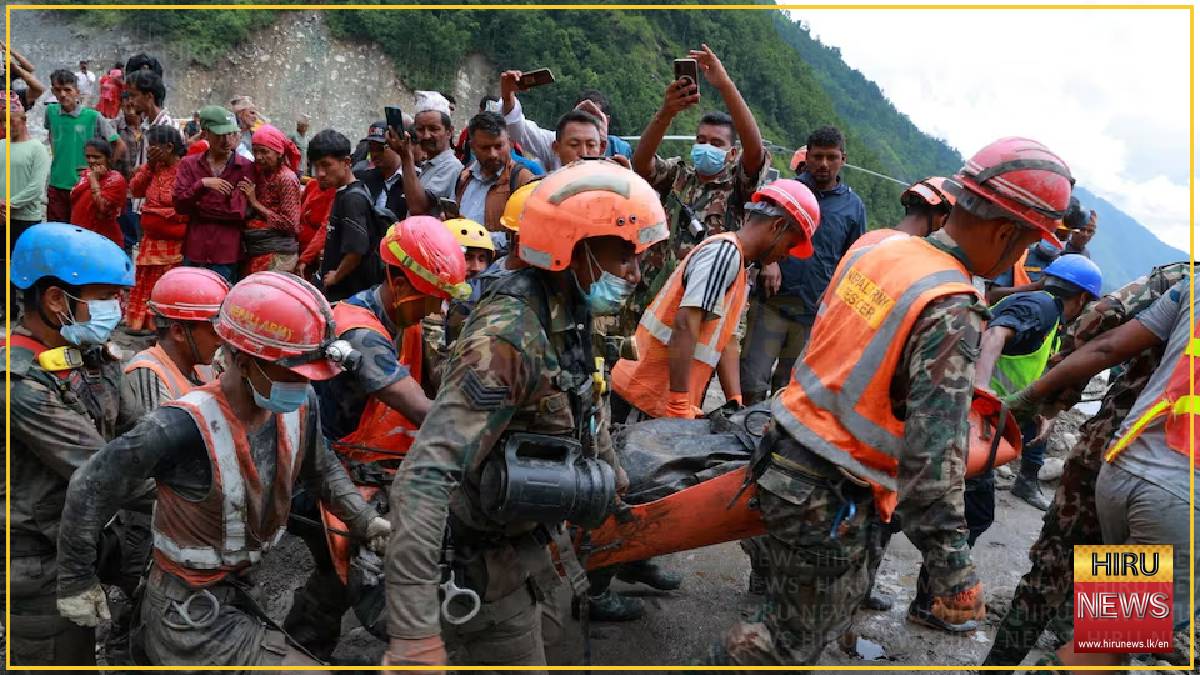
Rescuers in Nepal are focusing on three hydropower project tunnels where they believe dozens of workers could be trapped, authorities said on Tuesday, two weeks after a devastating flood killed hundreds and left thousands missing in the Himalayan country and in neighbouring China's Tibet region.
At least 11 hydropower projects were engulfed when a glacier collapsed into a river on the Nepal-China border on August 26, burying the entrances to the tunnels of these projects under debris and mud and cutting off those trapped inside.
"Our search operation is focussed on finding survivors, including in tunnels. Our bigger focus is on the Chilime hydroelectric project, where we believe people are trapped, because there was a canteen, residency and arrangements for food," Dharma Raj Upreti, chief of the country's disaster authority, told Reuters.
Teams were also focused on tunnels of the Upper Trishuli 3A and 3B projects, which are linked by an interconnected tunnel, said Upreti. "Oxygen has been supplied to these tunnels through pipes and we have sent new equipment needed for the operation (to open a passage into them)," he said.
"We know our responsibility and its sensitivity. We are translating the humanitarian spirit of the Nepali people into practice through the search and rescue operation," he said in a social media post late on Monday.
About 121 of a total 900 people missing from the hydroelectric projects could have been trapped in these tunnels, army rescuers said on Monday, while others may have been working elsewhere at the power plants but not inside the vast network of tunnels.
In recent days, search teams have rescued four people, including a Chinese national who was pulled from a tunnel on Saturday. The others were two hydropower workers rescued from another tunnel on Friday and a Nepali woman pulled out from her buried house on Saturday.
At least 1,399 people have been killed by the mudslide and more than 5,400 are missing in Nepal and Tibet. The toll includes 43 people who died on the Chinese side and 519 missing there, as of Saturday.
None of the bodies retrieved in Tibet were those of foreign nationals, China's state news agency Xinhua reported on Tuesday.
Both China and Nepal have said climate change was responsible for the glacier collapse which triggered the flooding.
-Reuters
At least 11 hydropower projects were engulfed when a glacier collapsed into a river on the Nepal-China border on August 26, burying the entrances to the tunnels of these projects under debris and mud and cutting off those trapped inside.
"Our search operation is focussed on finding survivors, including in tunnels. Our bigger focus is on the Chilime hydroelectric project, where we believe people are trapped, because there was a canteen, residency and arrangements for food," Dharma Raj Upreti, chief of the country's disaster authority, told Reuters.
Teams were also focused on tunnels of the Upper Trishuli 3A and 3B projects, which are linked by an interconnected tunnel, said Upreti. "Oxygen has been supplied to these tunnels through pipes and we have sent new equipment needed for the operation (to open a passage into them)," he said.
"We know our responsibility and its sensitivity. We are translating the humanitarian spirit of the Nepali people into practice through the search and rescue operation," he said in a social media post late on Monday.
About 121 of a total 900 people missing from the hydroelectric projects could have been trapped in these tunnels, army rescuers said on Monday, while others may have been working elsewhere at the power plants but not inside the vast network of tunnels.
In recent days, search teams have rescued four people, including a Chinese national who was pulled from a tunnel on Saturday. The others were two hydropower workers rescued from another tunnel on Friday and a Nepali woman pulled out from her buried house on Saturday.
At least 1,399 people have been killed by the mudslide and more than 5,400 are missing in Nepal and Tibet. The toll includes 43 people who died on the Chinese side and 519 missing there, as of Saturday.
None of the bodies retrieved in Tibet were those of foreign nationals, China's state news agency Xinhua reported on Tuesday.
Both China and Nepal have said climate change was responsible for the glacier collapse which triggered the flooding.
-Reuters
Latest News
Electronic revenue license services suspended from September 25
Local
23 September 2026

Fire breaks out at computer shop in Welisara
Local
23 September 2026
Heavy rain, strong winds expected across Sri Lanka
Local
23 September 2026

One Dead, Two Injured in Soysapura Housing Scheme Fire
Local
23 September 2026
Businessman remanded over alleged $24.85bn illicit outflow
Local
23 September 2026

Kurunegala Ridi Viharaya set for tourism development
Local
23 September 2026
Sri Lanka Customs goes paperless from October 1
Local
23 September 2026

Religious leaders unite for Anojan’s release
Local
23 September 2026

Premadasa Says 22nd Amendment Threatens Democracy
Local
23 September 2026

New energy rules put 20,000 solar jobs at risk
Local
23 September 2026