Share Post


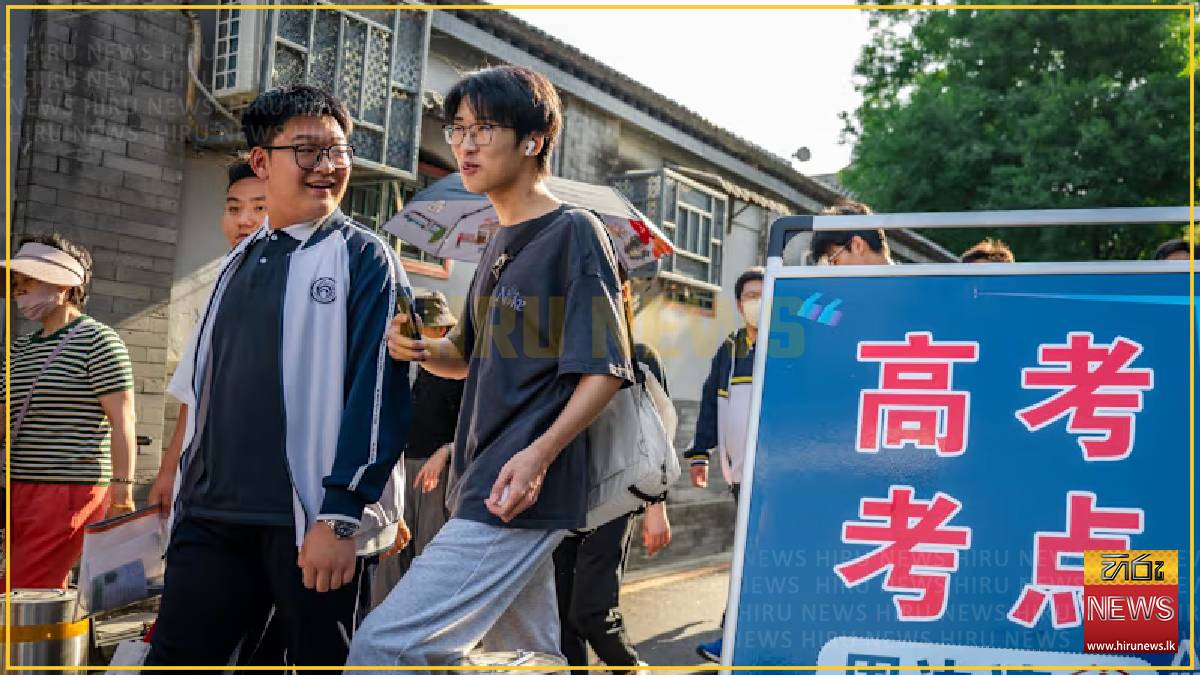
Students in several Chinese provinces will have their spectacles checked before sitting for China’s national college entrance examination this year, as authorities tighten scrutiny of smart glasses amid concerns over high-tech cheating.
The Ministry of Education, together with several provincial authorities, has issued a series of reminders and rules ahead of the high-stakes exam, known as gaokao, which begins on Sunday (Jun 7).
Close to 13 million candidates have registered to sit for the gaokao this year. The test is widely seen as pivotal in shaping students’ educational and career prospects.
In Guangdong, education authorities said on Tuesday that candidates wearing or carrying glasses must remove them for inspection before entering examination rooms.
Shanghai has issued similar guidance. Students who wear prescription glasses have been urged to cooperate with invigilators during pre-examination checks, state-owned China Daily reported.
Authorities in Inner Mongolia have instructed students who normally wear smart glasses to switch to conventional prescription glasses before sitting for the gaokao, China Daily reported. Hebei and Guizhou have introduced similar requirements.
China’s education ministry said in a notice on WeChat on Tuesday that bringing any device capable of sending or receiving information into examination venues constitutes cheating. The list includes mobile phones, smartwatches or bracelets, and smart glasses.
It cited a case in 2022, where a student bypassed security checks and brought a mobile phone into the examination hall. The student then photographed the test paper and sent it to a chat group to seek answers.
The ministry said security measures at gaokao test centres have been upgraded, with many venues now equipped with smart gates and manual screening checks to detect barred devices. It reminded candidates to strictly abide by examination rules.
The heightened scrutiny comes as smart glasses gain traction among Chinese businesses and consumers, with the devices typically featuring cameras, voice assistants and other connected functions.
Chinese tech giants such as Alibaba, Huawei and Xiaomi, as well as state-owned telecoms operator China Unicom, have launched their own smart-glasses products.
According to state news agency Xinhua, smart glasses were included in China's national subsidy programme for the first time in January, offering buyers a 15 per cent discount on purchases, capped at 500 yuan (US$73.80).
-Channel News Asia
The Ministry of Education, together with several provincial authorities, has issued a series of reminders and rules ahead of the high-stakes exam, known as gaokao, which begins on Sunday (Jun 7).
Close to 13 million candidates have registered to sit for the gaokao this year. The test is widely seen as pivotal in shaping students’ educational and career prospects.
In Guangdong, education authorities said on Tuesday that candidates wearing or carrying glasses must remove them for inspection before entering examination rooms.
Shanghai has issued similar guidance. Students who wear prescription glasses have been urged to cooperate with invigilators during pre-examination checks, state-owned China Daily reported.
Authorities in Inner Mongolia have instructed students who normally wear smart glasses to switch to conventional prescription glasses before sitting for the gaokao, China Daily reported. Hebei and Guizhou have introduced similar requirements.
China’s education ministry said in a notice on WeChat on Tuesday that bringing any device capable of sending or receiving information into examination venues constitutes cheating. The list includes mobile phones, smartwatches or bracelets, and smart glasses.
It cited a case in 2022, where a student bypassed security checks and brought a mobile phone into the examination hall. The student then photographed the test paper and sent it to a chat group to seek answers.
The ministry said security measures at gaokao test centres have been upgraded, with many venues now equipped with smart gates and manual screening checks to detect barred devices. It reminded candidates to strictly abide by examination rules.
The heightened scrutiny comes as smart glasses gain traction among Chinese businesses and consumers, with the devices typically featuring cameras, voice assistants and other connected functions.
Chinese tech giants such as Alibaba, Huawei and Xiaomi, as well as state-owned telecoms operator China Unicom, have launched their own smart-glasses products.
According to state news agency Xinhua, smart glasses were included in China's national subsidy programme for the first time in January, offering buyers a 15 per cent discount on purchases, capped at 500 yuan (US$73.80).
-Channel News Asia
Latest News
Messi v Ronaldo: A rivalry that changed football
Local
05 June 2026

Laugfs gas prices unchanged for June
Local
05 June 2026
US visa rejections, war on Iran keep fans away from World Cup
Local
05 June 2026

FIFA regrets free ticket error, demands fans pay
Local
05 June 2026
Israeli strikes continue on Lebanon as displacement rises
Local
05 June 2026

US passes $70bn new funds for ICE, Border Patrol
Local
05 June 2026

Cuba under US pressure as sanctions target Prez Díaz-Canel
Local
05 June 2026

Germany probes into Boeing 787 'collapse' in Frankfurt
Local
05 June 2026

Iraq aim to shock rivals at 2026 World Cup
Local
05 June 2026

Trump 'dozing off' at White House sparks debate
Local
05 June 2026