Share Post


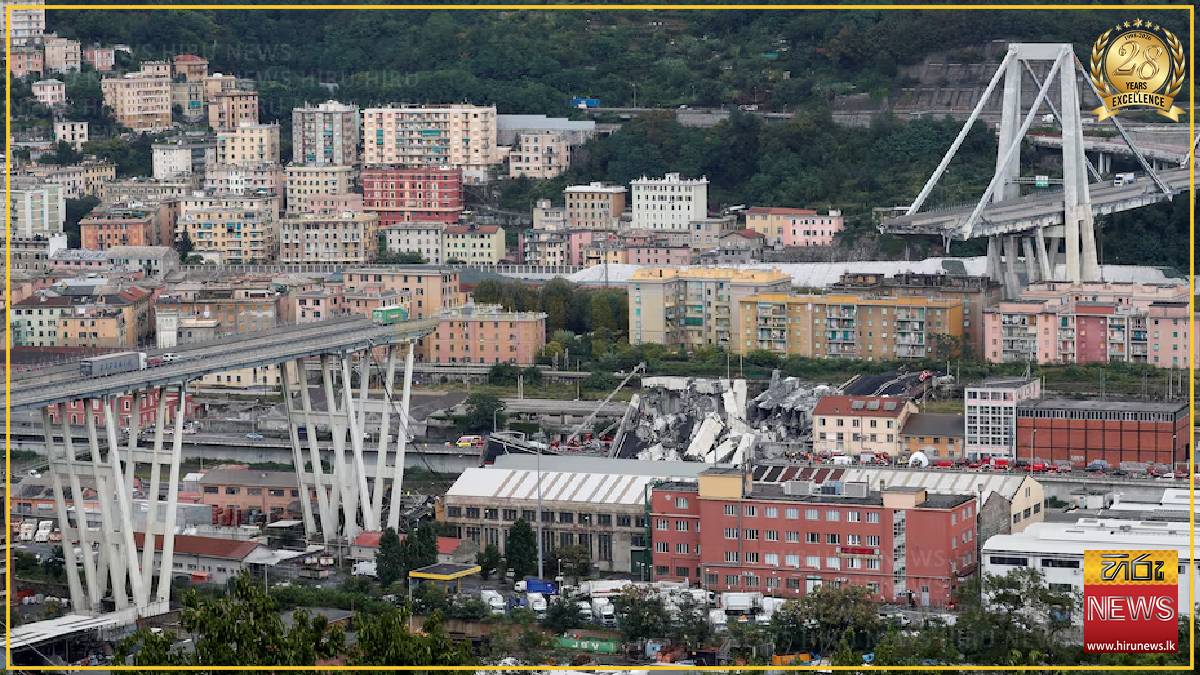
On the morning of August 14, 2018, Andrea Cerulli, 48, was driving to work at the port of Voltri, on the far western outskirts of the Italian port city of Genoa, when the Morandi motorway bridge collapsed beneath him.
His car was among the last to plunge from the viaduct and he was among 43 people killed in one of Italy's worst infrastructure disasters in decades.
In the ensuing eight years, Cerulli's son Cesare has completed high school, passed his final exams and is set to start university this autumn. He was 10 when his father died. He is now an adult.
On July 16, Cesare and dozens of other relatives of the victims will return to the Genoa courtroom where judges are due to deliver a first-instance verdict in the trial over the collapse, after 284 hearings spread over almost four years.
The case has become both a search for accountability for the disaster and a symbol of the slow pace of justice in complex Italian criminal proceedings.
COLLAPSE ON EVE OF NATIONAL HOLIDAY
The collapse of the motorway bridge during a summer storm on the eve of a national holiday shocked Italy and triggered years of investigations into the management and maintenance of ageing infrastructure.
The disaster caused a dispute between holding company Atlantia, controlled by the Benetton family, and the then government that ended with the sale of Atlantia's controlling stake in motorway operator Autostrade per l'Italia.
Fifty-seven defendants, including former executives and managers of Autostrade and Atlantia, engineers from maintenance subsidiary Spea and former transport ministry officials, are on trial. They have all denied wrongdoing.
For the most serious accusations, Genoa prosecutors sought prison sentences ranging from two years and four months to 18-1/2 years. However, many of the lesser charges, such as forgery of documents, are already time-barred.
For victims' families, the wait has been agonising.
"I was on the beach in Calabria that morning, building sandcastles with my friends," Cesare told Reuters.
Only after returning to Genoa did his mother tell him that his father had died.
"I never even got the chance to say goodbye," he said.
Now approaching adulthood, he says he has never succumbed to thoughts of revenge.
"It is right that justice is done, for me, for everyone and for our country," he said.
WHAT WENT WRONG?
At the centre of the trial is a dispute over what caused the bridge to fail.
Prosecutors argue that years of inadequate maintenance, ignored warning signs and delayed safety work contributed to the collapse, alleging that vital work was postponed while profits continued to be generated and distributed.
Defence lawyers reject that theory. They argue that the disaster was caused by an original design defect in the bridge's stay cable number nine, the one that failed, and that no maintenance programme could have prevented the tragedy.
The opposing views have been aired over almost four years of proceedings. The trial opened in July 2022 and has involved technical evidence, engineering assessments and extensive courtroom testimony.
SLOW PACE OF CASE
Former Genoa deputy chief prosecutor Francesco Pinto, who oversaw the case for part of its journey, said that its duration reflected both the complexity of the evidence and broader problems within Italy's criminal justice system.
"This trial is almost a symptom of the structural crisis of criminal proceedings in Italy," Pinto told Reuters, adding that, in the best-case scenario, it will take another 18 months for the inevitable appeal trial and at least another year after that before the Supreme Court's final verdict.
Giovanni Paolo Accinni, a lawyer for former Atlantia chief executive Giovanni Castellucci, one of the main defendants, offered a different explanation.
Accinni argued that delays stemmed largely from the prosecutors' decision to conduct extensive pre-trial technical examinations into the cause of the collapse. According to the defence, much of that work then had to be revisited during the trial itself, lengthening proceedings.
For relatives, the legal arguments matter less than securing a clear judicial answer.
"If responsibilities are not clearly established, then as a country we have a serious problem," Egle Possetti, spokesperson for a committee representing victims' families, told Reuters.
-Reuters
His car was among the last to plunge from the viaduct and he was among 43 people killed in one of Italy's worst infrastructure disasters in decades.
In the ensuing eight years, Cerulli's son Cesare has completed high school, passed his final exams and is set to start university this autumn. He was 10 when his father died. He is now an adult.
On July 16, Cesare and dozens of other relatives of the victims will return to the Genoa courtroom where judges are due to deliver a first-instance verdict in the trial over the collapse, after 284 hearings spread over almost four years.
The case has become both a search for accountability for the disaster and a symbol of the slow pace of justice in complex Italian criminal proceedings.
COLLAPSE ON EVE OF NATIONAL HOLIDAY
The collapse of the motorway bridge during a summer storm on the eve of a national holiday shocked Italy and triggered years of investigations into the management and maintenance of ageing infrastructure.
The disaster caused a dispute between holding company Atlantia, controlled by the Benetton family, and the then government that ended with the sale of Atlantia's controlling stake in motorway operator Autostrade per l'Italia.
Fifty-seven defendants, including former executives and managers of Autostrade and Atlantia, engineers from maintenance subsidiary Spea and former transport ministry officials, are on trial. They have all denied wrongdoing.
For the most serious accusations, Genoa prosecutors sought prison sentences ranging from two years and four months to 18-1/2 years. However, many of the lesser charges, such as forgery of documents, are already time-barred.
For victims' families, the wait has been agonising.
"I was on the beach in Calabria that morning, building sandcastles with my friends," Cesare told Reuters.
Only after returning to Genoa did his mother tell him that his father had died.
"I never even got the chance to say goodbye," he said.
Now approaching adulthood, he says he has never succumbed to thoughts of revenge.
"It is right that justice is done, for me, for everyone and for our country," he said.
WHAT WENT WRONG?
At the centre of the trial is a dispute over what caused the bridge to fail.
Prosecutors argue that years of inadequate maintenance, ignored warning signs and delayed safety work contributed to the collapse, alleging that vital work was postponed while profits continued to be generated and distributed.
Defence lawyers reject that theory. They argue that the disaster was caused by an original design defect in the bridge's stay cable number nine, the one that failed, and that no maintenance programme could have prevented the tragedy.
The opposing views have been aired over almost four years of proceedings. The trial opened in July 2022 and has involved technical evidence, engineering assessments and extensive courtroom testimony.
SLOW PACE OF CASE
Former Genoa deputy chief prosecutor Francesco Pinto, who oversaw the case for part of its journey, said that its duration reflected both the complexity of the evidence and broader problems within Italy's criminal justice system.
"This trial is almost a symptom of the structural crisis of criminal proceedings in Italy," Pinto told Reuters, adding that, in the best-case scenario, it will take another 18 months for the inevitable appeal trial and at least another year after that before the Supreme Court's final verdict.
Giovanni Paolo Accinni, a lawyer for former Atlantia chief executive Giovanni Castellucci, one of the main defendants, offered a different explanation.
Accinni argued that delays stemmed largely from the prosecutors' decision to conduct extensive pre-trial technical examinations into the cause of the collapse. According to the defence, much of that work then had to be revisited during the trial itself, lengthening proceedings.
For relatives, the legal arguments matter less than securing a clear judicial answer.
"If responsibilities are not clearly established, then as a country we have a serious problem," Egle Possetti, spokesperson for a committee representing victims' families, told Reuters.
-Reuters
Latest News
Indian activist urged to give up hunger strike over exam leaks
Local
14 July 2026
Norway return home to heroes' welcome after World Cup exit
Local
14 July 2026

BMW cars recalled over fire hazard
Local
14 July 2026

Fashion designer Olivier Rousteing joins Rabanne
Local
14 July 2026

International Network of Elite Women launches Sri Lanka chapter
Local
14 July 2026

Peace in Ukraine unlikely to be reached soon
Local
14 July 2026

Bangkok governor pledges tougher pub regulations
Local
14 July 2026
Sydney daycare worker facing child abuse offences identity revealed
Local
14 July 2026
Two arrested following Fontainebleau forest fires
Local
14 July 2026

FTZMA calls for solutions to energy challenges facing exporters
Local
14 July 2026