Share Post


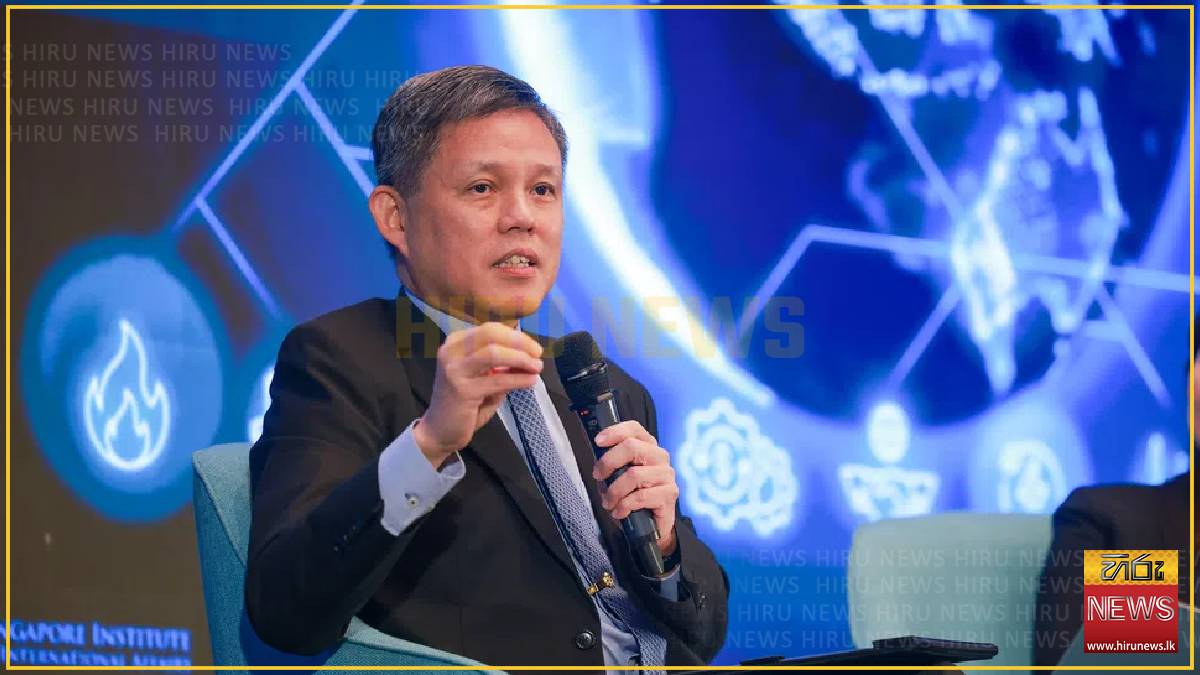
If countries in ASEAN work together on data sharing, energy and finance, it will provide a basis to propel the rest of the region’s economic activities, Defence Minister Chan Chun Sing said on August 3.
ASEAN must then overcome the temptation of data protectionism to allow for new business ideas to be generated in the region, he said.
Speaking at the Singapore Institute of International Affairs’ (SIIA) 18th ASEAN and Asia Forum held at the Parkroyal Collection Marina Bay, Chan described data as “the new lubricant for the future economy”.
“Every sector that we are interested in, that has tremendous potential for growth, will rely on the seamless flow of data,” he said.
Unlike oil, which as a perishable commodity means it is a zero-sum resource, Chan said data can be shared. The increase in the sharing of data between countries can result in more insights, products and services being generated, he said.
ASEAN has rich data due to the diversity of its population, but the question is if the grouping will be able to “overcome the tendency or the temptation (for) data protectionism” that will stand in the way of new insights for new business propositions, said Chan.
He was responding to a question from the audience on how ASEAN can preserve a stable, predictable and rules-based environment that enables businesses to invest and operate with confidence, during a dialogue titled Power and Agency Amidst Turmoil. It was moderated by Quah Ley Hoon, group chief corporate officer at CapitaLand Investment and a council member at SIIA.
He said regional coherence or continuity cannot happen without each country having it domestically, and that each of them has to work on it itself, before trying to support each other by having a bigger goal.
It is often said that by 2030, ASEAN might be the fourth-largest economic entity in the world, Chan noted. There is then a lot of potential for the grouping “to work together to achieve something more than the sum of our individual parts”.
On the energy front, quite a few ASEAN countries are potentially global renewable energy superpowers because they have energy sources like wind, geothermal and solar, said Chan.
ASEAN is aiming to achieve a fully integrated regional electricity grid by 2045 and Chan said that such a system will provide “money on the table” and potentially lower the cost of energy for everyone.
“Then the question is – will we be able to overcome some of the domestic political challenges for this vision of the more integrated ASEAN grid to come about?
“We today already have certain components of this, and we hope that we can continue to grow,” said Chan, citing the Lao PDR-Thailand-Malaysia-Singapore Power Integration Project.
On how countries can cooperate in finance, Chan spoke of the importance of better integration between the economies in the region that will allow for the movement of capital with minimum friction and transaction costs.
This does not have to be achieved through a common currency, but through a more integrated system, he said, citing how Singapore currently works with Australia and New Zealand.
“There is very little technical reason why we cannot achieve this within ASEAN, where we can help businesses to mobilise capital, grow capital (in) a more integrated financial system.”
At an earlier session at the same event, Transport Minister Jeffrey Siow spoke of some of the transport-related initiatives that Singapore hopes to advance within the region when the Republic takes over ASEAN chairmanship in 2027.
These include trying to liberalise air services across the region and looking at how ports can cooperate more. “The objective is always drive more integration, emphasise the size of the market, build connections, so that we are able to then put ourselves out in the world and provide a value proposition that is competitive with other regions in the world,” he added.
-The Strait Times
ASEAN must then overcome the temptation of data protectionism to allow for new business ideas to be generated in the region, he said.
Speaking at the Singapore Institute of International Affairs’ (SIIA) 18th ASEAN and Asia Forum held at the Parkroyal Collection Marina Bay, Chan described data as “the new lubricant for the future economy”.
“Every sector that we are interested in, that has tremendous potential for growth, will rely on the seamless flow of data,” he said.
Unlike oil, which as a perishable commodity means it is a zero-sum resource, Chan said data can be shared. The increase in the sharing of data between countries can result in more insights, products and services being generated, he said.
ASEAN has rich data due to the diversity of its population, but the question is if the grouping will be able to “overcome the tendency or the temptation (for) data protectionism” that will stand in the way of new insights for new business propositions, said Chan.
He was responding to a question from the audience on how ASEAN can preserve a stable, predictable and rules-based environment that enables businesses to invest and operate with confidence, during a dialogue titled Power and Agency Amidst Turmoil. It was moderated by Quah Ley Hoon, group chief corporate officer at CapitaLand Investment and a council member at SIIA.
He said regional coherence or continuity cannot happen without each country having it domestically, and that each of them has to work on it itself, before trying to support each other by having a bigger goal.
It is often said that by 2030, ASEAN might be the fourth-largest economic entity in the world, Chan noted. There is then a lot of potential for the grouping “to work together to achieve something more than the sum of our individual parts”.
On the energy front, quite a few ASEAN countries are potentially global renewable energy superpowers because they have energy sources like wind, geothermal and solar, said Chan.
ASEAN is aiming to achieve a fully integrated regional electricity grid by 2045 and Chan said that such a system will provide “money on the table” and potentially lower the cost of energy for everyone.
“Then the question is – will we be able to overcome some of the domestic political challenges for this vision of the more integrated ASEAN grid to come about?
“We today already have certain components of this, and we hope that we can continue to grow,” said Chan, citing the Lao PDR-Thailand-Malaysia-Singapore Power Integration Project.
On how countries can cooperate in finance, Chan spoke of the importance of better integration between the economies in the region that will allow for the movement of capital with minimum friction and transaction costs.
This does not have to be achieved through a common currency, but through a more integrated system, he said, citing how Singapore currently works with Australia and New Zealand.
“There is very little technical reason why we cannot achieve this within ASEAN, where we can help businesses to mobilise capital, grow capital (in) a more integrated financial system.”
At an earlier session at the same event, Transport Minister Jeffrey Siow spoke of some of the transport-related initiatives that Singapore hopes to advance within the region when the Republic takes over ASEAN chairmanship in 2027.
These include trying to liberalise air services across the region and looking at how ports can cooperate more. “The objective is always drive more integration, emphasise the size of the market, build connections, so that we are able to then put ourselves out in the world and provide a value proposition that is competitive with other regions in the world,” he added.
-The Strait Times
Latest News
Rithu Akarsha refutes allegations, vows legal action
Local
03 August 2026

Sri Lanka launches dedicated lane for motorcycles
Local
03 August 2026
Threat to oil tankers in Middle East worst since start of Iran war, analysts say
Local
03 August 2026
Sunshine Holdings to strengthen its digital DNA
Local
03 August 2026

Manchester United women's team part ways with coach Skinner ahead of new season
Local
03 August 2026

Scotland v UAE ODI washed out at Forthill
Local
03 August 2026

England midfielder Henderson joins Chelsea
Local
03 August 2026

Rhine falls to record low levels as drought strains Europe's rivers
Local
03 August 2026
Michigan reports two deaths in ongoing cyclosporiasis outbreak
Local
03 August 2026

Trump returns to pessimistic view of diplomacy after saying Iran talks would happen today
Local
03 August 2026