


Share Post


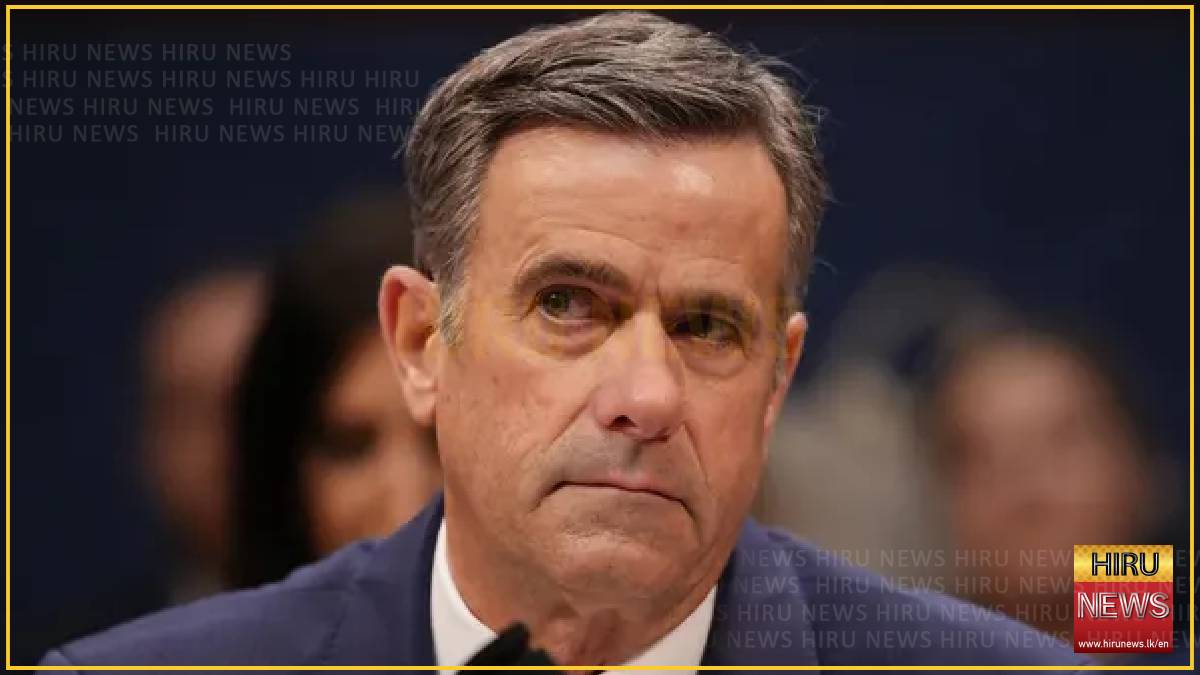
Donald Trump has downplayed a visit to Moscow by the CIA director, John Ratcliffe, as “semi-routine” after he turned up in the Russian capital unannounced, triggering a wave of speculation about the reasons for his trip.
Ratcliffe was reported to have flown to Moscow on a government transport plane on Tuesday in a rare visit after taking off from the Andrews air force base in Maryland.
The White House, CIA, Pentagon and the US air force all declined to comment on the visit, which was confirmed on Wednesday by a Kremlin spokesperson, Dimitry Peskov.
Interviewed by the conservative radio host Glenn Beck, Trump poured cold water on speculation that Ratcliffe had travelled in response to fears that Vladimir Putin, the Russian president, was planning to “test Nato resolve” or to win Moscow’s cooperation for intensified US sanctions on Iran.
“None of the above,” the US president said in response to Beck, who referred to the speculation as “crazy”.
“He’s there, you know, very sort of semi-routine. I hate to disappoint people. We would like to see the war with Ukraine end,” Trump said.
“John Ratcliffe is a fantastic guy. He’s the head of the CIA, and he is not in there for any of the things that you said. Now something may come … out of it. We’re working very hard to get that war ended, and frankly, they both want to see it ended at this point.”
On Wednesday, the Wall Street Journal reported, citing people briefed on the visit, that the reason for the spy chief’s surprise visit was to warn Russia not to attack Nato countries.
Ratcliffe’s visit was the first from a CIA director since his predecessor Bill Burns travelled to Moscow in November 2021 to warn Putin of the consequences of attacking Ukraine.
The Russian leader went ahead with the attack regardless in February of the following year.
Trump’s efforts to end the war – which he once vowed to bring to a conclusion on “day one” of his second presidency – have proven unsuccessful, despite his friendly personal relations with Putin.
Peskov, the Kremlin spokesperson, said Ratcliffe did not meet Putin during his visit.
Washington and Moscow have found themselves on opposite sides following Trump’s decision last February to go to war with Iran, with Russian satellite technology said to have been used to help Iranian forces with precise targeting of US and allied bases in the Gulf and beyond.
With military hostilities at an impasse, the US treasury department this week unveiled a new program of economic warfare against the Tehran regime involving secondary sanctions against countries that trade with it.
To be effective, it would need the cooperation of allies of Iran such as Russia and China, experts say.
Peskov did not give a reason for Ratcliffe’s visit, but described forecasts that it would lead to an upturn in US-Russian relations as “premature”, the Washington Post reported.
“Contacts through intelligence-service channels are in themselves a positive phenomenon, a positive process. These contacts often continue even in the most difficult moments of bilateral relations,” Peskov told reporters. “But whether this will affect, on the whole, the process of bringing our bilateral relations out of the deep crisis they are in – it’s premature to say at this point.”
In recent days, Ukraine has targeted Russia’s energy infrastructure and online retail facilities in long-distance strikes, while Russia has intensified drone and missile attacks on Kyiv.
-The Guardian
Ratcliffe was reported to have flown to Moscow on a government transport plane on Tuesday in a rare visit after taking off from the Andrews air force base in Maryland.
The White House, CIA, Pentagon and the US air force all declined to comment on the visit, which was confirmed on Wednesday by a Kremlin spokesperson, Dimitry Peskov.
Interviewed by the conservative radio host Glenn Beck, Trump poured cold water on speculation that Ratcliffe had travelled in response to fears that Vladimir Putin, the Russian president, was planning to “test Nato resolve” or to win Moscow’s cooperation for intensified US sanctions on Iran.
“None of the above,” the US president said in response to Beck, who referred to the speculation as “crazy”.
“He’s there, you know, very sort of semi-routine. I hate to disappoint people. We would like to see the war with Ukraine end,” Trump said.
“John Ratcliffe is a fantastic guy. He’s the head of the CIA, and he is not in there for any of the things that you said. Now something may come … out of it. We’re working very hard to get that war ended, and frankly, they both want to see it ended at this point.”
On Wednesday, the Wall Street Journal reported, citing people briefed on the visit, that the reason for the spy chief’s surprise visit was to warn Russia not to attack Nato countries.
Ratcliffe’s visit was the first from a CIA director since his predecessor Bill Burns travelled to Moscow in November 2021 to warn Putin of the consequences of attacking Ukraine.
The Russian leader went ahead with the attack regardless in February of the following year.
Trump’s efforts to end the war – which he once vowed to bring to a conclusion on “day one” of his second presidency – have proven unsuccessful, despite his friendly personal relations with Putin.
Peskov, the Kremlin spokesperson, said Ratcliffe did not meet Putin during his visit.
Washington and Moscow have found themselves on opposite sides following Trump’s decision last February to go to war with Iran, with Russian satellite technology said to have been used to help Iranian forces with precise targeting of US and allied bases in the Gulf and beyond.
With military hostilities at an impasse, the US treasury department this week unveiled a new program of economic warfare against the Tehran regime involving secondary sanctions against countries that trade with it.
To be effective, it would need the cooperation of allies of Iran such as Russia and China, experts say.
Peskov did not give a reason for Ratcliffe’s visit, but described forecasts that it would lead to an upturn in US-Russian relations as “premature”, the Washington Post reported.
“Contacts through intelligence-service channels are in themselves a positive phenomenon, a positive process. These contacts often continue even in the most difficult moments of bilateral relations,” Peskov told reporters. “But whether this will affect, on the whole, the process of bringing our bilateral relations out of the deep crisis they are in – it’s premature to say at this point.”
In recent days, Ukraine has targeted Russia’s energy infrastructure and online retail facilities in long-distance strikes, while Russia has intensified drone and missile attacks on Kyiv.
-The Guardian
Latest News
Coral bleaching occurring too frequently for reefs to recover, scientists say
Local
31 August 2026

G20 countries should consider more trade barriers on China to cut imbalances, Bessent says
Local
31 August 2026
Tom Holland becomes third highest-grossing actor of all time
Local
31 August 2026

Ukraine's former defence chief seeks US investment for defence tech fund, FT reports
Local
31 August 2026
Novak Djokovic suffers historic US Open first-round defeat
Local
31 August 2026
Roger Federer inducted into International Tennis Hall of Fame
Local
31 August 2026

Iran says it targeted US forces at UAE’s Al Minhad Air Base
Local
31 August 2026

Pacific forum set to open in Palau without several leaders
Local
31 August 2026

Before flood catastrophe, Nepal asked China for early warnings as risks mounted
Local
31 August 2026

Iran's Khamenei urges Gulf rulers in written message to confront 'real enemy'
Local
31 August 2026