



Share Post


Sri Lanka’s rubber industry has built its export foundation on value-added goods, pushing rubber and rubber-based product earnings past $1 billion in 2024.
During the first half of 2026, cumulative export earnings grew by 5.24% year-on-year to $64.35 million, while industrial and surgical glove shipments surged 22.95%.
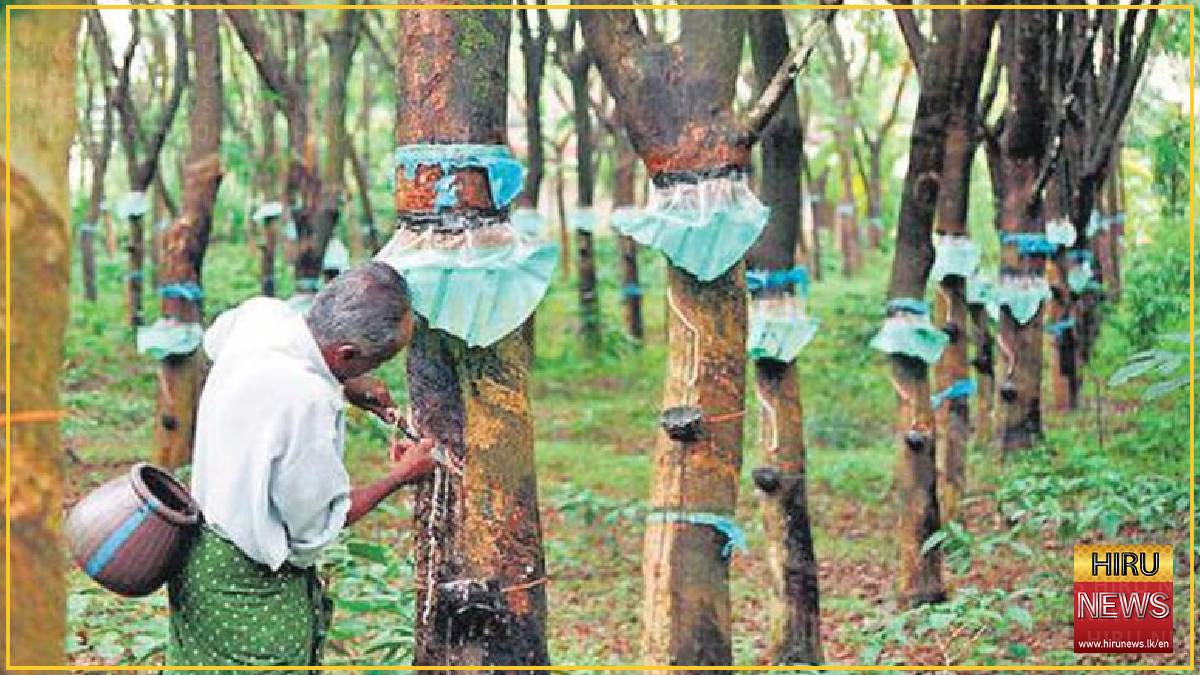
However, natural rubber production has plummeted significantly, forcing local manufacturers to rely heavily on imports. Smallholders account for over 70% of production, leaving the health of the cultivation sector critical to the industry's future.
A source from the Rubber Development Department noted that output grew in 2024 before dropping slightly in 2025. Key drivers of the decline include reduced tapping in late 2025, changing weather patterns, increased rainfall, shrinking cultivation areas, and a shrinking labour pool.
Furthermore, low replanting rates persist as growers increasingly pivot away from rubber toward alternative crops like oil palm.
Despite rising prices, severe tapper shortages have left many harvestable lands untapped.
The department has launched rehabilitation projects and provides subsidies and intercropping recommendations to help mitigate the long six-to-seven-year maturity period and high upfront costs, though commitment remains difficult to secure.
Compliance with the European Union Deforestation Regulation (EUDR) adds another layer of complexity, requiring smallholder land mapping in collaboration with the Survey Department.
With roughly one-third of exports heading to the US and 30-35% to Europe, local exporters remain vulnerable to US tariff shifts and strict European regulations.
Meanwhile, the National Export Development Plan 2026–2030 highlights critical structural constraints—such as high energy costs, outdated technology among smaller processors, and weak supply contracts—while identifying lucrative opportunities in EV-compatible tyres, medical rubber products, and FSC-certified goods across global markets.
Rubber, Plastic, and Related Industry Sector Advisory Committee member Ananda Caldera noted that domestic natural rubber production has dropped from 140–150 thousand tonnes to 70–75 thousand tonnes annually, forcing the country to import to sustain operations.
While Sri Lanka dominates the global solid tyre market and commands a strong presence in rubber gloves, the domestic raw material deficit constrains further value-added expansion and discourages new investments.
Caldera emphasised the urgency of cultivating rubber in non-traditional regions like Monaragala and Mannar to curb foreign exchange outflows.
Sri Lanka Shippers’ Council Chairman Trisherman Frink echoed these concerns, stating that the manufacturing sector requires roughly 150,000 metric tonnes annually.
With local production dropping to about 65,000 metric tonnes, the industry now imports over half its raw material requirements.
Frink underscored the need for government-backed expansion in non-traditional growing regions and stronger support structures for smallholders to overcome the prolonged gestation period of rubber trees, warning that import dependency will otherwise continue to spiral.
During the first half of 2026, cumulative export earnings grew by 5.24% year-on-year to $64.35 million, while industrial and surgical glove shipments surged 22.95%.
However, natural rubber production has plummeted significantly, forcing local manufacturers to rely heavily on imports. Smallholders account for over 70% of production, leaving the health of the cultivation sector critical to the industry's future.
A source from the Rubber Development Department noted that output grew in 2024 before dropping slightly in 2025. Key drivers of the decline include reduced tapping in late 2025, changing weather patterns, increased rainfall, shrinking cultivation areas, and a shrinking labour pool.
Furthermore, low replanting rates persist as growers increasingly pivot away from rubber toward alternative crops like oil palm.
Despite rising prices, severe tapper shortages have left many harvestable lands untapped.
The department has launched rehabilitation projects and provides subsidies and intercropping recommendations to help mitigate the long six-to-seven-year maturity period and high upfront costs, though commitment remains difficult to secure.
Compliance with the European Union Deforestation Regulation (EUDR) adds another layer of complexity, requiring smallholder land mapping in collaboration with the Survey Department.
With roughly one-third of exports heading to the US and 30-35% to Europe, local exporters remain vulnerable to US tariff shifts and strict European regulations.
Meanwhile, the National Export Development Plan 2026–2030 highlights critical structural constraints—such as high energy costs, outdated technology among smaller processors, and weak supply contracts—while identifying lucrative opportunities in EV-compatible tyres, medical rubber products, and FSC-certified goods across global markets.
Rubber, Plastic, and Related Industry Sector Advisory Committee member Ananda Caldera noted that domestic natural rubber production has dropped from 140–150 thousand tonnes to 70–75 thousand tonnes annually, forcing the country to import to sustain operations.
While Sri Lanka dominates the global solid tyre market and commands a strong presence in rubber gloves, the domestic raw material deficit constrains further value-added expansion and discourages new investments.
Caldera emphasised the urgency of cultivating rubber in non-traditional regions like Monaragala and Mannar to curb foreign exchange outflows.
Sri Lanka Shippers’ Council Chairman Trisherman Frink echoed these concerns, stating that the manufacturing sector requires roughly 150,000 metric tonnes annually.
With local production dropping to about 65,000 metric tonnes, the industry now imports over half its raw material requirements.
Frink underscored the need for government-backed expansion in non-traditional growing regions and stronger support structures for smallholders to overcome the prolonged gestation period of rubber trees, warning that import dependency will otherwise continue to spiral.
Latest News
Mother of Sri Lanka cricket legend Aravinda de Silva passes away
Local
14 September 2026

Sri Lanka showcases diversified tourism offerings at ATM
Local
14 September 2026

Sampath Bank, Lanka’s ‘Best Bank for Corporate Responsibility’ at Euromoney Awards
Local
14 September 2026

Sri Lanka, Thailand sign two labour pacts
Local
14 September 2026

CSE ends lower on weak turnover
Local
14 September 2026
Swabha Wickramasinghe re-elected SLANA Chairperson for third term
Local
14 September 2026

Finland joins France's nuclear deterrent initiative
Local
14 September 2026

M-CRIL, IDEAS partner to strengthen Lanka’s microfinance sector
Local
14 September 2026

Unwanted in the US, old oil equipment finds a new home in Venezuela
Local
14 September 2026

Germany to order fourth new signals intelligence ship
Local
14 September 2026