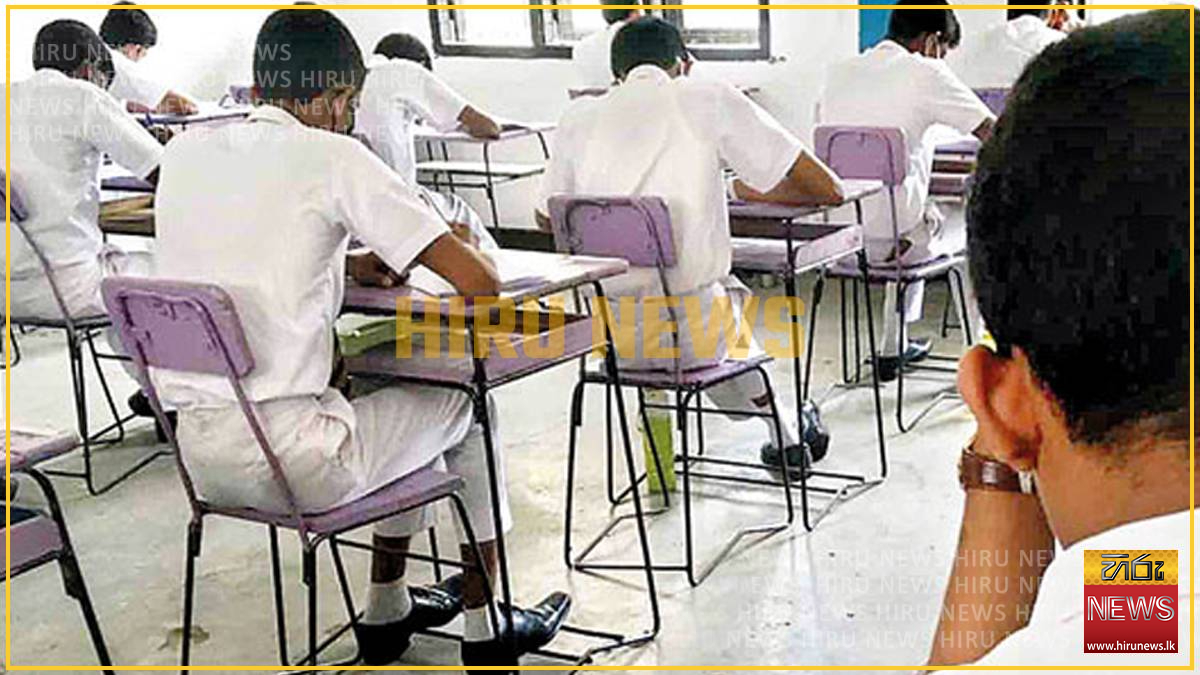
It is a concerning reality that nearly 10% of students who sat for the 2025 G.C.E. Advanced Level Examination have failed all subjects.
Out of 281,810 candidates, only 176,527 have qualified to apply for university entrance, while a significant 30,898 students did not pass a single subject.
According to Commissioner General of Examinations, A. K. S. Indika Kumari Liyanage, this group includes 19,301 school candidates and 11,597 private applicants.
However, education experts stress that this setback does not define a student’s future.
“Now, we need to think about how to move forward”
Prof. Krishantha Pathiraja, a member of the Governing Council at the National Apprentice and Industrial Training Authority (NAITA), emphasised that students must now focus on alternative opportunities rather than dwelling on failure.
“They have already failed. Now, we need to think about how we can move forward from this situation. There are many vocational development and training institutions available in Sri Lanka, such as NAITA, VTA, German Tech, Technical Colleges, and the Maritime College. Why not guide students into the vocational education system?”
He highlighted that vocational education can open doors not only locally but globally.
“If they enter this system, they can become professionals in fields like plumbing, painting, the automobile industry, and waterproofing technology. They can become highly successful and will 100% contribute to the Sri Lankan economy.”
Breaking the stigma around skilled trades
Prof. Pathiraja also addressed a deeply rooted social mindset that prioritises academic careers over technical professions.
“Not everyone can become a professor or a chartered engineer. We need to start thinking about other fields such as professional painting, plumbing, and welding. It is time to give serious attention to these sectors, as they are highly rewarding.”
He pointed out the strong earning potential in these industries:
“In some cases, electricians charge between Rs. 3,000 and Rs. 4,000 per hour, while plumbers may charge Rs. 4,000 to Rs. 5,000. This shows the earning potential in these professions.”
“Not everyone can become a computer engineer, but not everyone needs to. Skilled technical roles are equally important. In Sri Lanka, there is a significant shortage of plumbers, painters, electricians, and welders.”
How students can get started
For students interested in vocational training, Prof. Pathiraja explained that accessing information is easier than ever.
“The easiest way is to visit the Secretariat Office or the Divisional Secretariat (DS) office. Students can go there and obtain the necessary details.”
He also encouraged students to make use of digital resources:
“Today, most students are very familiar with social media and the internet, so they can easily search online if they are interested in joining NAITA or find the nearest centre.”
He further highlighted the strong industry connections these institutions offer:
“Students who complete their NVQ certificates, diplomas, or advanced diplomas are often quickly recruited by private companies. This allows them to gain both job experience and practical knowledge.”
Learning from global models
Prof. Pathiraja noted that several developed countries have already embraced vocational education as a mainstream pathway.
“In countries like Japan, Singapore, and Malaysia, students are asked as early as Grade 7 or 8 to choose their future curriculum path.”
“If a student wants to become a carpenter, they can choose carpentry. If they want to become a welder, they can choose welding.”
He emphasised that alternative pathways exist even for those who do not succeed in traditional exams:
“If a student does not pass Grade 10 or O/Ls, there are many options. They can pursue courses in automobile repair, plumbing, welding, and painting.”
“By enrolling in vocational training institutions, they can begin with NVQ levels and progress through certificates, diplomas, and even advanced diplomas to achieve their career goals.”
A different kind of success
While exam results may seem like the ultimate measure of success, experts insist they are only one part of a much larger journey.
For thousands of students who faced disappointment this year, vocational education offers not just a second chance—but a pathway to a stable, rewarding, and respected career.