At 10pm, when most of the Philippines is ready for bed, the day is only just beginning for some workers such as Paul Ponce.
His clients are in the United States, which is why he works the night shift in an industry known as business process outsourcing (BPO). In the Philippines, BPO jobs include admin work, accounting services, information technology development and customer support.
For him, as a call centre agent in Greater Manila, it has been a job that pays. “I was able to send my four kids (to) a private school,” he shared. “Now we (can) afford to buy our own house.”
The sector employs nearly 2 million workers and brings in about US$40 billion per year, more than 8 per cent of the country’s gross domestic product. Around 70 per cent of the work is outsourced from North America.
In India, a similar story has unfolded in Bengaluru, the country’s back-office capital, where Shahid Khan works from 8pm to 5am, having joined the industry in 2022. “By (working) in BPO, we can (build a) better … future,” he said.
Outsourcing employs nearly 6 million Indians and generates about 7 per cent of GDP.
India is the market leader, capturing an estimated 55 per cent of global IT outsourcing. The Philippines is second, with a 15 to 18 per cent share of the BPO industry.
“When America wakes up, the Indian and the Philippine workforces continue to work,” said Neeti Sharma, chief executive officer of staffing firm TeamLease Digital. “That’s (why) we say that the Indian and the Philippine … workforces work 24/7.”
But something is coming to eat the industry’s lunch, or supper in this case. Back-office jobs are among the most at risk of being replaced by artificial intelligence, according to reports from the International Monetary Fund, Bloomberg Intelligence and others.
The characteristics that make BPO work easy to offshore, like its repetitiveness, also make it suitable for automation. Outsourced jobs in India and the Philippines are already changing as AI becomes part of the workflow. And workers are feeling it.
Ponce’s company, for example, has an AI assistant for its clients. “If AI can help them, the issue gets resolved right away, instead of … being transferred to a live agent, leaving us with no tasks to work on,” he said.
“I’ve heard from the news and other BPO friends that some people have lost their jobs, … especially those in chat support.”
In Bengaluru, AI is disrupting another commonly outsourced task: coding. As the CEO of Emergent Labs, an app-building platform that lets anyone use AI to write code, Mukund Jha is helping to drive the change.
“The whole outsourcing industry will need to be reimagined,” said the startup co-founder. He sees a “massive risk” of 2 million to 3 million people facing disruption.
“Earlier, … software development was really expensive. It used to take a lot of time, and you’d outsource it to India … at a cheaper cost. But what’s happening with AI now is that anybody can build.”
Is the concern about job losses just fearmongering or has an AI job apocalypse begun in the world’s outsourcing capitals, CNA’s Insight explores.
There may already be early signs of the projected job apocalypse. In April, Oracle cut 12,000 jobs in India amid a reported boost in its AI spending.
Indian tech giant Tata Consultancy Services, among the world’s biggest back-office providers, also cut 12,000 jobs last year — the largest reduction in its history.
Hiring has tanked too. India’s top IT firms added 17 net employees in the first nine months of the 2025/26 fiscal year, down from thousands of hires the year before.
Then in February, AI jitters wiped out US$68.6 billion in market value from Indian IT stocks. The reason? An AI model called Claude, developed by Anthropic, which released plug-ins that would enable businesses to automate faster, better and more efficiently.
“It’s also about … the various possibilities (of what) AI can do, thereby replacing the hundreds and thousands working as outsourcing support,” said Sharma.
“I get very worried because there are lots of people losing jobs. And we don’t know where we’re going to get them another job.”
She cited a few examples. If a legal department has 30 people who review and write contracts, then “one person can do everything” with AI today. In claims processing, AI can cut working hours by half or even more.
When it comes to data entry, “a simple AI agent can scan, record, write and thereby fill all the fields that are required”, she said. “Maybe what a 10-member team was doing, a two or three-member team can actually do.”
Union leader Suman Dasmahapatra of the All India IT and IT-Enabled Services Employees’ Union has started to see the impact on his members.
“When companies lay off their employees, most of the time they (don’t say) upfront (that the layoffs are) because of AI. … (Instead), they try to create an argument that your performance isn’t up to the mark,” he said.
“Management is trying to give the impression (that) if you can’t deliver, … you might lose your job, which creates a lot of physical and psychological issues.”
For junior-level coder Ravi (not his real name), who has three years’ experience, being named a “star performer” last year did not keep him from being laid off, and the reason was made clear in his case, he recounted.
“I was working on a project at 5am, and I was about to go (to sleep when) I received an email (saying) that because of AI, (the company) was about to reduce the workforce.”
He did not tell his family the news. “This job was very … important (to) me,” lamented Ravi, whose family lives in rented accommodation. “We (need) money for (my sister’s) marriage as well.”
In the Philippines, Ivan Peregrina has a similar story. His job was to monitor and improve the performance of customer service agents at a call centre. He was among 70-plus quality analysts (QAs), including two supervisors, replaced by AI, he said.
The AI audits the agents’ call recordings, and there is a reason that quality analysts are “the first line of workers … affected by AI right now”, according to BPO Industry Employees Network secretary-general Renso Bajala.
“(The AI listens to) the words that you’re speaking, the pitch … of your voice and the resolution that you’ll be giving to a customer,” he said.
“(It’s) going to give you a score — and at an alarming pace that no humans can (achieve).”
In a similar vein, companies have used recordings of help desk calls to train AI to respond to customer requests. The irony for Peregrina is he may have helped to improve his automated replacement after it was first introduced.
“A human QA was needed … to cross-check the output of the AI tool because (we could) still see a lot of errors in the … AI audit,” he recounted. “Now the AI has replaced my job.”
A permanent job seems elusive for now, so he is focused on getting part-time work to pay for basic needs and medicine for his mother. A renovation of their home that he had been planning will have to be postponed.
“I have to stay strong to provide for my family,” he said. “There were a couple of times that I (almost cried) … because (of) stress.”
Millions of outsourcing workers have fuelled the Philippine and Indian economies by buying cars, houses and everything in between, so they are not the only ones worried about AI.
Nearly all the customers at Jon-Jon Kapampangan Sizzling and Eatery near Manila, for example, are back-office workers.
“Call centres are a big part of our business. They keep us afloat,” said manager Michelle Payuan, adding that any layoffs would be “a big blow”.
“What will happen to our employees? Many of our staff are from other provinces and send money home. I also have children I send to school.
“Maybe not all will be laid off, maybe some call centre agents, but even a reduction will affect us.”
In Bengaluru, the importance of IT and BPO workers in real estate cannot be overstated.
“They (form) the major share of home buyers, especially the first-time home buyers, who come from different cities (and) aspire to make … their home (in) Bengaluru,” said property broker Manjesh Rao.
But for all the talk of the impending AI disruption, the outsourcing industry appears to be growing in both countries instead of shrinking.
Around 80,000 jobs were added in the Philippines last year and 135,000 jobs in India in the fiscal year that just ended, according to industry data. This year’s forecasts show further job creation.
In India, BPO company Altruist Technologies is recruiting for new assignments from new clients.
“We have a rural market that’s expanding. They’d still prefer somebody who can explain (things) a little bit better. The government is expanding (by) outsourcing (more) than before,” cited Makesh Sankaran, its CEO until quite recently.
“AI is now a good augmenting tool … helping human beings to do better. (It’s) not reached a stage where it can replace (them).”
It has not advanced enough to hit the tipping point in the Philippines either. “Automation isn’t really that reliable,” said Dominic Ligot, the director for AI ethics and data governance at the Philippine AI Business Association.
“The usual issues that come up are data security, data privacy (and), of course, the ability of AI to execute. It still leaves a lot for humans to … come in and oversee.”
Telework PH is one Filipino company using AI to boost productivity, with chatbots answering calls when agents are unavailable. But it has hired more people than it has let go, according to CEO Marjorie Aviso-Baynosa.
“Some of the drawbacks of AI are that … it can’t empathise with the client, it can’t sense tension (nor) tell if the client is about to (cancel) the contract,” she said.
The technology also remains expensive, so not all organisations can invest in it, added Ralph Regalado, chief scientist and head of AI at digital transformation company Kollab.
“But if it became much cheaper, … it’d be a no-brainer,” he said. “Probably in the next three to five years, we’ll be seeing more … organisations leveraging contact centre AI. Because again, the technology is also improving.”
By 2029 — that is when AI can resolve 80 per cent of common customer service issues, research firm Gartner estimates. It is not just voice agents; video bots are being built for visual troubleshooting.
So, despite the BPO growth trend, industry projections may have to be adjusted. The Philippines has an IT-Business Process Management road map, for example, with a target of 2.5 million jobs by 2028.
“Is that still on track? Obviously not any more,” said Michelle Alarcon, the president of the Analytics and Artificial Intelligence Association of the Philippines.
“These targets need to be recalibrated and therefore we can’t be complacent. The jobs that we know may not be there.”
The AI story remains complex. A World Economic Forum (WEF) report last year estimated that 170 million jobs will be created versus 92 million jobs displaced by 2030, suggesting that AI will have a positive effect.
But the jobs created may not be for the same workers who lose their jobs, or in the same places.
The biggest investments in AI are being made in the Americas, followed by China, the United Kingdom, Europe and Israel, pointed out Sharma.
“A large (portion) of AI-related employment could also get created in those economies,” she said. “They’re going to call the shots, and then the other countries, which become captive users, have to just follow the rules.”
The United Nations Development Programme warned in December of a “great divergence” ahead, where AI could either narrow gaps across the Asia-Pacific, “expanding opportunity and empowering communities”, or entrench divides, “ushering in an age of unequal progress”.
The dichotomy is also seen in India in a report released last year by governmental think-tank NITI Aayog. It said 1.5 million tech jobs could be displaced by 2031 or up to 4 million job opportunities could be created.
“The new roles can be very different,” said Sankaran, citing roles such as prompt strategist, AI workflow specialist, AI operations manager, AI-enabled customer experience specialist and AI quality and governance specialist.
In some BPOs, AI workshops are now routine. Some Indian non-profit organisations, meanwhile, run programmes aimed at helping workers find meaningful jobs. The mission of the Nimaya Foundation, for example, is to enable women from underserved communities to master AI.
“Data suggests that … there’s almost a 42 per cent gender gap between the number of women who are equipped (with AI skills) versus men,” highlighted co-founder Navya Naveli Nanda.
Indeed, the WEF report urges upskilling as the main way to mitigate AI disruption and estimates that 59 per cent of workers globally will need it.
But this may not be easy for many back-office workers. “It’s going to (cost) a lot of money to enrol in one of the courses offered by private institutions,” said Bajala. “It’s also difficult in terms of the time required.”
A different kind of outsourcing may also be required to push the industry up the value chain. Companies known as global capability centres (GCCs) are now handling more complex jobs instead of repetitive tasks.
Michael McCullough, co-founder of flexible workspace provider KMC Solutions, calls them “the next wave of outsourcing”, one that requires people with higher-value skills in functions such as intellectual property, finance and accounts payable.
“Traditional outsourcing will probably remain, and that’ll be challenged,” he said.
“GCCs, on the other hand, are kind of in (their) infancy and … a really exciting area to be (in) because of the skills and the type of employees that they’re hiring and developing, which is great for the Philippine economy.”
These advanced roles are not immediately accessible, however, to many BPO workers.
“GCCs will absorb some of that talent for sure, maybe 10 to 30 per cent. … The biggest question is what happens to the (rest),” said McCullough, who thinks they may end up in the gig economy or in hospitality.
Another solution may lie outside the service sector. Various reports suggest that jobs involving fine motor skills and technical knowledge are more resilient to AI disruption. Bajala, for one, sees a need for the government to focus on heavy industries.
“For decades, BPO workers were offered a lot more than the blue-collar workers who were earning a minimum wage daily,” he said. “The mindset should start shifting because of the reality that our jobs here aren’t permanent.”
BPO workers such as Ponce are already having these discussions. Two of his friends have talked about going overseas or starting a business. He may have other ideas.
“We can also start a YouTube channel,” he said, before adding: “My plan is really to upskill so I survive the entry of AI.”
-Channel News Asia
His clients are in the United States, which is why he works the night shift in an industry known as business process outsourcing (BPO). In the Philippines, BPO jobs include admin work, accounting services, information technology development and customer support.
For him, as a call centre agent in Greater Manila, it has been a job that pays. “I was able to send my four kids (to) a private school,” he shared. “Now we (can) afford to buy our own house.”
The sector employs nearly 2 million workers and brings in about US$40 billion per year, more than 8 per cent of the country’s gross domestic product. Around 70 per cent of the work is outsourced from North America.
In India, a similar story has unfolded in Bengaluru, the country’s back-office capital, where Shahid Khan works from 8pm to 5am, having joined the industry in 2022. “By (working) in BPO, we can (build a) better … future,” he said.
Outsourcing employs nearly 6 million Indians and generates about 7 per cent of GDP.
India is the market leader, capturing an estimated 55 per cent of global IT outsourcing. The Philippines is second, with a 15 to 18 per cent share of the BPO industry.
“When America wakes up, the Indian and the Philippine workforces continue to work,” said Neeti Sharma, chief executive officer of staffing firm TeamLease Digital. “That’s (why) we say that the Indian and the Philippine … workforces work 24/7.”
But something is coming to eat the industry’s lunch, or supper in this case. Back-office jobs are among the most at risk of being replaced by artificial intelligence, according to reports from the International Monetary Fund, Bloomberg Intelligence and others.
The characteristics that make BPO work easy to offshore, like its repetitiveness, also make it suitable for automation. Outsourced jobs in India and the Philippines are already changing as AI becomes part of the workflow. And workers are feeling it.
Ponce’s company, for example, has an AI assistant for its clients. “If AI can help them, the issue gets resolved right away, instead of … being transferred to a live agent, leaving us with no tasks to work on,” he said.
“I’ve heard from the news and other BPO friends that some people have lost their jobs, … especially those in chat support.”
In Bengaluru, AI is disrupting another commonly outsourced task: coding. As the CEO of Emergent Labs, an app-building platform that lets anyone use AI to write code, Mukund Jha is helping to drive the change.
“The whole outsourcing industry will need to be reimagined,” said the startup co-founder. He sees a “massive risk” of 2 million to 3 million people facing disruption.
“Earlier, … software development was really expensive. It used to take a lot of time, and you’d outsource it to India … at a cheaper cost. But what’s happening with AI now is that anybody can build.”
Is the concern about job losses just fearmongering or has an AI job apocalypse begun in the world’s outsourcing capitals, CNA’s Insight explores.
There may already be early signs of the projected job apocalypse. In April, Oracle cut 12,000 jobs in India amid a reported boost in its AI spending.
Indian tech giant Tata Consultancy Services, among the world’s biggest back-office providers, also cut 12,000 jobs last year — the largest reduction in its history.
Hiring has tanked too. India’s top IT firms added 17 net employees in the first nine months of the 2025/26 fiscal year, down from thousands of hires the year before.
Then in February, AI jitters wiped out US$68.6 billion in market value from Indian IT stocks. The reason? An AI model called Claude, developed by Anthropic, which released plug-ins that would enable businesses to automate faster, better and more efficiently.
“It’s also about … the various possibilities (of what) AI can do, thereby replacing the hundreds and thousands working as outsourcing support,” said Sharma.
“I get very worried because there are lots of people losing jobs. And we don’t know where we’re going to get them another job.”
She cited a few examples. If a legal department has 30 people who review and write contracts, then “one person can do everything” with AI today. In claims processing, AI can cut working hours by half or even more.
When it comes to data entry, “a simple AI agent can scan, record, write and thereby fill all the fields that are required”, she said. “Maybe what a 10-member team was doing, a two or three-member team can actually do.”
Union leader Suman Dasmahapatra of the All India IT and IT-Enabled Services Employees’ Union has started to see the impact on his members.
“When companies lay off their employees, most of the time they (don’t say) upfront (that the layoffs are) because of AI. … (Instead), they try to create an argument that your performance isn’t up to the mark,” he said.
“Management is trying to give the impression (that) if you can’t deliver, … you might lose your job, which creates a lot of physical and psychological issues.”
For junior-level coder Ravi (not his real name), who has three years’ experience, being named a “star performer” last year did not keep him from being laid off, and the reason was made clear in his case, he recounted.
“I was working on a project at 5am, and I was about to go (to sleep when) I received an email (saying) that because of AI, (the company) was about to reduce the workforce.”
He did not tell his family the news. “This job was very … important (to) me,” lamented Ravi, whose family lives in rented accommodation. “We (need) money for (my sister’s) marriage as well.”
In the Philippines, Ivan Peregrina has a similar story. His job was to monitor and improve the performance of customer service agents at a call centre. He was among 70-plus quality analysts (QAs), including two supervisors, replaced by AI, he said.
The AI audits the agents’ call recordings, and there is a reason that quality analysts are “the first line of workers … affected by AI right now”, according to BPO Industry Employees Network secretary-general Renso Bajala.
“(The AI listens to) the words that you’re speaking, the pitch … of your voice and the resolution that you’ll be giving to a customer,” he said.
“(It’s) going to give you a score — and at an alarming pace that no humans can (achieve).”
In a similar vein, companies have used recordings of help desk calls to train AI to respond to customer requests. The irony for Peregrina is he may have helped to improve his automated replacement after it was first introduced.
“A human QA was needed … to cross-check the output of the AI tool because (we could) still see a lot of errors in the … AI audit,” he recounted. “Now the AI has replaced my job.”
A permanent job seems elusive for now, so he is focused on getting part-time work to pay for basic needs and medicine for his mother. A renovation of their home that he had been planning will have to be postponed.
“I have to stay strong to provide for my family,” he said. “There were a couple of times that I (almost cried) … because (of) stress.”
Millions of outsourcing workers have fuelled the Philippine and Indian economies by buying cars, houses and everything in between, so they are not the only ones worried about AI.
Nearly all the customers at Jon-Jon Kapampangan Sizzling and Eatery near Manila, for example, are back-office workers.
“Call centres are a big part of our business. They keep us afloat,” said manager Michelle Payuan, adding that any layoffs would be “a big blow”.
“What will happen to our employees? Many of our staff are from other provinces and send money home. I also have children I send to school.
“Maybe not all will be laid off, maybe some call centre agents, but even a reduction will affect us.”
In Bengaluru, the importance of IT and BPO workers in real estate cannot be overstated.
“They (form) the major share of home buyers, especially the first-time home buyers, who come from different cities (and) aspire to make … their home (in) Bengaluru,” said property broker Manjesh Rao.
But for all the talk of the impending AI disruption, the outsourcing industry appears to be growing in both countries instead of shrinking.
Around 80,000 jobs were added in the Philippines last year and 135,000 jobs in India in the fiscal year that just ended, according to industry data. This year’s forecasts show further job creation.
In India, BPO company Altruist Technologies is recruiting for new assignments from new clients.
“We have a rural market that’s expanding. They’d still prefer somebody who can explain (things) a little bit better. The government is expanding (by) outsourcing (more) than before,” cited Makesh Sankaran, its CEO until quite recently.
“AI is now a good augmenting tool … helping human beings to do better. (It’s) not reached a stage where it can replace (them).”
It has not advanced enough to hit the tipping point in the Philippines either. “Automation isn’t really that reliable,” said Dominic Ligot, the director for AI ethics and data governance at the Philippine AI Business Association.
“The usual issues that come up are data security, data privacy (and), of course, the ability of AI to execute. It still leaves a lot for humans to … come in and oversee.”
Telework PH is one Filipino company using AI to boost productivity, with chatbots answering calls when agents are unavailable. But it has hired more people than it has let go, according to CEO Marjorie Aviso-Baynosa.
“Some of the drawbacks of AI are that … it can’t empathise with the client, it can’t sense tension (nor) tell if the client is about to (cancel) the contract,” she said.
The technology also remains expensive, so not all organisations can invest in it, added Ralph Regalado, chief scientist and head of AI at digital transformation company Kollab.
“But if it became much cheaper, … it’d be a no-brainer,” he said. “Probably in the next three to five years, we’ll be seeing more … organisations leveraging contact centre AI. Because again, the technology is also improving.”
By 2029 — that is when AI can resolve 80 per cent of common customer service issues, research firm Gartner estimates. It is not just voice agents; video bots are being built for visual troubleshooting.
So, despite the BPO growth trend, industry projections may have to be adjusted. The Philippines has an IT-Business Process Management road map, for example, with a target of 2.5 million jobs by 2028.
“Is that still on track? Obviously not any more,” said Michelle Alarcon, the president of the Analytics and Artificial Intelligence Association of the Philippines.
“These targets need to be recalibrated and therefore we can’t be complacent. The jobs that we know may not be there.”
The AI story remains complex. A World Economic Forum (WEF) report last year estimated that 170 million jobs will be created versus 92 million jobs displaced by 2030, suggesting that AI will have a positive effect.
But the jobs created may not be for the same workers who lose their jobs, or in the same places.
The biggest investments in AI are being made in the Americas, followed by China, the United Kingdom, Europe and Israel, pointed out Sharma.
“A large (portion) of AI-related employment could also get created in those economies,” she said. “They’re going to call the shots, and then the other countries, which become captive users, have to just follow the rules.”
The United Nations Development Programme warned in December of a “great divergence” ahead, where AI could either narrow gaps across the Asia-Pacific, “expanding opportunity and empowering communities”, or entrench divides, “ushering in an age of unequal progress”.
The dichotomy is also seen in India in a report released last year by governmental think-tank NITI Aayog. It said 1.5 million tech jobs could be displaced by 2031 or up to 4 million job opportunities could be created.
“The new roles can be very different,” said Sankaran, citing roles such as prompt strategist, AI workflow specialist, AI operations manager, AI-enabled customer experience specialist and AI quality and governance specialist.
In some BPOs, AI workshops are now routine. Some Indian non-profit organisations, meanwhile, run programmes aimed at helping workers find meaningful jobs. The mission of the Nimaya Foundation, for example, is to enable women from underserved communities to master AI.
“Data suggests that … there’s almost a 42 per cent gender gap between the number of women who are equipped (with AI skills) versus men,” highlighted co-founder Navya Naveli Nanda.
Indeed, the WEF report urges upskilling as the main way to mitigate AI disruption and estimates that 59 per cent of workers globally will need it.
But this may not be easy for many back-office workers. “It’s going to (cost) a lot of money to enrol in one of the courses offered by private institutions,” said Bajala. “It’s also difficult in terms of the time required.”
A different kind of outsourcing may also be required to push the industry up the value chain. Companies known as global capability centres (GCCs) are now handling more complex jobs instead of repetitive tasks.
Michael McCullough, co-founder of flexible workspace provider KMC Solutions, calls them “the next wave of outsourcing”, one that requires people with higher-value skills in functions such as intellectual property, finance and accounts payable.
“Traditional outsourcing will probably remain, and that’ll be challenged,” he said.
“GCCs, on the other hand, are kind of in (their) infancy and … a really exciting area to be (in) because of the skills and the type of employees that they’re hiring and developing, which is great for the Philippine economy.”
These advanced roles are not immediately accessible, however, to many BPO workers.
“GCCs will absorb some of that talent for sure, maybe 10 to 30 per cent. … The biggest question is what happens to the (rest),” said McCullough, who thinks they may end up in the gig economy or in hospitality.
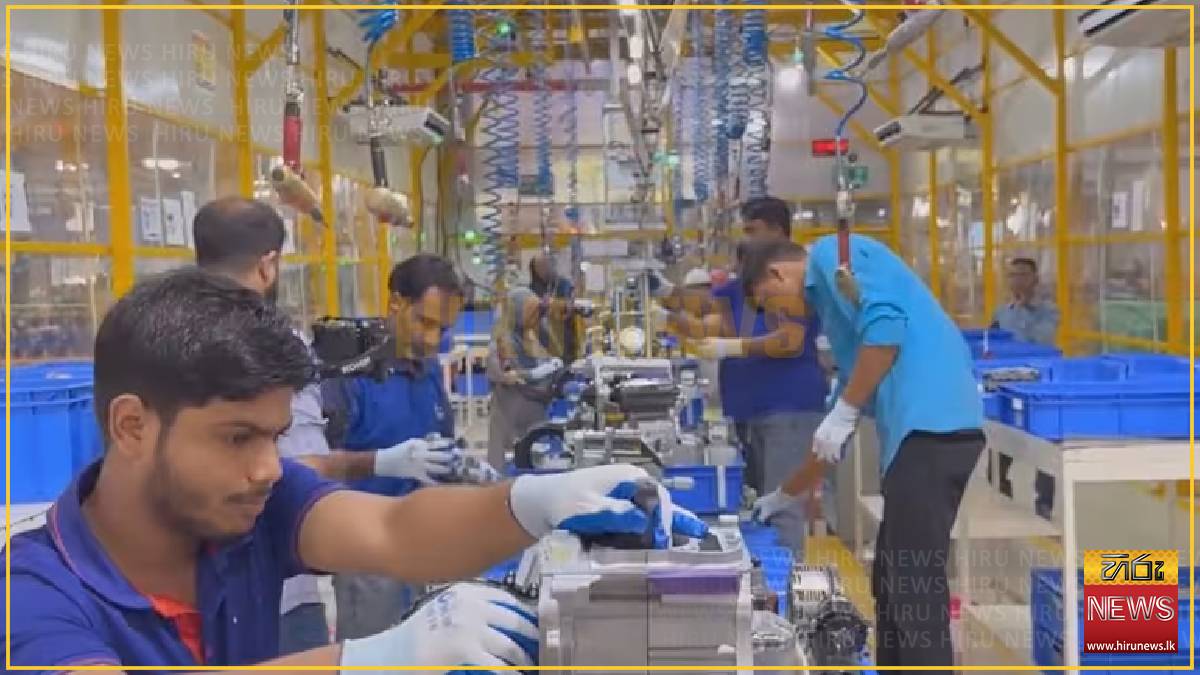
Another solution may lie outside the service sector. Various reports suggest that jobs involving fine motor skills and technical knowledge are more resilient to AI disruption. Bajala, for one, sees a need for the government to focus on heavy industries.
“For decades, BPO workers were offered a lot more than the blue-collar workers who were earning a minimum wage daily,” he said. “The mindset should start shifting because of the reality that our jobs here aren’t permanent.”
BPO workers such as Ponce are already having these discussions. Two of his friends have talked about going overseas or starting a business. He may have other ideas.
“We can also start a YouTube channel,” he said, before adding: “My plan is really to upskill so I survive the entry of AI.”
-Channel News Asia