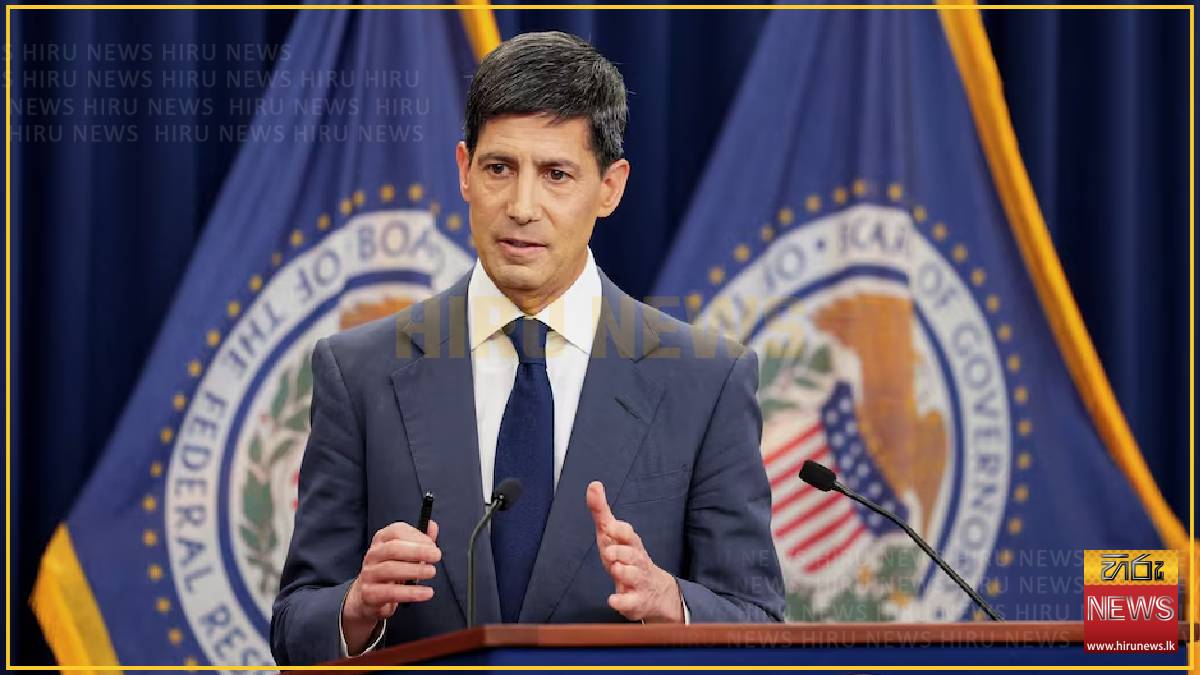
Federal Reserve Chairman Kevin Warsh's early leadership of the US central bank faces fresh tests this week, with an appearance before a high-profile economic conference in Portugal and the US Supreme Court's expected ruling on the legality of President Donald Trump's effort to fire a Fed policymaker.
The top US court, entering the final week of its current term, could decide as soon as Monday whether Fed Governor Lisa Cook can keep her job despite Trump's announcement last August that he was firing her.
Lower courts have agreed that Cook is likely to win her legal challenge of Trump's effort to fire her and have let her remain on the Fed's Board of Governors as the case worked its way to the Supreme Court.
Fed governors can only be fired "for cause," but that has never been defined or tested in the courts. Trump is the first president to attempt to dismiss a sitting governor, arguing that what the president has characterised as misstatements on a home mortgage application by Cook justified her removal.
The move was seen broadly as an attack on the Fed's independence from political interference in its policymaking, as Trump sought to make room on the Fed's board for his own appointees after being frustrated that current US central bankers would not respond to his demands for steep interest rate cuts.
In a hearing earlier this year, Supreme Court justices seemed skeptical of the Trump administration's arguments. Though it has allowed the administration to remove officials from other independent agencies, the Supreme Court indicated in earlier rulings that the Fed had its own status.
Legal scholars interpreted that stance as a hint that the court would find a rationale to protect the central bank's policymakers from removal "at will."
Allowing Cook to remain, with firm guardrails in place, would remove a major risk for Warsh — namely that his leadership of the Fed would involve a disruptive string of firings by Trump, with Warsh himself at risk of removal.
It would also, however, emphasise the constraints Trump faces when it comes to influencing the Fed's actions, including on rates, with a ruling in Cook's favour also insulating Warsh and others to act free from the threat of removal.
Recent economic data, with a key inflation gauge in May running at more than double the Fed's 2% target, has raised the likelihood in the eyes of investors that the central bank will raise rates in coming months, not lower them as Trump has said he wants and expects.
So far, however, comments by Trump and Treasury Secretary Scott Bessent have been more forgiving than they were towards former Fed Chair Jerome Powell, whose refusal to cut rates earned him the pejorative "Too Late" nickname, and more significantly, a since-dropped criminal investigation and calls for his removal. Powell remains a member of the Fed's board.
"Kevin is fantastic, and I want him to do whatever he wants," Trump said on NBC News' "Meet the Press" program earlier this month. "I don't want to have a big influence on him."
Warsh's approach to his job may help him somewhat in managing Trump's expectations. The new Fed chief has said he plans to avoid as much as possible any talk or "forward guidance" about whether the policy interest rate should be raised or lowered on any given timetable, keeping his own outlook largely out of public, and the president's, view.
Warsh has long said he dislikes guidance or steering financial markets about Fed outcomes during normal times, when, he argues, investors should be reacting to economic conditions and not the central bank.
He began putting that preference into practice quickly, overseeing a new policy statement that dropped guidance language and emphasising the point in his first press conference as Fed chief following the central bank's June 16-17 meeting.
"Your question sounded like an encouragement for me to give forward guidance. We've dropped forward guidance," he said in response to a reporter's query about the conditions under which the Fed might raise rates. "I can't give any forward guidance about what we're going to do next. The good news is, we'll be meeting in six weeks" and issuing an updated policy statement.
Warsh's appearance on Wednesday at the European Central Bank's annual forum in the Portuguese hilltop resort of Sintra will be a first test of how that approach is received by global peers including ECB President Christine Lagarde, Bank of England Governor Andrew Bailey and Bank of Canada Governor Tiff Macklem.
The four central bankers will share a question-and-answer panel.
While the ECB's Lagarde has also moved away from forward guidance, the BoE includes fairly detailed commentary about how the economy is seen evolving, based on different economic scenarios.
The dollar, however, plays a different role globally as the major reserve and trading currency, with unexpected movements in US interest rates a source of potential stress across other markets and currencies, and the Fed's open "swap lines" with other countries offering a dollar liquidity backstop for much of the world economy.
A global audience will be looking to see just how far Warsh's low-information approach might extend.
Pierre-Olivier Gourinchas, who is leaving his post as the International Monetary Fund's chief economist next week to return to academic life, told Reuters in an exit interview on Friday that strong forward guidance had gotten "really bad press" because it committed central banks to some future action, regardless of economic developments, noting it bound the Fed from responding more quickly to the inflation outbreak following the COVID-19 pandemic.
"So I think moving away from these strong forms of forward guidance is entirely appropriate. Saying there is no forward guidance, I don't think that is actually the case ever. You do it explicitly, or implicitly, the market is going to form a view," he said.
-Reuters
The top US court, entering the final week of its current term, could decide as soon as Monday whether Fed Governor Lisa Cook can keep her job despite Trump's announcement last August that he was firing her.
Lower courts have agreed that Cook is likely to win her legal challenge of Trump's effort to fire her and have let her remain on the Fed's Board of Governors as the case worked its way to the Supreme Court.
Fed governors can only be fired "for cause," but that has never been defined or tested in the courts. Trump is the first president to attempt to dismiss a sitting governor, arguing that what the president has characterised as misstatements on a home mortgage application by Cook justified her removal.
The move was seen broadly as an attack on the Fed's independence from political interference in its policymaking, as Trump sought to make room on the Fed's board for his own appointees after being frustrated that current US central bankers would not respond to his demands for steep interest rate cuts.
In a hearing earlier this year, Supreme Court justices seemed skeptical of the Trump administration's arguments. Though it has allowed the administration to remove officials from other independent agencies, the Supreme Court indicated in earlier rulings that the Fed had its own status.
Legal scholars interpreted that stance as a hint that the court would find a rationale to protect the central bank's policymakers from removal "at will."
Allowing Cook to remain, with firm guardrails in place, would remove a major risk for Warsh — namely that his leadership of the Fed would involve a disruptive string of firings by Trump, with Warsh himself at risk of removal.
It would also, however, emphasise the constraints Trump faces when it comes to influencing the Fed's actions, including on rates, with a ruling in Cook's favour also insulating Warsh and others to act free from the threat of removal.
Recent economic data, with a key inflation gauge in May running at more than double the Fed's 2% target, has raised the likelihood in the eyes of investors that the central bank will raise rates in coming months, not lower them as Trump has said he wants and expects.
So far, however, comments by Trump and Treasury Secretary Scott Bessent have been more forgiving than they were towards former Fed Chair Jerome Powell, whose refusal to cut rates earned him the pejorative "Too Late" nickname, and more significantly, a since-dropped criminal investigation and calls for his removal. Powell remains a member of the Fed's board.
"Kevin is fantastic, and I want him to do whatever he wants," Trump said on NBC News' "Meet the Press" program earlier this month. "I don't want to have a big influence on him."
Warsh's approach to his job may help him somewhat in managing Trump's expectations. The new Fed chief has said he plans to avoid as much as possible any talk or "forward guidance" about whether the policy interest rate should be raised or lowered on any given timetable, keeping his own outlook largely out of public, and the president's, view.
Warsh has long said he dislikes guidance or steering financial markets about Fed outcomes during normal times, when, he argues, investors should be reacting to economic conditions and not the central bank.
He began putting that preference into practice quickly, overseeing a new policy statement that dropped guidance language and emphasising the point in his first press conference as Fed chief following the central bank's June 16-17 meeting.
"Your question sounded like an encouragement for me to give forward guidance. We've dropped forward guidance," he said in response to a reporter's query about the conditions under which the Fed might raise rates. "I can't give any forward guidance about what we're going to do next. The good news is, we'll be meeting in six weeks" and issuing an updated policy statement.
Warsh's appearance on Wednesday at the European Central Bank's annual forum in the Portuguese hilltop resort of Sintra will be a first test of how that approach is received by global peers including ECB President Christine Lagarde, Bank of England Governor Andrew Bailey and Bank of Canada Governor Tiff Macklem.
The four central bankers will share a question-and-answer panel.
While the ECB's Lagarde has also moved away from forward guidance, the BoE includes fairly detailed commentary about how the economy is seen evolving, based on different economic scenarios.
The dollar, however, plays a different role globally as the major reserve and trading currency, with unexpected movements in US interest rates a source of potential stress across other markets and currencies, and the Fed's open "swap lines" with other countries offering a dollar liquidity backstop for much of the world economy.
A global audience will be looking to see just how far Warsh's low-information approach might extend.
Pierre-Olivier Gourinchas, who is leaving his post as the International Monetary Fund's chief economist next week to return to academic life, told Reuters in an exit interview on Friday that strong forward guidance had gotten "really bad press" because it committed central banks to some future action, regardless of economic developments, noting it bound the Fed from responding more quickly to the inflation outbreak following the COVID-19 pandemic.
"So I think moving away from these strong forms of forward guidance is entirely appropriate. Saying there is no forward guidance, I don't think that is actually the case ever. You do it explicitly, or implicitly, the market is going to form a view," he said.
-Reuters