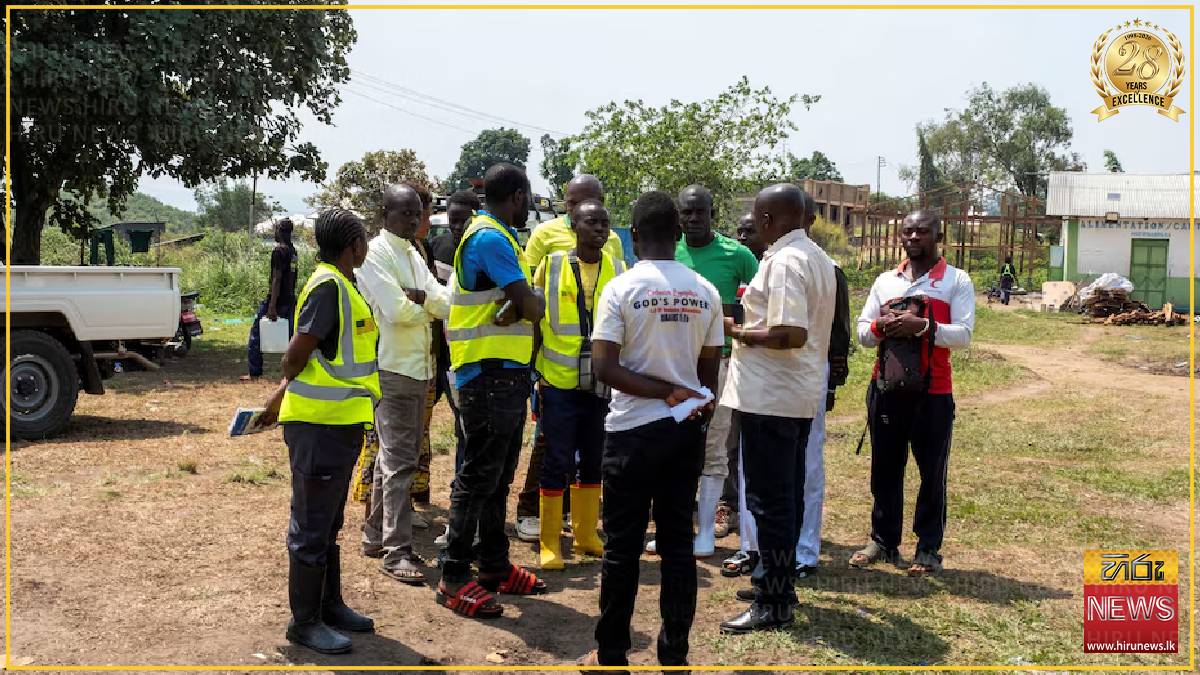
Four out of every five new Ebola cases in parts of Democratic Republic of Congo have no known link to existing patients, a senior World Health Organization official said, warning that the true scale of the outbreak could be two to four times larger than official data suggest.
The figures underscore the challenges facing health workers as they battle to contain the outbreak in the country's northeast, which has so far infected 1,792 people and killed 625, according to government data released on Thursday.
But the virus has also spread beyond the epicentre to North Kivu province, South Kivu province and, more recently, Tshopo province.
In Bunia, Ituri's capital and a city of one million, roughly one in two patients tested for Ebola turns out to be positive, a sign of intense, ongoing community transmission, Ihekweazu said.
Preliminary evidence suggests the Bundibugyo strain of the Ebola virus may cause milder symptoms than other types, reducing risk perceptions among affected communities and leading some families to care for sick relatives at home before seeking treatment.
While that appears to improve survival rates among patients who reach treatment centres, it also means infected people may remain in the community longer and continue transmitting the virus.
"Patients are out there much longer than we would like," Ihekweazu said. "The longer patients are outside of care, the more likely they are to transmit this illness."
Community deaths also remain a major concern. An analysis of the first 400 Ebola deaths in the outbreak found that roughly 70% occurred outside treatment centres, he said.
Strengthening surveillance remains the biggest challenge for the response, he said.
Authorities this week began training 21,000 community health workers to conduct house-to-house visits, identify suspected cases and encourage people with symptoms to seek care.
-Reuters
The figures underscore the challenges facing health workers as they battle to contain the outbreak in the country's northeast, which has so far infected 1,792 people and killed 625, according to government data released on Thursday.
But the virus has also spread beyond the epicentre to North Kivu province, South Kivu province and, more recently, Tshopo province.
In Bunia, Ituri's capital and a city of one million, roughly one in two patients tested for Ebola turns out to be positive, a sign of intense, ongoing community transmission, Ihekweazu said.
Preliminary evidence suggests the Bundibugyo strain of the Ebola virus may cause milder symptoms than other types, reducing risk perceptions among affected communities and leading some families to care for sick relatives at home before seeking treatment.
While that appears to improve survival rates among patients who reach treatment centres, it also means infected people may remain in the community longer and continue transmitting the virus.
"Patients are out there much longer than we would like," Ihekweazu said. "The longer patients are outside of care, the more likely they are to transmit this illness."
Community deaths also remain a major concern. An analysis of the first 400 Ebola deaths in the outbreak found that roughly 70% occurred outside treatment centres, he said.
Strengthening surveillance remains the biggest challenge for the response, he said.
Authorities this week began training 21,000 community health workers to conduct house-to-house visits, identify suspected cases and encourage people with symptoms to seek care.
-Reuters