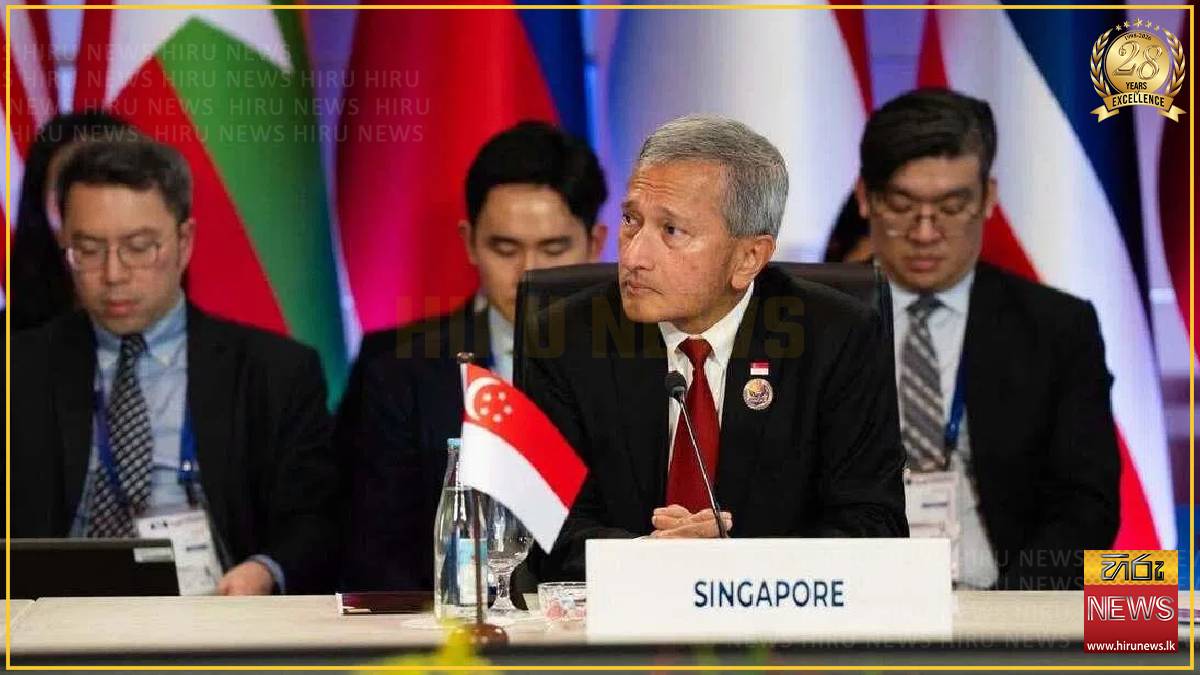
ASEAN’s partnerships with countries around the world remain one of the regional grouping’s greatest strengths, Foreign Minister Vivian Balakrishnan said on July 22.
“They have helped to advance our shared prosperity, strengthen our resilience, and contribute to peace and stability in our region and beyond,” he said in a Facebook post after attending a series of post-ministerial conferences on the sidelines of the ASEAN Foreign Ministers’ Meeting in Manila.
Discussions with ASEAN’s dialogue partners covered issues including the digital economy, green transition, supply chain resilience and people-to-people connectivity, he added.
As Singapore’s country coordinator for ASEAN-Japan dialogue relations, Balakrishnan also co-chaired the ASEAN Post-Ministerial Conference with Japan alongside Japanese Foreign Minister Motegi Toshimitsu. Both sides reaffirmed their commitment to deepen the ASEAN-Japan Comprehensive Strategic Partnership through practical cooperation.
The meetings took place as ASEAN foreign ministers engaged counterparts from major powers amid growing strategic competition in the Indo-Pacific.
One of the most closely watched engagements on the sidelines was a 90-minute meeting between US Secretary of State Marco Rubio and Chinese Foreign Minister Wang Yi. Both nations agreed to keep ties on a stable footing ahead of Chinese President Xi Jinping’s planned visit to Washington in September.
Speaking to reporters afterwards, Rubio said the talks focused on identifying areas of cooperation that could help lay the groundwork for a successful summit, even as both countries acknowledged their “great differences” over issues including Taiwan and trade.
“It would frankly be reckless and irresponsible for the US and China not to have a relationship, given the impact our countries have on the global economy and on the world,” Rubio said.
He added that both sides were working towards implementing new bilateral mechanisms on trade and investment agreed during President Donald Trump’s visit to Beijing in May. Accusations of election interference by Beijing were not discussed, Rubio said.
In his comments to reporters, Rubio also touched on escalating tensions in the South China Sea, describing the recent clash between China and the Philippines over the Second Thomas Shoal as “very negative” and benefiting no one.
He downplayed China’s role in the hostilities between the US and Iran when asked if Beijing had supplied Tehran with targeting information on US troops, adding that Beijing has been cooperative “in some cases”, in particular its public opposition to any tolling or restrictions on global shipping through international waterways.
Separately, an official Chinese readout said both sides agreed that the meeting was ultimately “pragmatic, positive, and constructive”.
However, Wang also urged the US to properly manage bilateral differences and address China’s legitimate concerns, according to the readout. This was in response to what Beijing said was a recent series of negative words and actions by the US.
Hoo Tiang Boon, an associate professor at Singapore’s Nanyang Technological University, told The Straits Times that the positive messaging coming out of the Rubio-Wang meeting continues the momentum of stabilising ties between the US and China.
“It’s sending the signal that both sides, particularly the US, want Xi’s visit to succeed,” said Hoo, who specialises in Chinese foreign policy.
“The fundamental problems that exist between China and the US are structural, and I don’t think any side will be able to resolve them any time soon,” he added. “But at the very least, it looks like they want to create structures to help mitigate differences.”
Earlier in the day, Rubio also reaffirmed the US commitment to ASEAN, describing the regional grouping as Washington’s primary mechanism for engaging South-east Asia.
He also announced US$2.5 billion (S$3.2 billion) in strategic investments in the region covering energy security, aviation infrastructure, supply chains and critical minerals.
-The Strait Times
“They have helped to advance our shared prosperity, strengthen our resilience, and contribute to peace and stability in our region and beyond,” he said in a Facebook post after attending a series of post-ministerial conferences on the sidelines of the ASEAN Foreign Ministers’ Meeting in Manila.
Discussions with ASEAN’s dialogue partners covered issues including the digital economy, green transition, supply chain resilience and people-to-people connectivity, he added.
As Singapore’s country coordinator for ASEAN-Japan dialogue relations, Balakrishnan also co-chaired the ASEAN Post-Ministerial Conference with Japan alongside Japanese Foreign Minister Motegi Toshimitsu. Both sides reaffirmed their commitment to deepen the ASEAN-Japan Comprehensive Strategic Partnership through practical cooperation.
The meetings took place as ASEAN foreign ministers engaged counterparts from major powers amid growing strategic competition in the Indo-Pacific.
One of the most closely watched engagements on the sidelines was a 90-minute meeting between US Secretary of State Marco Rubio and Chinese Foreign Minister Wang Yi. Both nations agreed to keep ties on a stable footing ahead of Chinese President Xi Jinping’s planned visit to Washington in September.
Speaking to reporters afterwards, Rubio said the talks focused on identifying areas of cooperation that could help lay the groundwork for a successful summit, even as both countries acknowledged their “great differences” over issues including Taiwan and trade.
“It would frankly be reckless and irresponsible for the US and China not to have a relationship, given the impact our countries have on the global economy and on the world,” Rubio said.
He added that both sides were working towards implementing new bilateral mechanisms on trade and investment agreed during President Donald Trump’s visit to Beijing in May. Accusations of election interference by Beijing were not discussed, Rubio said.
In his comments to reporters, Rubio also touched on escalating tensions in the South China Sea, describing the recent clash between China and the Philippines over the Second Thomas Shoal as “very negative” and benefiting no one.
He downplayed China’s role in the hostilities between the US and Iran when asked if Beijing had supplied Tehran with targeting information on US troops, adding that Beijing has been cooperative “in some cases”, in particular its public opposition to any tolling or restrictions on global shipping through international waterways.
Separately, an official Chinese readout said both sides agreed that the meeting was ultimately “pragmatic, positive, and constructive”.
However, Wang also urged the US to properly manage bilateral differences and address China’s legitimate concerns, according to the readout. This was in response to what Beijing said was a recent series of negative words and actions by the US.
Hoo Tiang Boon, an associate professor at Singapore’s Nanyang Technological University, told The Straits Times that the positive messaging coming out of the Rubio-Wang meeting continues the momentum of stabilising ties between the US and China.
“It’s sending the signal that both sides, particularly the US, want Xi’s visit to succeed,” said Hoo, who specialises in Chinese foreign policy.
“The fundamental problems that exist between China and the US are structural, and I don’t think any side will be able to resolve them any time soon,” he added. “But at the very least, it looks like they want to create structures to help mitigate differences.”
Earlier in the day, Rubio also reaffirmed the US commitment to ASEAN, describing the regional grouping as Washington’s primary mechanism for engaging South-east Asia.
He also announced US$2.5 billion (S$3.2 billion) in strategic investments in the region covering energy security, aviation infrastructure, supply chains and critical minerals.
-The Strait Times