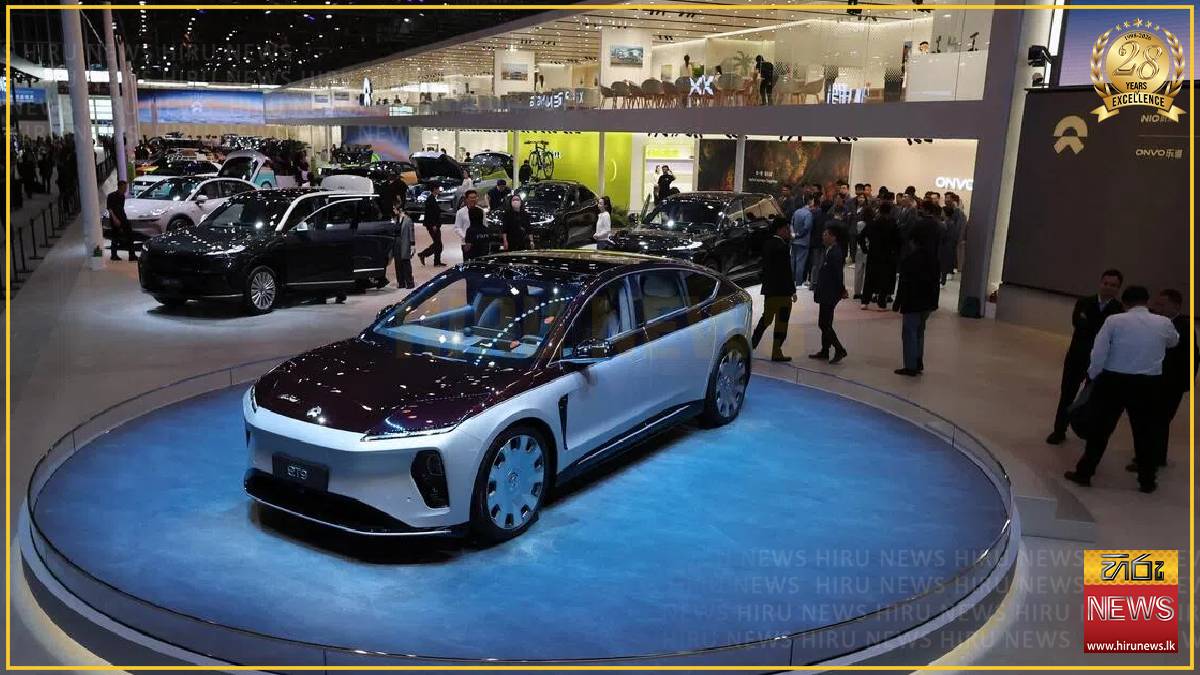
China’s new generation of supersized electric vehicles (EVs) – some more than 5m long and weighing three tonnes – is straining the nation’s roads while starving the government of fuel taxes to maintain them.
Six out of 10 new cars launched in the first half of this year stretched more than 5m – about the length of a Ford Explorer SUV.
By comparison, just 2 per cent of new models were compact vehicles under 4.5m, down from 13 percent a year earlier, according to Cui Dongshu, secretary-general of the China Passenger Car Association.
The popularity of big, heavy cars is creating a fiscal dilemma for China’s local governments. Beijing bankrolls major national highways and collects a fuel tax that is distributed to the regional authorities to maintain local roads.
However, that revenue is dwindling as EVs, which tend to be heavier than petrol cars, account for an ever-growing slice of China’s vehicle fleet and cause more road damage.
That raises the case for overhauling how roads are funded, potentially by introducing measures such as mileage-based road user charges.
The financial strain is already pushing China’s road network to a breaking point.
A study by a research unit at the nation’s transport ministry found China faces an annual funding shortfall of roughly 50 per cent for ordinary road maintenance and management.
Around 40 percent of local roads are trapped in a critical bottleneck, described by the report as “listed for maintenance but starved of funds, and desperately needing repairs but lacking the budget”.
Another study from the research arm in 2023 put the funding gap at around 300 billion yuan (S$57.14 billion) a year.
Faced with the mounting funding shortfall and growing concerns about who should contribute to road maintenance, Beijing is aggressively rolling back EV tax concessions. The decade-long sales tax discount for new energy vehicles was recently halved to 5 per cent and capped at a maximum of 15,000 yuan.
In addition, the finance ministry announced that annual vehicle and vessel tax exemptions will be completely axed for plug-in hybrids and extended-range EVs – the segments driving the oversized vehicle boom.
The government has also enforced strict mandatory energy-consumption standards that penalise excessively heavy passenger cars. The rules force automakers to pivot towards lightweight materials and aerodynamic efficiency, rather than simply adding heavier batteries for extra range.
For a long-term fix, policymakers are looking at a total overhaul of how roads are funded. In provinces like Hainan, pilot programmes are using satellite navigation systems to track targeted vehicles, laying the groundwork for a dynamic, distance-based mileage tax that could permanently end the era of the free electric ride.
State-backed media outlets have also weighed into the debate, calling on carmakers to slim down oversized vehicles and end what they called a “dangerous weight arms race.”
The People’s Daily – the flagship newspaper of the ruling Communist Party – noted in June that the size of cars had undergone severe inflation in recent years and argued that blindly scaling up vehicles not only renders third-row seating a useless gimmick, but also clashes with existing urban infrastructure and drives up overall energy consumption. The commentary urged auto design to “return to rationality”.
A series by CCTV.com on new electric vehicles (NEVs), How To Stop NEVs From Collectively Gaining Weight, blasted the trend as a step backwards for innovation. The report called the massive size of vehicles “a distorted reflection of short-term market demands and competitive strategies” and questioned how long the market could sustain the trend.
“Standardising and tightening tax policies across the board is an inevitable trend,” PCA’s Cui said. “And that’s going to guide our automotive market into balanced, healthy development.”
Great Tang
China isn’t the only country grappling with how to replace fuel taxes as more EVs hit the road. All Icelandic drivers must log odometer readings at least once a year and pay the equivalent of about 6 US cents a mile (1.6km). In New Zealand, EV owners have to buy a road user licence, which costs around US$44 (S$56.77) for 1,000km. Other countries are starting to impose higher annual registration fees on battery and hybrid cars.
Yet, larger cars continue to be seen as a status symbol in China, especially as they are not substantially pricier than mid-sized vehicles. Take BYD’s new flagship sport utility vehicle, the seven-seat Great Tang, which spans a whopping 5.3m in length with a curb weight of as much as 2,970kg and a starting price of just 239,900 yuan.
Carmakers have been adding bigger, heavier batteries to overcome range anxiety and loading up cars with accessories such as refrigerators and multi-screen entertainment systems to lure buyers. That’s a change from just five years ago, when the top-selling EV was the pint-sized Hongguang Mini.
“Without the traditional tax penalties on big engines and high fuel consumption, EVs have naturally ballooned,” said Zhu Yulong, founder of Shanghai-based consultancy Zhineng Auto. Carmakers’ aggressive pricing means “it simply makes no financial sense for consumers to buy smaller”. – With assistance from Kevin Dharmawan.
-Bloomberg
Six out of 10 new cars launched in the first half of this year stretched more than 5m – about the length of a Ford Explorer SUV.
By comparison, just 2 per cent of new models were compact vehicles under 4.5m, down from 13 percent a year earlier, according to Cui Dongshu, secretary-general of the China Passenger Car Association.
The popularity of big, heavy cars is creating a fiscal dilemma for China’s local governments. Beijing bankrolls major national highways and collects a fuel tax that is distributed to the regional authorities to maintain local roads.
However, that revenue is dwindling as EVs, which tend to be heavier than petrol cars, account for an ever-growing slice of China’s vehicle fleet and cause more road damage.
That raises the case for overhauling how roads are funded, potentially by introducing measures such as mileage-based road user charges.
The financial strain is already pushing China’s road network to a breaking point.
A study by a research unit at the nation’s transport ministry found China faces an annual funding shortfall of roughly 50 per cent for ordinary road maintenance and management.
Around 40 percent of local roads are trapped in a critical bottleneck, described by the report as “listed for maintenance but starved of funds, and desperately needing repairs but lacking the budget”.
Another study from the research arm in 2023 put the funding gap at around 300 billion yuan (S$57.14 billion) a year.
Faced with the mounting funding shortfall and growing concerns about who should contribute to road maintenance, Beijing is aggressively rolling back EV tax concessions. The decade-long sales tax discount for new energy vehicles was recently halved to 5 per cent and capped at a maximum of 15,000 yuan.
In addition, the finance ministry announced that annual vehicle and vessel tax exemptions will be completely axed for plug-in hybrids and extended-range EVs – the segments driving the oversized vehicle boom.
The government has also enforced strict mandatory energy-consumption standards that penalise excessively heavy passenger cars. The rules force automakers to pivot towards lightweight materials and aerodynamic efficiency, rather than simply adding heavier batteries for extra range.
For a long-term fix, policymakers are looking at a total overhaul of how roads are funded. In provinces like Hainan, pilot programmes are using satellite navigation systems to track targeted vehicles, laying the groundwork for a dynamic, distance-based mileage tax that could permanently end the era of the free electric ride.
State-backed media outlets have also weighed into the debate, calling on carmakers to slim down oversized vehicles and end what they called a “dangerous weight arms race.”
The People’s Daily – the flagship newspaper of the ruling Communist Party – noted in June that the size of cars had undergone severe inflation in recent years and argued that blindly scaling up vehicles not only renders third-row seating a useless gimmick, but also clashes with existing urban infrastructure and drives up overall energy consumption. The commentary urged auto design to “return to rationality”.
A series by CCTV.com on new electric vehicles (NEVs), How To Stop NEVs From Collectively Gaining Weight, blasted the trend as a step backwards for innovation. The report called the massive size of vehicles “a distorted reflection of short-term market demands and competitive strategies” and questioned how long the market could sustain the trend.
“Standardising and tightening tax policies across the board is an inevitable trend,” PCA’s Cui said. “And that’s going to guide our automotive market into balanced, healthy development.”
Great Tang
China isn’t the only country grappling with how to replace fuel taxes as more EVs hit the road. All Icelandic drivers must log odometer readings at least once a year and pay the equivalent of about 6 US cents a mile (1.6km). In New Zealand, EV owners have to buy a road user licence, which costs around US$44 (S$56.77) for 1,000km. Other countries are starting to impose higher annual registration fees on battery and hybrid cars.
Yet, larger cars continue to be seen as a status symbol in China, especially as they are not substantially pricier than mid-sized vehicles. Take BYD’s new flagship sport utility vehicle, the seven-seat Great Tang, which spans a whopping 5.3m in length with a curb weight of as much as 2,970kg and a starting price of just 239,900 yuan.
Carmakers have been adding bigger, heavier batteries to overcome range anxiety and loading up cars with accessories such as refrigerators and multi-screen entertainment systems to lure buyers. That’s a change from just five years ago, when the top-selling EV was the pint-sized Hongguang Mini.
“Without the traditional tax penalties on big engines and high fuel consumption, EVs have naturally ballooned,” said Zhu Yulong, founder of Shanghai-based consultancy Zhineng Auto. Carmakers’ aggressive pricing means “it simply makes no financial sense for consumers to buy smaller”. – With assistance from Kevin Dharmawan.
-Bloomberg