



Share Post


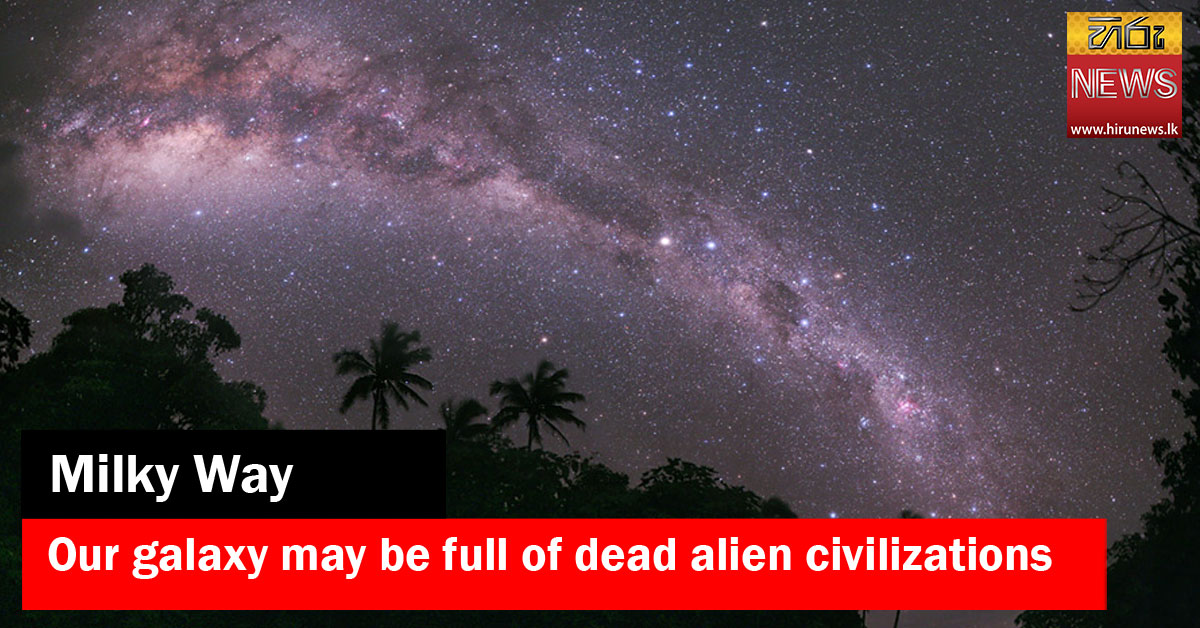
A new study published using an expanded version of the famous Drake Equation, which determines the odds of extraterrestrial intelligence existing in our Milky Way suggested that our galaxy could be home to alien civilizations, although there is a strong possibility that most of them are already dead.
The study was conducted by researchers from California Institute of Technology, NASA's Jet Propulsion Laboratory and Santiago High School.
They looked at various factors that could presumably lead to a habitable environment, and determined intelligent life may have emerged in our galaxy about 8 billion years after it was formed.
Yet to be peer-reviewed, the study also considers the factors that could have ended these civilizations such as exposure to radiation, a halt in evolution, and the tendency for intelligent life to self-annihilate, whether it be through climate change, technological advancements or war.
This suggests that any alien civilizations that are still alive are most likely young, as self-annihilation typically occurs after a long period.
“While no evidence explicitly suggests that intelligent life will eventually annihilate themselves, we cannot a priori preclude the possibility of self-annihilation,” the study reads.
The study was conducted by researchers from California Institute of Technology, NASA's Jet Propulsion Laboratory and Santiago High School.
They looked at various factors that could presumably lead to a habitable environment, and determined intelligent life may have emerged in our galaxy about 8 billion years after it was formed.
Yet to be peer-reviewed, the study also considers the factors that could have ended these civilizations such as exposure to radiation, a halt in evolution, and the tendency for intelligent life to self-annihilate, whether it be through climate change, technological advancements or war.
This suggests that any alien civilizations that are still alive are most likely young, as self-annihilation typically occurs after a long period.
“While no evidence explicitly suggests that intelligent life will eventually annihilate themselves, we cannot a priori preclude the possibility of self-annihilation,” the study reads.
Latest News
Europe targets shadow fleet tankers falsely using Cameroon flag
Local
02 July 2026

'Married at First Sight UK' star arrested on suspicion of rape
Local
02 July 2026

Hong Kong bookseller Lam Wing-kee passes away
Local
02 July 2026

Aviation industry warn of 'queue chaos' from new EU border system
Local
02 July 2026

Finding freedom from the heat on July 4 will be a challenge in US
Local
02 July 2026

Canada to announce countries backing global defence bank at NATO summit
Local
02 July 2026

UK culture minister Nandy says she is leaving X
Local
02 July 2026

Mali creates state body to regulate artisanal gold trade
Local
02 July 2026

Spurs sign Fernandes for club record £85m
Local
02 July 2026

Trump biofuel goals hit reality as US plants lag
Local
02 July 2026