Share Post


Media on Tuesday (Aug 8) asked Canada's competition watchdog to investigate Meta's blocking of news articles on Facebook and Instagram, accusing the tech giant of using its dominance to gobble up online advertising money.
Meta began blocking news last week in response to a recent law requiring digital giants to pay publishers for news content.
Google, another critic of the Online News Act, has said it is considering a similar move, among an ongoing global debate as more governments try to make tech firms pay for such content.
In a statement, industry associations News Media Canada and the Canadian Association of Broadcasters, as well as public broadcaster CBC and its French language counterpart Radio-Canada, accused Meta of "anticompetitive conduct" and "abuse of its dominant position" in the online advertising market.
Meta's blocking of news on its platforms in Canada, they said, effectively prevents Canadian media from gaining a fair slice of the advertising pie and significantly reduces their visibility on social media channels.
"Meta's anticompetitive conduct, which has attracted the attention of regulators around the world, will strengthen its already dominant position in advertising and social media distribution and harm Canadian journalism," the associations said.
They asked the Competition Bureau to prohibit Meta from continuing to block Canadians' access to news and pressed Meta to "refrain from discriminating, by algorithm or by any other means, against content from Canadian news organizations."
Meta did not react to the competition complaint, but has said the Online News Act is flawed and based on the "incorrect premise that Meta benefits unfairly from news content shared on our platforms, when the reverse is true."
Rather, it said, news outlets share content on Facebook and Instagram to attract readers, which helps their own bottom line.
The bill builds on similar legislation introduced in Australia and aims to support a struggling Canadian news sector that has seen a flight of advertising dollars and hundreds of publications closed in the last decade. Click here for article on Australian govt vs google
It requires digital giants to make fair commercial deals with Canadian outlets for the news and information that is shared on their platforms, or face binding arbitration.
An estimated 80 per cent of all online advertising revenues in Canada goes to Meta and Google.
Meanwhile, Facebook and Instagram together account for more than 70 per cent of the online social media market in the country, according to the media associations.
The parliamentary budget watchdog in an October 2022 report estimated the legislation would see Canadian media receive about C$330 million (US$250 million) per year from digital platforms
Meta began blocking news last week in response to a recent law requiring digital giants to pay publishers for news content.
Google, another critic of the Online News Act, has said it is considering a similar move, among an ongoing global debate as more governments try to make tech firms pay for such content.
In a statement, industry associations News Media Canada and the Canadian Association of Broadcasters, as well as public broadcaster CBC and its French language counterpart Radio-Canada, accused Meta of "anticompetitive conduct" and "abuse of its dominant position" in the online advertising market.
Meta's blocking of news on its platforms in Canada, they said, effectively prevents Canadian media from gaining a fair slice of the advertising pie and significantly reduces their visibility on social media channels.
"Meta's anticompetitive conduct, which has attracted the attention of regulators around the world, will strengthen its already dominant position in advertising and social media distribution and harm Canadian journalism," the associations said.
They asked the Competition Bureau to prohibit Meta from continuing to block Canadians' access to news and pressed Meta to "refrain from discriminating, by algorithm or by any other means, against content from Canadian news organizations."
Meta did not react to the competition complaint, but has said the Online News Act is flawed and based on the "incorrect premise that Meta benefits unfairly from news content shared on our platforms, when the reverse is true."
Rather, it said, news outlets share content on Facebook and Instagram to attract readers, which helps their own bottom line.
The bill builds on similar legislation introduced in Australia and aims to support a struggling Canadian news sector that has seen a flight of advertising dollars and hundreds of publications closed in the last decade. Click here for article on Australian govt vs google
It requires digital giants to make fair commercial deals with Canadian outlets for the news and information that is shared on their platforms, or face binding arbitration.
An estimated 80 per cent of all online advertising revenues in Canada goes to Meta and Google.
Meanwhile, Facebook and Instagram together account for more than 70 per cent of the online social media market in the country, according to the media associations.
The parliamentary budget watchdog in an October 2022 report estimated the legislation would see Canadian media receive about C$330 million (US$250 million) per year from digital platforms
Latest News
Death at Indian fort leads to trial by media outcry
Local
02 July 2026

At Least 13 Dead After Russian Assault on Kyiv
Local
02 July 2026

EU court upholds €4.1 bn antitrust fine on Google
Local
02 July 2026

Senior Chinese lawmaker to attend Khamenei's funeral
Local
02 July 2026

St. Peter's College, Colombo wins under-14 4x50m relay at Hiru Relay Championship 2026
Local
02 July 2026

Walala A. Rathnayake Central College sets new record at Hiru Relay Championship
Local
02 July 2026

India asks WhatsApp to pause username rollout over fraud fears
Local
02 July 2026

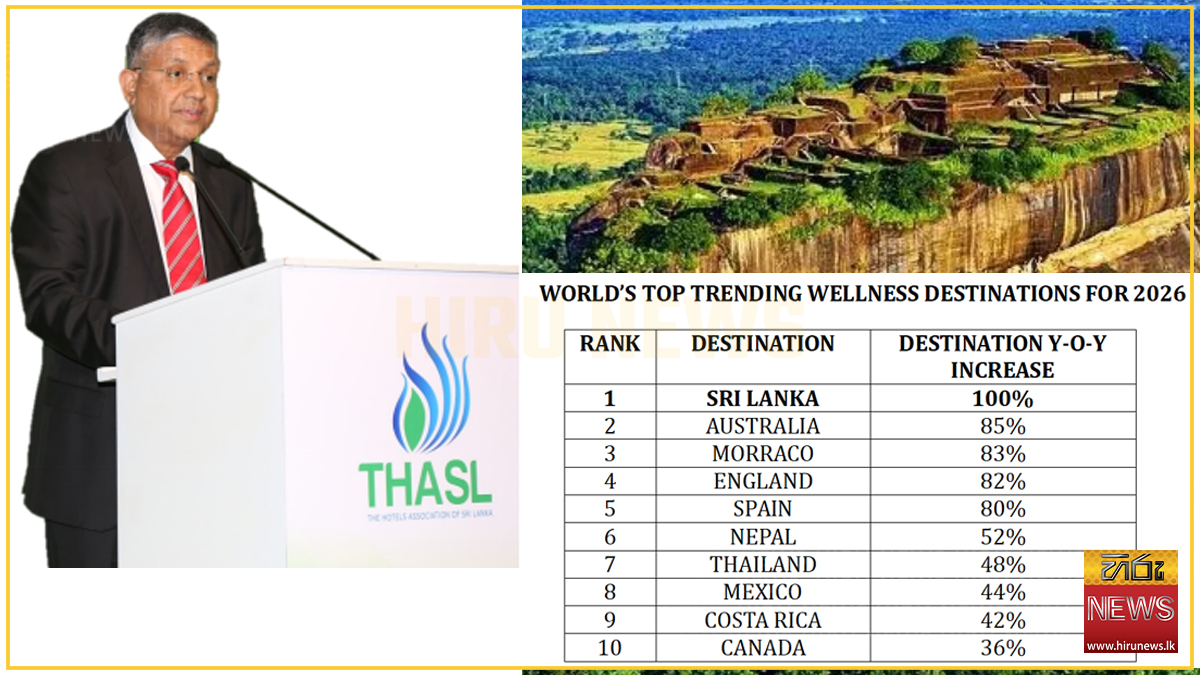
SRI LANKA RANKED WORLD’S TOP TRENDING WELLNESS DESTINATIONS FOR 2026
Local
02 July 2026
Delhi tightens grip on toxic winter smog
Local
02 July 2026

Firefighters battle wildfire in southern France
Local
02 July 2026