Share Post


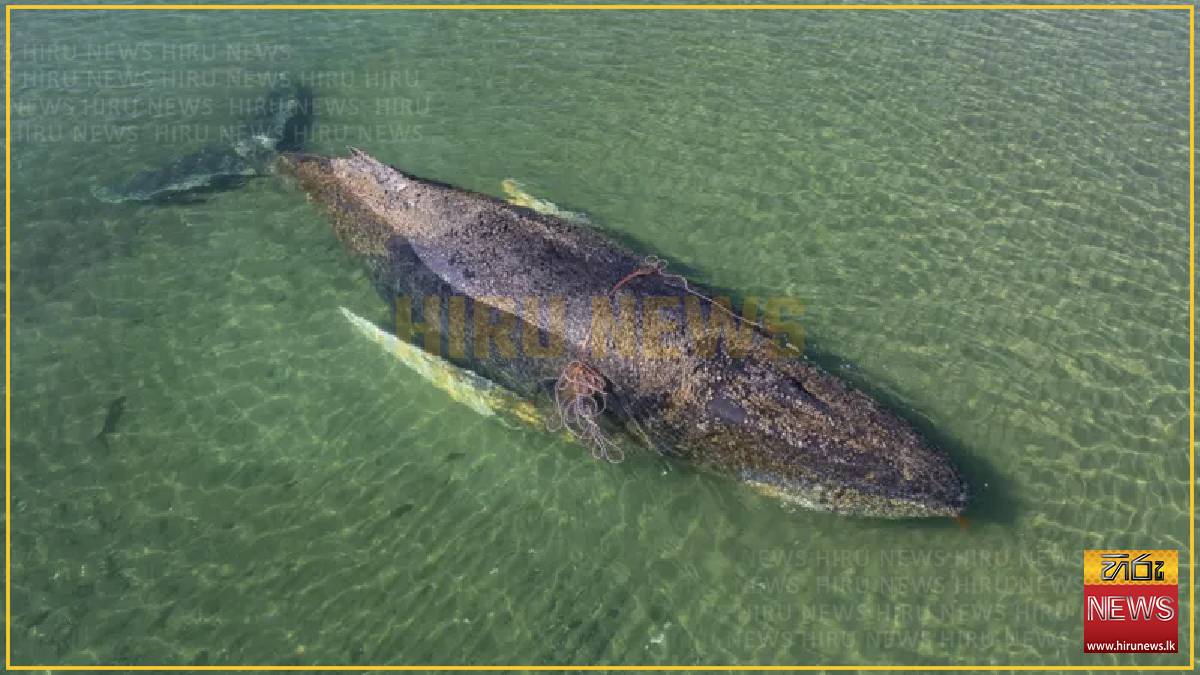
A humpback whale rescued after beaching itself in Germany has been found dead near a Danish island.
The whale was first spotted stuck on a sandbank on 23 March, off the island of Poel on Germany's Baltic coast.
It swam free in early May after a water-filled barge carried it into the North Sea.
The operation was privately funded by two German entrepreneurs and spurred intense public debate, with critics suggesting it would only cause the animal distress.
A whale carcass was reportedly spotted on Thursday off the Danish island of Anholt, located between Denmark and Sweden.
Authorities were not immediately able to confirm it was the same whale. In a statement the Danish Environmental Protection Agency said conditions on Saturday made it possible for the whale's identity to be verified, and its tracking device retrieved.
The agency told AFP "there are no concrete plans to remove the whale from the area or to perform a necropsy, and it is not currently considered to pose a problem in the area".
But it stressed that people should not approach the whale because it might carry diseases that can be transmitted to humans.
There may also be a risk of explosion, it added, because of large volumes of internal gas caused by decomposition.
The whale, nicknamed "Timmy" or "Hope" by rescuers and German media, became stranded on Timmendorfer Beach in Lübeck Bay on 23 March.
At first it freed itself but became stuck again several times.
German authorities attempted a number of rescues before announcing they were giving up.
Entrepreneurs Karin Walter-Mommert and Walter Gunz later funded a private rescue, fitting the whale with a tracking device and coaxing it onto a water-filled transport ship called Fortuna B.
Till Backhaus, the environment minister in the northern state of Mecklenburg-Vorpommern, hailed the operation as a success and an "example for Germany of what can be done".
But wildlife groups have been sceptical about the whale's future after its release into the North Sea.
The German Oceanographic Museum warned that the whale was at risk of drowning because it was so weak.
Whale and Dolphin Conservation was especially downbeat, warning that the whale had no long-term chance of survival and had suffered skin damage because of the lack of salinity in the waters along Germany's Baltic Sea coast.
-BBC
The whale was first spotted stuck on a sandbank on 23 March, off the island of Poel on Germany's Baltic coast.
It swam free in early May after a water-filled barge carried it into the North Sea.
The operation was privately funded by two German entrepreneurs and spurred intense public debate, with critics suggesting it would only cause the animal distress.
A whale carcass was reportedly spotted on Thursday off the Danish island of Anholt, located between Denmark and Sweden.
Authorities were not immediately able to confirm it was the same whale. In a statement the Danish Environmental Protection Agency said conditions on Saturday made it possible for the whale's identity to be verified, and its tracking device retrieved.
The agency told AFP "there are no concrete plans to remove the whale from the area or to perform a necropsy, and it is not currently considered to pose a problem in the area".
But it stressed that people should not approach the whale because it might carry diseases that can be transmitted to humans.
There may also be a risk of explosion, it added, because of large volumes of internal gas caused by decomposition.
The whale, nicknamed "Timmy" or "Hope" by rescuers and German media, became stranded on Timmendorfer Beach in Lübeck Bay on 23 March.
At first it freed itself but became stuck again several times.
German authorities attempted a number of rescues before announcing they were giving up.
Entrepreneurs Karin Walter-Mommert and Walter Gunz later funded a private rescue, fitting the whale with a tracking device and coaxing it onto a water-filled transport ship called Fortuna B.
Till Backhaus, the environment minister in the northern state of Mecklenburg-Vorpommern, hailed the operation as a success and an "example for Germany of what can be done".
But wildlife groups have been sceptical about the whale's future after its release into the North Sea.
The German Oceanographic Museum warned that the whale was at risk of drowning because it was so weak.
Whale and Dolphin Conservation was especially downbeat, warning that the whale had no long-term chance of survival and had suffered skin damage because of the lack of salinity in the waters along Germany's Baltic Sea coast.
-BBC
Latest News
Maguire wants 'huge threat' Rashford to stay at Man Utd
Local
16 August 2026

Elvedi set for Leeds move as £8.5m fee agreed
Local
16 August 2026

Europe's tallest Virgin Mary statue unveiled in rural Poland
Local
16 August 2026

Ronaldo hints at retirement, says upcoming year could be his last
Local
16 August 2026

Kushner in the Middle East for meetings with Hamas leader and Egypt's president
Local
16 August 2026

Belgian wildfire doubles in size tearing through nature reserve
Local
16 August 2026

Iranian parliament advances bill to curb foreign influence
Local
16 August 2026

Russia says at least seven killed in largest Ukrainian attack of 2026
Local
16 August 2026

ANC Education celebrates Class of 2026 graduation
Local
16 August 2026

Janashakthi to acquire Continental Insurance for Rs. 5.14 Bn
Local
16 August 2026