



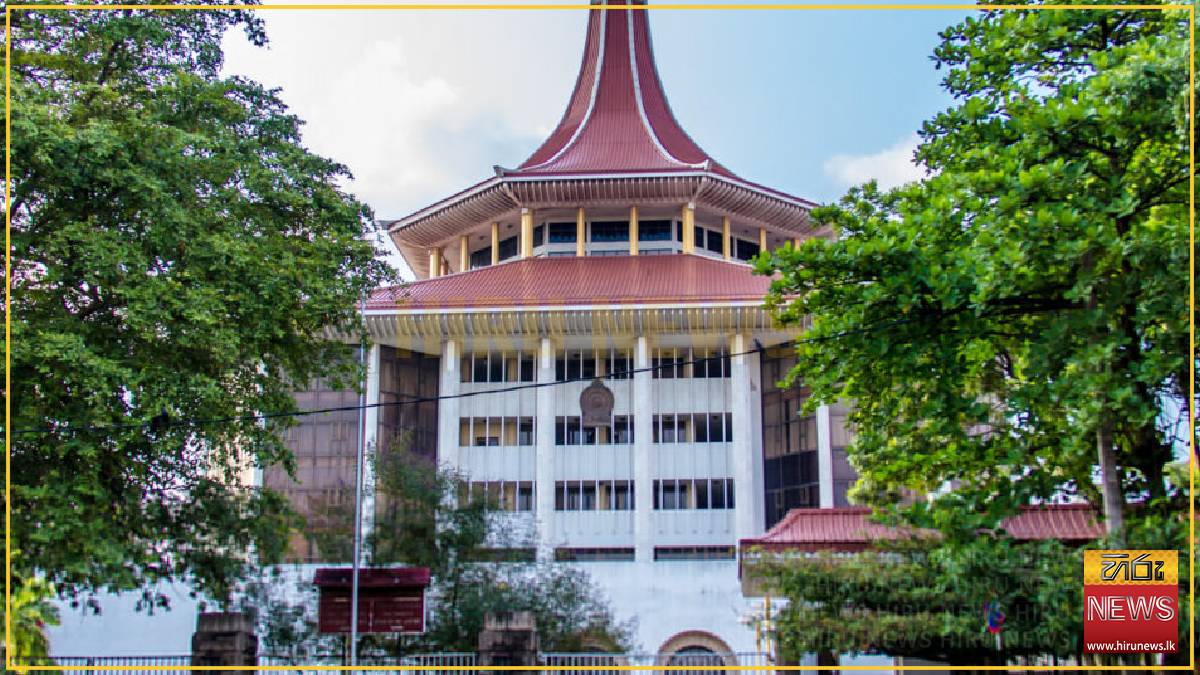


The Supreme Court ruled that banks hold the legal authority to take direct legal action against a guarantor without first suing the principal debtor, on the condition that the guarantor explicitly waived that right within the guarantee agreement.
The decision came as the Supreme Court dismissed an appeal filed by a guarantor and upheld a previous Commercial High Court ruling. That initial judgment held Vithanage Happawana liable as a guarantor for credit facilities secured from DFCC Bank Public Limited Company.
The legal battle originated from a lawsuit launched by the bank to claw back more than 5.5 million rupees plus interest from the defendant, who served as the guarantor for the company’s loan facilities.
In his defence, the guarantor contended that the company carried the primary liability as the principal debtor and sole beneficiary of the credit facilities. He argued that the firm should have been included as a party to the lawsuit and targeted with legal proceedings before any action moved against him.
The Supreme Court rejected this stance, clarifying that whilst Roman-Dutch law generally allows a surety to demand that the principal debtor face legal action first, individuals can explicitly forfeit this right through a contractual agreement.
Justice Sampath Wijeratne noted during the judgment that Clause 15 of the specific guarantee agreement explicitly granted the bank the power to pursue the guarantor directly without tackling the principal debtor beforehand.
Furthermore, the Supreme Court cast aside the defendant's assertions that he lacked knowledge of the contents within the guarantee documents and signed blank sheets. The court maintained that such a line of defence fails unless the individual signing proves to be illiterate, blind, or otherwise unable to comprehend the nature of the transaction.
The Supreme Court consequently backed the Commercial High Court judgment and decreed that the plaintiff bank receives coverage for legal costs incurred across both courts.
The Supreme Court three-judge bench consisted of Justice Yasantha Kodagoda, Justice Shiran Gooneratne, and Justice Sampath Wijeratne.
Counsel Harith de Mel alongside Hasini Rupasinghe, instructed by Chamithri Kaluhennadige, represented the guarantor.
President’s Counsel Kushan De Alwis, alongside Kaushalya Nawaratne, P.C., and Sashendra Mudannayake, instructed by Tejaka Perera, represented the bank.
Latest News
Police launch email hotline to report obscene social media content

Nepal on alert as two lakes pose continued flood threat

New machinery boosts operational capacity at Lanka Phosphate

Coca-Cola-backed hydro-powered recycling centre sets new benchmark in SL
Screenline secures ISO certification for Kandy manufacturing facility

CSE gains marginally after two-day holiday

Notices issued to 20 prison officers over Negombo prison clash

Uganda’s King Oyo Nyimba dies aged 34

Youth granted bail in obscene content case

Cheese name dispute stalls US-Mexico trade talks