



Share Post


The IMF's Executive Board signed off on Sri Lanka's combined Fifth and Sixth Reviews under the Extended Fund Facility on May 28, unlocking another SDR 508 million, roughly US$695 million, and bringing total purchases under the four-year programme to about US$2.4 billion. By the conventional measure of an IMF review, this is a pass. The prior actions on restoring cost-recovery electricity and fuel pricing were met. All end-of-December 2025 quantitative performance criteria were observed. Most of the 22 structural benchmarks due by the end of February were either met or implemented with a delay. The Fund's headline message is that performance has been "generally strong." But buried inside the 143-page Country Report No. 26/111 is a verdict that complicates that headline. Debt sustainability risk, in the IMF's own debt sustainability framework, is rated High across the overall horizon, the medium term and the long term.
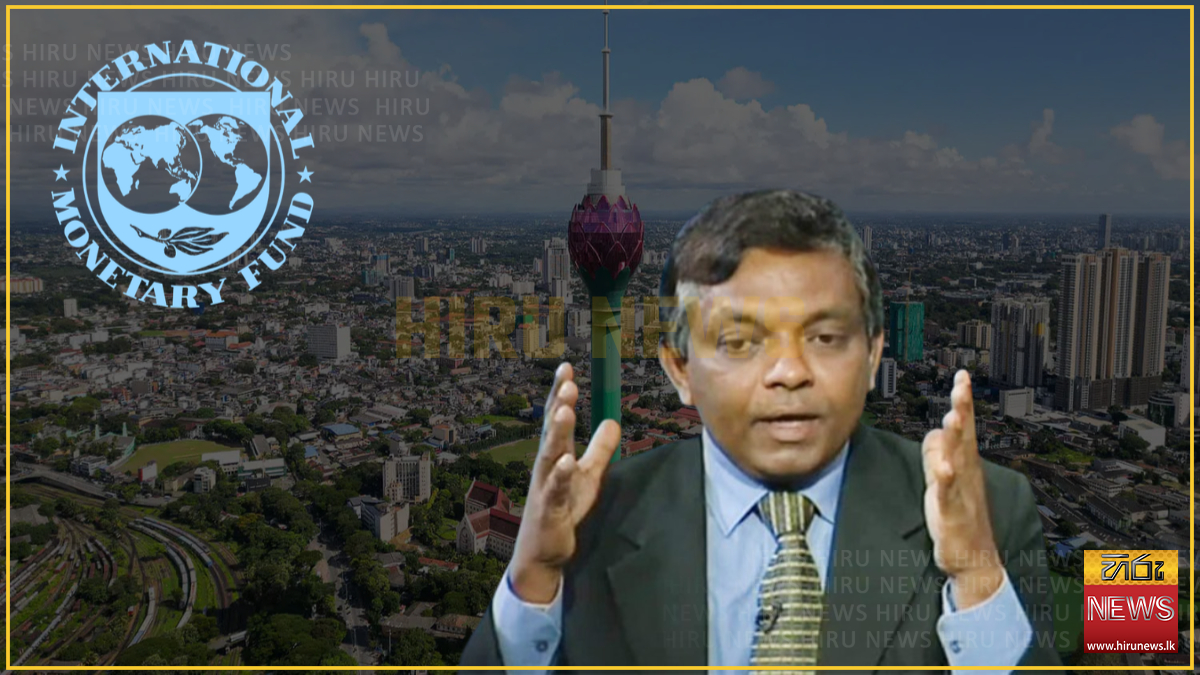
Economist Professor Priyanga Dunusinghe, in a conversation reviewing the document line by line, calls it an eye-opening report from the Fund at this point of the programme. "Sri Lanka has come back almost to where the country was in terms of debt sustainability," he says. "When the IMF say that sustainability risk remains high, that is not a good message to the international investors and the local investors and even to the Sri Lankan donors."
The starting point is that 2025 was an unusually good year. Real GDP grew 5%. The primary surplus came in at 5.4% of GDP, more than double the programme target of 2.3%. Inflation averaged below zero, on the back of falling fuel costs and a stable exchange rate. Gross official reserves climbed from US$6.1 billion at end-2024 to US$6.8 billion at end-2025, just under three and a half months of imports. And the current account closed in surplus for a third consecutive year. The Fund attributes much of this overperformance to pent-up demand for motor vehicles, which alone delivered an extra 2.0 percentage points of GDP in revenue. Tax revenue rose to 15.4% of GDP, and indirect taxes to 11.9%. The 5.4% primary surplus was, in effect, a one-off windfall, and that is the cushion the government is now spending down.
Then came two shocks. Cyclone Ditwah, in late 2025, caused damage estimated at US$3.4 billion, or 3.1% of GDP, per the forthcoming Post-Disaster Needs Assessment. The Middle East war, which broke out shortly after, is described by the Fund as "the most significant external shock to Sri Lanka since the 2022 economic crisis." The transmission channels are spelled out in Annex VI of the report. The Middle East accounts for roughly 50% of Sri Lanka's petroleum imports, 40% of remittances, and serves as a hub for 34% of flights into the country.
The Fund's strategic petroleum reserves cover only about one month of typical fuel consumption. Around 80% of pre-conflict migrant worker departures were headed to Middle Eastern destinations, and those workers remit roughly 3% of GDP every year. Tourist arrivals fell about 20% year-on-year in March, with the Fund's working assumption being a 45% drop from March to June and recovery to the pre-conflict baseline only by September. Administered fuel prices have been raised four times since February, cumulatively by 38 to 46%. Brent crude, in rupee terms, has gone from 141 LKR per litre in late February to 217 LKR in early May, a 54% jump in about ten weeks.
The combined effect is captured in the IMF's revised baseline. Pre-conflict, the Fund had been expecting 2026 growth of around 4.0%. The current projection is 3.0%, a full percentage point shaved off. End-of-period inflation has been revised up from 5.0% to 6.1%, peaking around 7% in the second quarter. The current account, which the IMF had pencilled in at +1.4% of GDP pre-conflict, is now projected at -0.5%. The oil price assumption underpinning all of this has moved from US$76 per barrel pre-conflict to US$98 currently, with the IMF assuming the conflict's economic effects persist through 2026. Reserves are now expected to reach US$8.6 billion by end-2026, rather than the US$9.3 billion the Fund was projecting at the time of the Fourth Review. None of this means the programme has unravelled, but it does mean the cushion built up in 2025 is now being absorbed.
The fiscal response has two pieces. The first is a temporary relief package, capped at LKR 100 billion, covering fuel and electricity subsidies, a fertiliser subsidy, fisheries assistance, and a one-off Aswesuma top-up. The Fund's published table shows it adding up to LKR 91.8 billion, broken down as LKR 57.0 billion for fuel, LKR 15.3 billion for electricity, LKR 6.5 billion for fertiliser, LKR 4.5 billion for fisheries, and LKR 8.5 billion for Aswesuma. The second is cyclone recovery and reconstruction, which the IMF puts at LKR 500 billion of new funding in the 2026 Supplementary Budget, plus another LKR 100 billion in reallocations, for a total 2026 effort of LKR 600 billion, about 1.7% of GDP. Across 2025-28, the combined effort comes to LKR 850 billion. The 2026 primary surplus target has been lowered to 1.4% of GDP to accommodate this, with a commitment to return to the 2.3% target from 2027 onward.
Dunusinghe sees the design of that relief package as the place where the IMF's preferences are most clearly visible. "While the IMF supports a social safety net, it does not basically support the across-the-board subsidy provision," he says. "That is why it has basically highlighted the need for the revision of specific items as well, while providing subsidies, if needed, only to the Aswesuma recipient." He reads the IMF's prior action on cost-recovery pricing, the LKR 100 billion ceiling and the September 2026 sunset together as a single, consistent message: temporary support is permissible, but it has to be on-budget, capped, time-bound, and increasingly channelled through Aswesuma rather than through universal subsidies. "The vulnerable community should be supported, but such support should be built into the Aswesuma program, and then it could be directed well, and there are no leakages, and there is no broad-based subsidy provision. So as a result of that, it won't be a burden to the budget."
The cost-recovery pricing question is, in his reading, even more pointed. The continuous structural benchmark on fuel cost-recovery has not been met since April, because price hikes 'only partially reflected' the post-conflict cost increases. The continuous benchmark on electricity has not been met since January. The 10.9 percent average tariff increase approved for the second quarter of 2026 does not, the Fund says, fully incorporate the higher fuel prices or the changed generation mix. The report contains a notable institutional move: the IMF is pressing for the PUCSL's mandate to be hard-wired toward cost recovery. "It seems that, according to the IMF review document, it highlighted that the government may introduce some amendments to the PUCSL bill and make it compulsory for the utility commission to comply with this cost-recovery pricing," Dunusinghe observes. "I think that is a key point in the IMF review document, and highlights the need for cost-reflective pricing." The Fund's own language envisions a new electricity tariff methodology with forward-looking, rules-based adjustment mechanisms, an end-June reporting requirement on cost-recovery to Parliament, and a new structural benchmark SB20 for an end-August deadline.
His broader argument is that piecemeal price adjustments now will be cheaper than a single large shock later. "The government must adjust prices regularly rather than waiting to absorb a large shock," he says. "It is good to absorb immediately, and basically that encourages people to change their behaviour, and it has to be done regularly rather than waiting to absorb the larger shock down the line that could lead to some even social unrest." The IMF, he notes, is itself working with a scenario in which oil prices remain elevated through 2026 and beyond. "When you go through the press release, today's IMF release with respect to Sri Lanka's Extended Fund Facility, under the EFF program, I could see that IMF, to some extent, assume the Middle East conflict to continue at least in the medium term. So in that respect, postponing any price adjustment is not a wise decision."
The revenue picture is where Dunusinghe and the Fund converge most explicitly. The IMF's own Change in Revenue to GDP table for 2025-26 shows a -1.4-percentage point swing in the tax revenue ratio, driven overwhelmingly by the normalisation of motor vehicle imports (-1.14 ppt) and the reduction of CESS on input goods (-0.08 ppt), partially offset by 0.3 ppt of new measures and compliance gains. Tax revenue, which reached 15.4% of GDP in 2025, is projected at 14.0% in 2026. The Fund is candid that the pent-up vehicle demand that drove the 2025 outperformance is fading and that revenue collection is fundamentally weaker than the headline suggests.
Dunusinghe puts the same point in plainer terms. "The IMF has highlighted the relatively weak revenue position because now the pent-up demand is over, so the government may not be able to achieve the primary surplus targets. So the IMF has suggested a medium-term revenue strategy to be implemented while strengthening the tax administration, and the government is required to come up with tax reforms that are both revenue-enhancing and investor-friendly." That MTRS, with diagnostics by IMF technical assistance and an end-October publication deadline, is now a structural benchmark SB25.
The debt sustainability analysis is the section most likely to shape how markets read this review. The headline numbers have improved relative to the Fourth Review, the projected debt-to-GDP ratio at end-2032 has declined to 86.7% from 88.5%, the average gross financing needs to GDP ratio in 2027-32 has declined to 12.6% from 12.7%, and the average FX debt service to GDP in 2027-32 has declined to 3.3% from 3.6%. All three remain comfortably inside the DSA's own ceilings. But the IMF's risk assessment table, Figure 1 of the DSA annex, holds the final verdict at High for the overall horizon, High for the medium term (with both fan chart and GFN signals flashing High), and High for the long term, citing a declining labour force and climate vulnerabilities. The mechanical signals on the medium-term index, that Dunusinghe alluded to from memory in our call, are present in the report exactly as he described, with the medium-term index registering "High" against the relevant threshold band and the long-term assessment finalised at "High." The Fund's own summary in the DSA, "debt sustainability risks will remain high for many years", is unusually direct.
Dunusinghe reads this as the most consequential single signal in the document, especially in the context of Sri Lanka's planned return to international capital markets. "Towards the end of this IMF program, there was a plan that Sri Lanka issue some interest-bearing bonds and enter into the capital market. Now, in the idea, let's say now the debt-sustainability-related risk remains high, that sends a very negative signal." The DSA explicitly notes that the projected improvement in debt indicators "hinges on sustained reform momentum", and that the post-restructuring economy is "prone to policy slippages, climate risks, and external shocks." Public debt remains above 100% of GDP in 2026 by the IMF's broader definition, declining to 95.5% only by 2028. External debt as a share of GDP rises from 50.3% in 2025 to 52.7% in 2027.
The reserves picture, which Dunusinghe linked back to the IMF's own pre-programme trajectory, is similarly mixed. Gross official reserves were US$6.8 billion at end-2025 (3.1 months of imports, 53% of the ARA composite metric on a floating-exchange-rate basis, 47% on a crawl-like basis). The IMF projects them rising to US$8.6 billion by end-2026 and US$11.8 billion by end-2027, but this is contingent on, among other things, US$2.2 billion of net foreign exchange purchases by CBSL in 2026 and a small issuance of local-law dollar-denominated debt. Reserves accumulation has, the IMF notes, slowed since the Middle East conflict began. The end-March indicative target on net international reserves was "narrowly missed", a phrase the Fund uses when a slippage is small enough not to require a waiver. The picture that emerges is not a reserves crisis, but a target that is now being met by a much smaller margin than would have been desirable.
The monetary and exchange rate stance is the area where the Fund is, by its standards, most explicit. The current policy rate of 7.75%, held since the 25 basis point cut in May 2025, translates into a forward-looking real rate of about 2.75%, against an estimated neutral real rate of around 3%.
Inflation expectations remain anchored at around 4.8% in surveys, but the IMF wants CBSL to be ready to tighten if expectations show signs of de-anchoring. On the exchange rate, the Fund repeats the line that "greater exchange rate flexibility and gradually phasing out the balance-of-payments measures remain critical to rebuild external buffers and resilience", language Dunusinghe reads as a clear preference for letting the rupee absorb the shock from higher energy prices, rather than burning reserves to defend a number.
On public investment, Dunusinghe is particularly sharp, and the report supports him. The IMF notes that capital expenditure under-execution remained a problem in 2025, actual capital spending came in at 3.0% of GDP against a planned 4.0% in the Fourth Review, and signals that 'the same thing is happening in 2026.' It is in this context that the report introduces a new structural benchmark SB17, end-August, requiring a standardised appraisal methodology and project selection criteria for the Public Investment Committee, along with an end-2026 commitment to clean up the public investment portfolio and publish a list of major projects. "IMF highlights it is not a favourable situation; actually, it is an unhealthy situation which limits the private sector development, which limits the foreign investment," Dunusinghe says. The Fund's own language is more diplomatic, but the conclusion is the same: chronic under-execution of capital spending is suppressing both the multiplier of the budget and the country's growth potential. The growth and structural reforms section makes the broader point quantitatively: well-calibrated reforms could lift real GDP by 4 percentage points in the short term and 8 percentage points in the long term, against a 2026 actual growth projection of 3%.
The combined Fifth and Sixth Review is not a clean pass even on the binding conditionality. The continuous performance criterion on no new external payment arrears was breached in November, when a US$2.5 million debt payment to the Government of Australia went missing as a result of a cybercrime incident at the Treasury. The arrears were small in dollar terms (0.002% of GDP) but symbolically uncomfortable, and the IMF has had to recommend a waiver of non-observance, predicated on the adoption of corrective actions, new standard operating procedures by end-June, and operationalisation of the new "Meridien" debt management information system by end-August. Six of the 22 end-February structural benchmarks were not met: the 2026 Budget (delayed because of the supplementary cyclone Budget), the cost-recovery fuel and electricity pricing (delayed and falling short of full pass-through), the PFM Act regulations (reformulated and reset to SB19, end-July), Customs legislation (handled through an MoU between Customs and the Board of Investment), and the PUCSL Act amendments (achieved via amendments to the PUCSL Rules). The waiver is granted based on a minor breach. But Dunusinghe is right to flag that the report names what was missed: "If you carefully look at the report, we can identify several areas where Sri Lanka has failed in meeting IMF targets. Some of those targets may be binding, some of the others may not be binding, but now the IMF has highlighted all the binding and non-binding constraints."
The Risk Assessment Matrix in Annex IV is, on its own, the most alarming single page in the document. Of the items the IMF rates as "High likelihood" with a high expected impact, the report includes: domestic programme financing risks, capacity constraints, protectionism and trade disruptions, fiscal vulnerabilities and higher interest rates, and cyber threats. Geopolitical tensions are rated High likelihood with Medium impact. Commodity price volatility is rated High likelihood with Medium impact. The Fund's external risks list is, in effect, a list of things that are already happening. The US has imposed Section 122 tariffs that put Sri Lanka's effective rate at around 20%. The country's GSP+ access to the EU expires in 2026, and the authorities plan to reapply under the revised framework. The financial sector has its own item, credit to the private sector grew 25% y/y in December, even after tightening loan-to-value limits, and a fraud incident at National Development Bank in early April surfaced LKR 13.2 billion in fraudulent transfers over 22 months, equivalent to about 4% of the bank's Tier 1 capital.
The closing frame, in Dunusinghe's reading, is the post-IMF question. The programme has roughly nine months left to run. The Fund's own staff appraisal acknowledges that even after a successful programme and a near-complete debt restructuring, "debt sustainability risks will remain high for many years." Sri Lanka has not yet returned to international capital markets, has not yet built reserves to the 100% ARA threshold that is the programme's medium-term target, and is being asked to do its biggest revenue reforms, the MTRS, the property tax, the National Tariff Policy, and public investment management, in the window between now and February 2027. "The country may not be strong enough to move forward without it," Dunusinghe says, of the post-programme period. "Policymakers must think about how we plan out our post-IMF period, assess whether the economy is strong enough to face the challenges. If the country is unable to access the international capital market, and if the donor agencies, multilateral and bilateral agencies, are not really willing to extend their development finance, then I think the country is in a not in a favourable or healthy environment."
His final point on growth threads back through everything else in the report. The IMF's own structural reform agenda, the under-execution of public investment, the high debt sustainability risk, the dependence on motor vehicle revenues, and the continued elevation of external debt all of these resolve, in his telling, into a single problem the country has to solve in the next nine months and beyond. "Economic or macroeconomic stability alone cannot guarantee the medium to long-term debt sustainability. We need to enhance our growth. Growth, we need to focus on growth. I think that is the key message in this IMF report. Without growth, if we continue, it could lead to several difficulties, not just the sustainability front, but even in the area of social stability, political stability."
On the page, the Fifth and Sixth Reviews are a US$695 million disbursement and a Board press release commending Sri Lanka's strong implementation under "challenging circumstances." Inside the document, the same Fund is signalling that the easy gains from disinflation, vehicle imports, and a benign global environment are behind us, and that the next stretch of the programme, and the period after it, will turn on the reforms the country has been slowest to deliver: cost-reflective energy pricing, a credible medium-term revenue strategy, public investment that actually executes, and structural reforms that lift the country's growth potential rather than just stabilising its macro position. The Fund's verdict on the past two years is generous. Its verdict on what comes next, read carefully, is not.
Economist Professor Priyanga Dunusinghe, in a conversation reviewing the document line by line, calls it an eye-opening report from the Fund at this point of the programme. "Sri Lanka has come back almost to where the country was in terms of debt sustainability," he says. "When the IMF say that sustainability risk remains high, that is not a good message to the international investors and the local investors and even to the Sri Lankan donors."
The starting point is that 2025 was an unusually good year. Real GDP grew 5%. The primary surplus came in at 5.4% of GDP, more than double the programme target of 2.3%. Inflation averaged below zero, on the back of falling fuel costs and a stable exchange rate. Gross official reserves climbed from US$6.1 billion at end-2024 to US$6.8 billion at end-2025, just under three and a half months of imports. And the current account closed in surplus for a third consecutive year. The Fund attributes much of this overperformance to pent-up demand for motor vehicles, which alone delivered an extra 2.0 percentage points of GDP in revenue. Tax revenue rose to 15.4% of GDP, and indirect taxes to 11.9%. The 5.4% primary surplus was, in effect, a one-off windfall, and that is the cushion the government is now spending down.
Then came two shocks. Cyclone Ditwah, in late 2025, caused damage estimated at US$3.4 billion, or 3.1% of GDP, per the forthcoming Post-Disaster Needs Assessment. The Middle East war, which broke out shortly after, is described by the Fund as "the most significant external shock to Sri Lanka since the 2022 economic crisis." The transmission channels are spelled out in Annex VI of the report. The Middle East accounts for roughly 50% of Sri Lanka's petroleum imports, 40% of remittances, and serves as a hub for 34% of flights into the country.
The Fund's strategic petroleum reserves cover only about one month of typical fuel consumption. Around 80% of pre-conflict migrant worker departures were headed to Middle Eastern destinations, and those workers remit roughly 3% of GDP every year. Tourist arrivals fell about 20% year-on-year in March, with the Fund's working assumption being a 45% drop from March to June and recovery to the pre-conflict baseline only by September. Administered fuel prices have been raised four times since February, cumulatively by 38 to 46%. Brent crude, in rupee terms, has gone from 141 LKR per litre in late February to 217 LKR in early May, a 54% jump in about ten weeks.
The combined effect is captured in the IMF's revised baseline. Pre-conflict, the Fund had been expecting 2026 growth of around 4.0%. The current projection is 3.0%, a full percentage point shaved off. End-of-period inflation has been revised up from 5.0% to 6.1%, peaking around 7% in the second quarter. The current account, which the IMF had pencilled in at +1.4% of GDP pre-conflict, is now projected at -0.5%. The oil price assumption underpinning all of this has moved from US$76 per barrel pre-conflict to US$98 currently, with the IMF assuming the conflict's economic effects persist through 2026. Reserves are now expected to reach US$8.6 billion by end-2026, rather than the US$9.3 billion the Fund was projecting at the time of the Fourth Review. None of this means the programme has unravelled, but it does mean the cushion built up in 2025 is now being absorbed.
The fiscal response has two pieces. The first is a temporary relief package, capped at LKR 100 billion, covering fuel and electricity subsidies, a fertiliser subsidy, fisheries assistance, and a one-off Aswesuma top-up. The Fund's published table shows it adding up to LKR 91.8 billion, broken down as LKR 57.0 billion for fuel, LKR 15.3 billion for electricity, LKR 6.5 billion for fertiliser, LKR 4.5 billion for fisheries, and LKR 8.5 billion for Aswesuma. The second is cyclone recovery and reconstruction, which the IMF puts at LKR 500 billion of new funding in the 2026 Supplementary Budget, plus another LKR 100 billion in reallocations, for a total 2026 effort of LKR 600 billion, about 1.7% of GDP. Across 2025-28, the combined effort comes to LKR 850 billion. The 2026 primary surplus target has been lowered to 1.4% of GDP to accommodate this, with a commitment to return to the 2.3% target from 2027 onward.
Dunusinghe sees the design of that relief package as the place where the IMF's preferences are most clearly visible. "While the IMF supports a social safety net, it does not basically support the across-the-board subsidy provision," he says. "That is why it has basically highlighted the need for the revision of specific items as well, while providing subsidies, if needed, only to the Aswesuma recipient." He reads the IMF's prior action on cost-recovery pricing, the LKR 100 billion ceiling and the September 2026 sunset together as a single, consistent message: temporary support is permissible, but it has to be on-budget, capped, time-bound, and increasingly channelled through Aswesuma rather than through universal subsidies. "The vulnerable community should be supported, but such support should be built into the Aswesuma program, and then it could be directed well, and there are no leakages, and there is no broad-based subsidy provision. So as a result of that, it won't be a burden to the budget."
The cost-recovery pricing question is, in his reading, even more pointed. The continuous structural benchmark on fuel cost-recovery has not been met since April, because price hikes 'only partially reflected' the post-conflict cost increases. The continuous benchmark on electricity has not been met since January. The 10.9 percent average tariff increase approved for the second quarter of 2026 does not, the Fund says, fully incorporate the higher fuel prices or the changed generation mix. The report contains a notable institutional move: the IMF is pressing for the PUCSL's mandate to be hard-wired toward cost recovery. "It seems that, according to the IMF review document, it highlighted that the government may introduce some amendments to the PUCSL bill and make it compulsory for the utility commission to comply with this cost-recovery pricing," Dunusinghe observes. "I think that is a key point in the IMF review document, and highlights the need for cost-reflective pricing." The Fund's own language envisions a new electricity tariff methodology with forward-looking, rules-based adjustment mechanisms, an end-June reporting requirement on cost-recovery to Parliament, and a new structural benchmark SB20 for an end-August deadline.
His broader argument is that piecemeal price adjustments now will be cheaper than a single large shock later. "The government must adjust prices regularly rather than waiting to absorb a large shock," he says. "It is good to absorb immediately, and basically that encourages people to change their behaviour, and it has to be done regularly rather than waiting to absorb the larger shock down the line that could lead to some even social unrest." The IMF, he notes, is itself working with a scenario in which oil prices remain elevated through 2026 and beyond. "When you go through the press release, today's IMF release with respect to Sri Lanka's Extended Fund Facility, under the EFF program, I could see that IMF, to some extent, assume the Middle East conflict to continue at least in the medium term. So in that respect, postponing any price adjustment is not a wise decision."
The revenue picture is where Dunusinghe and the Fund converge most explicitly. The IMF's own Change in Revenue to GDP table for 2025-26 shows a -1.4-percentage point swing in the tax revenue ratio, driven overwhelmingly by the normalisation of motor vehicle imports (-1.14 ppt) and the reduction of CESS on input goods (-0.08 ppt), partially offset by 0.3 ppt of new measures and compliance gains. Tax revenue, which reached 15.4% of GDP in 2025, is projected at 14.0% in 2026. The Fund is candid that the pent-up vehicle demand that drove the 2025 outperformance is fading and that revenue collection is fundamentally weaker than the headline suggests.
Dunusinghe puts the same point in plainer terms. "The IMF has highlighted the relatively weak revenue position because now the pent-up demand is over, so the government may not be able to achieve the primary surplus targets. So the IMF has suggested a medium-term revenue strategy to be implemented while strengthening the tax administration, and the government is required to come up with tax reforms that are both revenue-enhancing and investor-friendly." That MTRS, with diagnostics by IMF technical assistance and an end-October publication deadline, is now a structural benchmark SB25.
The debt sustainability analysis is the section most likely to shape how markets read this review. The headline numbers have improved relative to the Fourth Review, the projected debt-to-GDP ratio at end-2032 has declined to 86.7% from 88.5%, the average gross financing needs to GDP ratio in 2027-32 has declined to 12.6% from 12.7%, and the average FX debt service to GDP in 2027-32 has declined to 3.3% from 3.6%. All three remain comfortably inside the DSA's own ceilings. But the IMF's risk assessment table, Figure 1 of the DSA annex, holds the final verdict at High for the overall horizon, High for the medium term (with both fan chart and GFN signals flashing High), and High for the long term, citing a declining labour force and climate vulnerabilities. The mechanical signals on the medium-term index, that Dunusinghe alluded to from memory in our call, are present in the report exactly as he described, with the medium-term index registering "High" against the relevant threshold band and the long-term assessment finalised at "High." The Fund's own summary in the DSA, "debt sustainability risks will remain high for many years", is unusually direct.
Dunusinghe reads this as the most consequential single signal in the document, especially in the context of Sri Lanka's planned return to international capital markets. "Towards the end of this IMF program, there was a plan that Sri Lanka issue some interest-bearing bonds and enter into the capital market. Now, in the idea, let's say now the debt-sustainability-related risk remains high, that sends a very negative signal." The DSA explicitly notes that the projected improvement in debt indicators "hinges on sustained reform momentum", and that the post-restructuring economy is "prone to policy slippages, climate risks, and external shocks." Public debt remains above 100% of GDP in 2026 by the IMF's broader definition, declining to 95.5% only by 2028. External debt as a share of GDP rises from 50.3% in 2025 to 52.7% in 2027.
The reserves picture, which Dunusinghe linked back to the IMF's own pre-programme trajectory, is similarly mixed. Gross official reserves were US$6.8 billion at end-2025 (3.1 months of imports, 53% of the ARA composite metric on a floating-exchange-rate basis, 47% on a crawl-like basis). The IMF projects them rising to US$8.6 billion by end-2026 and US$11.8 billion by end-2027, but this is contingent on, among other things, US$2.2 billion of net foreign exchange purchases by CBSL in 2026 and a small issuance of local-law dollar-denominated debt. Reserves accumulation has, the IMF notes, slowed since the Middle East conflict began. The end-March indicative target on net international reserves was "narrowly missed", a phrase the Fund uses when a slippage is small enough not to require a waiver. The picture that emerges is not a reserves crisis, but a target that is now being met by a much smaller margin than would have been desirable.
The monetary and exchange rate stance is the area where the Fund is, by its standards, most explicit. The current policy rate of 7.75%, held since the 25 basis point cut in May 2025, translates into a forward-looking real rate of about 2.75%, against an estimated neutral real rate of around 3%.
Inflation expectations remain anchored at around 4.8% in surveys, but the IMF wants CBSL to be ready to tighten if expectations show signs of de-anchoring. On the exchange rate, the Fund repeats the line that "greater exchange rate flexibility and gradually phasing out the balance-of-payments measures remain critical to rebuild external buffers and resilience", language Dunusinghe reads as a clear preference for letting the rupee absorb the shock from higher energy prices, rather than burning reserves to defend a number.
On public investment, Dunusinghe is particularly sharp, and the report supports him. The IMF notes that capital expenditure under-execution remained a problem in 2025, actual capital spending came in at 3.0% of GDP against a planned 4.0% in the Fourth Review, and signals that 'the same thing is happening in 2026.' It is in this context that the report introduces a new structural benchmark SB17, end-August, requiring a standardised appraisal methodology and project selection criteria for the Public Investment Committee, along with an end-2026 commitment to clean up the public investment portfolio and publish a list of major projects. "IMF highlights it is not a favourable situation; actually, it is an unhealthy situation which limits the private sector development, which limits the foreign investment," Dunusinghe says. The Fund's own language is more diplomatic, but the conclusion is the same: chronic under-execution of capital spending is suppressing both the multiplier of the budget and the country's growth potential. The growth and structural reforms section makes the broader point quantitatively: well-calibrated reforms could lift real GDP by 4 percentage points in the short term and 8 percentage points in the long term, against a 2026 actual growth projection of 3%.
The combined Fifth and Sixth Review is not a clean pass even on the binding conditionality. The continuous performance criterion on no new external payment arrears was breached in November, when a US$2.5 million debt payment to the Government of Australia went missing as a result of a cybercrime incident at the Treasury. The arrears were small in dollar terms (0.002% of GDP) but symbolically uncomfortable, and the IMF has had to recommend a waiver of non-observance, predicated on the adoption of corrective actions, new standard operating procedures by end-June, and operationalisation of the new "Meridien" debt management information system by end-August. Six of the 22 end-February structural benchmarks were not met: the 2026 Budget (delayed because of the supplementary cyclone Budget), the cost-recovery fuel and electricity pricing (delayed and falling short of full pass-through), the PFM Act regulations (reformulated and reset to SB19, end-July), Customs legislation (handled through an MoU between Customs and the Board of Investment), and the PUCSL Act amendments (achieved via amendments to the PUCSL Rules). The waiver is granted based on a minor breach. But Dunusinghe is right to flag that the report names what was missed: "If you carefully look at the report, we can identify several areas where Sri Lanka has failed in meeting IMF targets. Some of those targets may be binding, some of the others may not be binding, but now the IMF has highlighted all the binding and non-binding constraints."
The Risk Assessment Matrix in Annex IV is, on its own, the most alarming single page in the document. Of the items the IMF rates as "High likelihood" with a high expected impact, the report includes: domestic programme financing risks, capacity constraints, protectionism and trade disruptions, fiscal vulnerabilities and higher interest rates, and cyber threats. Geopolitical tensions are rated High likelihood with Medium impact. Commodity price volatility is rated High likelihood with Medium impact. The Fund's external risks list is, in effect, a list of things that are already happening. The US has imposed Section 122 tariffs that put Sri Lanka's effective rate at around 20%. The country's GSP+ access to the EU expires in 2026, and the authorities plan to reapply under the revised framework. The financial sector has its own item, credit to the private sector grew 25% y/y in December, even after tightening loan-to-value limits, and a fraud incident at National Development Bank in early April surfaced LKR 13.2 billion in fraudulent transfers over 22 months, equivalent to about 4% of the bank's Tier 1 capital.
The closing frame, in Dunusinghe's reading, is the post-IMF question. The programme has roughly nine months left to run. The Fund's own staff appraisal acknowledges that even after a successful programme and a near-complete debt restructuring, "debt sustainability risks will remain high for many years." Sri Lanka has not yet returned to international capital markets, has not yet built reserves to the 100% ARA threshold that is the programme's medium-term target, and is being asked to do its biggest revenue reforms, the MTRS, the property tax, the National Tariff Policy, and public investment management, in the window between now and February 2027. "The country may not be strong enough to move forward without it," Dunusinghe says, of the post-programme period. "Policymakers must think about how we plan out our post-IMF period, assess whether the economy is strong enough to face the challenges. If the country is unable to access the international capital market, and if the donor agencies, multilateral and bilateral agencies, are not really willing to extend their development finance, then I think the country is in a not in a favourable or healthy environment."
His final point on growth threads back through everything else in the report. The IMF's own structural reform agenda, the under-execution of public investment, the high debt sustainability risk, the dependence on motor vehicle revenues, and the continued elevation of external debt all of these resolve, in his telling, into a single problem the country has to solve in the next nine months and beyond. "Economic or macroeconomic stability alone cannot guarantee the medium to long-term debt sustainability. We need to enhance our growth. Growth, we need to focus on growth. I think that is the key message in this IMF report. Without growth, if we continue, it could lead to several difficulties, not just the sustainability front, but even in the area of social stability, political stability."
On the page, the Fifth and Sixth Reviews are a US$695 million disbursement and a Board press release commending Sri Lanka's strong implementation under "challenging circumstances." Inside the document, the same Fund is signalling that the easy gains from disinflation, vehicle imports, and a benign global environment are behind us, and that the next stretch of the programme, and the period after it, will turn on the reforms the country has been slowest to deliver: cost-reflective energy pricing, a credible medium-term revenue strategy, public investment that actually executes, and structural reforms that lift the country's growth potential rather than just stabilising its macro position. The Fund's verdict on the past two years is generous. Its verdict on what comes next, read carefully, is not.
Latest News
Police launch email hotline to report obscene social media content
Local
28 August 2026

Nepal on alert as two lakes pose continued flood threat
Local
28 August 2026
New machinery boosts operational capacity at Lanka Phosphate
Local
28 August 2026

Coca-Cola-backed hydro-powered recycling centre sets new benchmark in SL
Local
28 August 2026
Screenline secures ISO certification for Kandy manufacturing facility
Local
28 August 2026
CSE gains marginally after two-day holiday
Local
28 August 2026
Notices issued to 20 prison officers over Negombo prison clash
Local
28 August 2026
Uganda’s King Oyo Nyimba dies aged 34
Local
28 August 2026

Youth granted bail in obscene content case
Local
28 August 2026

Cheese name dispute stalls US-Mexico trade talks
Local
28 August 2026