



Share Post


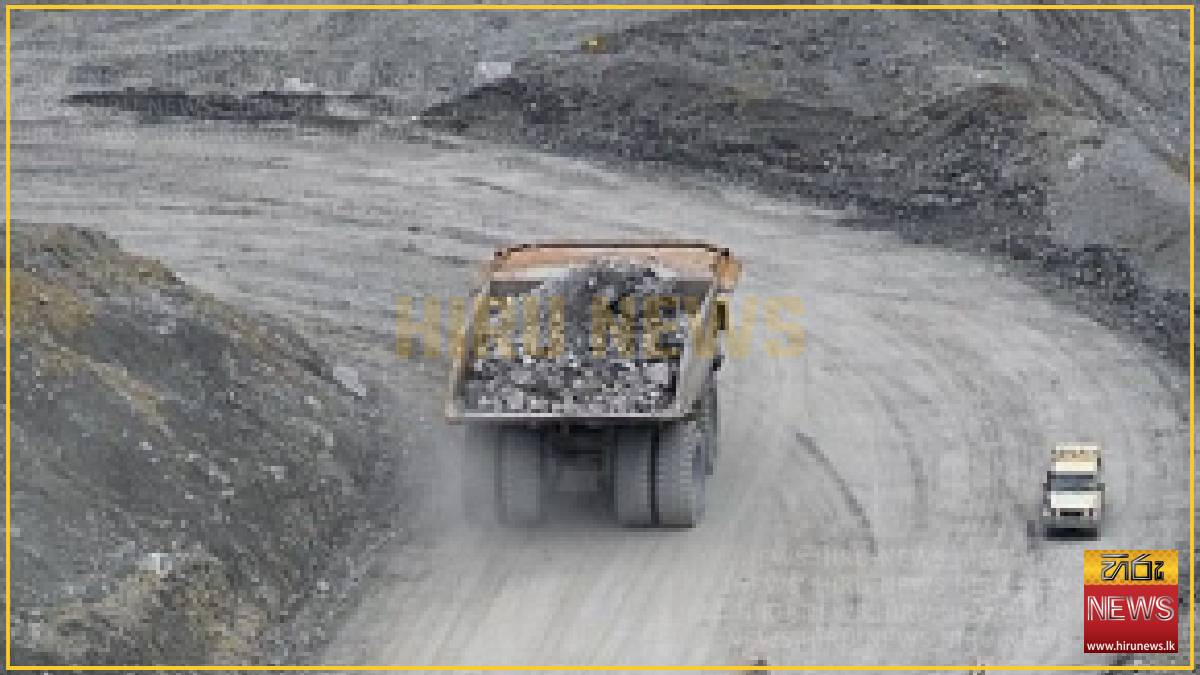
The export of mineral resources in their raw form without value addition faces an official ban under Sri Lanka’s updated National Mineral Policy, which takes effect after 27 years.
Minister of Industry and Entrepreneurship Development, Sunil Handunneththi announced the implementation of the revised strategy during a press briefing yesterday. Under the new framework, regulations will cover the entire mineral supply chain, spanning exploration, extraction, processing, and value addition to stop unprocessed raw materials leaving the country.
The national economy historically missed out on vital economic returns and foreign currency because the majority of mineral wealth left the country as raw commodities, Sunil Handunneththi stated.
The Minister of Industry and Entrepreneurship Development explained that the true financial potential of these assets was never fully realised, noting that whilst a tonne of a specific mineral might sell for about 2,000 US dollars, processing it would significantly multiply its market value. Materials like zircon, garnet, silica, quartz, and titanium were repeatedly exported without maximising profits.
Sunil Handunneththi added that old regulations restricted operations to exploration permits, but the new policy ensures Cabinet and Parliamentary approval to secure higher economic yields, coming into force on June 11, 2026.
Minister of Industry and Entrepreneurship Development, Sunil Handunneththi announced the implementation of the revised strategy during a press briefing yesterday. Under the new framework, regulations will cover the entire mineral supply chain, spanning exploration, extraction, processing, and value addition to stop unprocessed raw materials leaving the country.
The national economy historically missed out on vital economic returns and foreign currency because the majority of mineral wealth left the country as raw commodities, Sunil Handunneththi stated.
The Minister of Industry and Entrepreneurship Development explained that the true financial potential of these assets was never fully realised, noting that whilst a tonne of a specific mineral might sell for about 2,000 US dollars, processing it would significantly multiply its market value. Materials like zircon, garnet, silica, quartz, and titanium were repeatedly exported without maximising profits.
Sunil Handunneththi added that old regulations restricted operations to exploration permits, but the new policy ensures Cabinet and Parliamentary approval to secure higher economic yields, coming into force on June 11, 2026.
Latest News
US judge who had sex in chambers apologises for 'offensive' behaviour
Local
12 June 2026

Trump bristles over memorandum text that appears to favour Iran
Local
12 June 2026
Pope tells traffickers of migrants, 'stop, repent or face God’s wrath'
Local
12 June 2026

Empty seats at World Cup match renews concerns over ticket prices
Local
12 June 2026

EU to make it harder to suspend carbon fee on imports
Local
12 June 2026

Indonesian students protest government policies as economic pressures grow
Local
12 June 2026
Analysis pattern points to further losses in Australian dollar
Local
12 June 2026

Weather dampens World Cup fan festival
Local
12 June 2026

India markets regulator to review delisting framework to ease exits
Local
12 June 2026
US to give Poland new $4bn loan for arms purchases
Local
12 June 2026