



Share Post


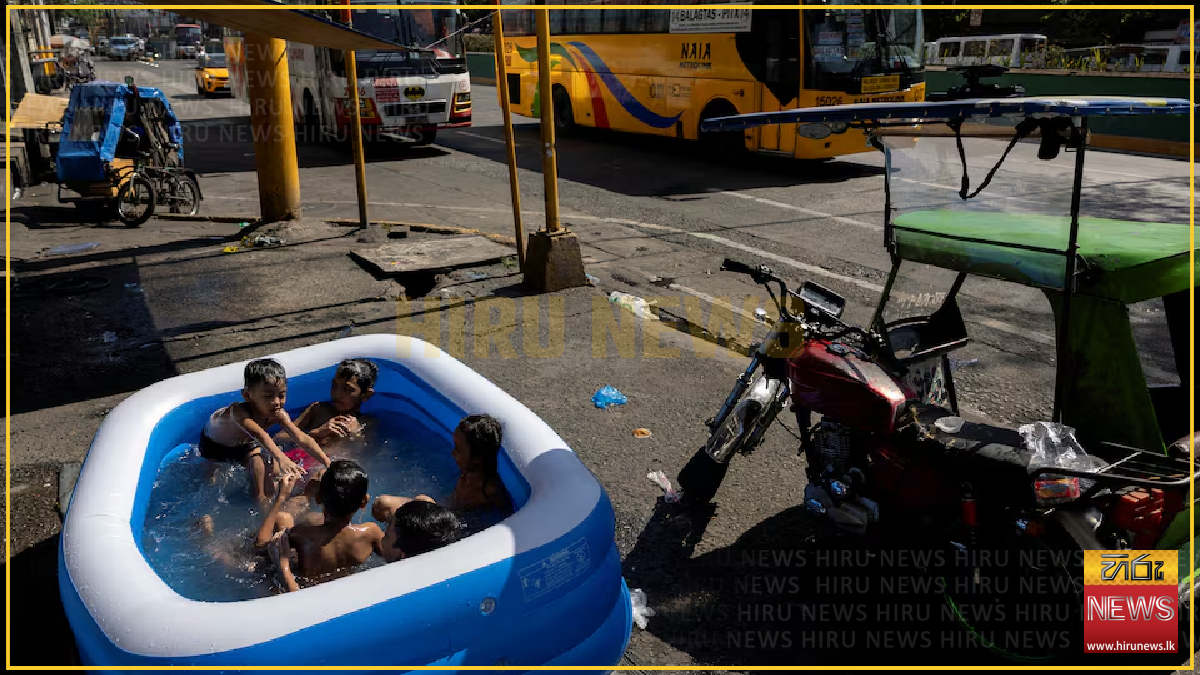
Almost all of the world's children are exposed to at least one climate hazard, with as many as 1.8 billion put in danger by droughts and 1.2 billion by extreme heat, the United Nations Children's Fund (UNICEF) said in a report on Tuesday.
UNICEF said children were "disproportionately affected" by a range of intensifying climate-related risks and governments urgently needed to invest in infrastructure, adaptation and disaster management capabilities to reduce their exposure.
Here are some of the details of UNICEF's Children's Climate Risk Report.
UNICEF said children were "disproportionately affected" by a range of intensifying climate-related risks and governments urgently needed to invest in infrastructure, adaptation and disaster management capabilities to reduce their exposure.
Here are some of the details of UNICEF's Children's Climate Risk Report.
- The report looked at a broad range of climate hazards, as well as the impact of air pollution and the risks of vector-borne diseases like malaria. It also factored in data about access to water, healthcare and social services across the world.
- As many as 1.1 billion children globally were exposed to at least three overlapping climate risks, the report said, warning of a "dangerous cascade of multiple, overlapping hazards" that could overwhelm governments and social services.
- "It's not just the exposure to the single hazards like floods or droughts or heat waves and extreme heat that children face, but it is the exposure to multiple hazards," said Rohini Sampoornam Swaminathan, UNICEF statistics manager and one of the authors of the report.
- As many as 662 million children were at risk from tropical storms, 337 million from riverine floods and 33 million from coastal floods, with 1 billion children also exposed to malaria, mostly in Africa.
- In 2024, 242 million children in 85 countries saw their schooling disrupted by climate hazards.
- UNICEF identified Somalia, Madagascar, Myanmar, Cambodia and Pakistan as the most vulnerable countries.
- The highest numbers of drought-exposed children live in agriculture-dependent economies like Bangladesh, Indonesia, Nigeria, Pakistan and Tanzania.
- Children in landlocked nations were also facing "disproportionate" risks of drought, desertification, heat stress and flash floods, with water stress set to intensify in countries like Botswana and Burkina Faso.
-Reuters
Latest News
Taiwan president says he 'won't give up' on defence spending
Local
16 June 2026

Sasakawa Centre opens, marking new architectural addition to Colombo skyline
Local
16 June 2026

Scientists identify 64,000 sq miles of coral reef capable of surviving climate crisis
Local
16 June 2026
As Europe rearms, 'wingman' aircraft take centre stage
Local
16 June 2026

A decade on from Brexit vote, divided brothers are both disappointed
Local
16 June 2026

Micro Cars Chairman Dr Lawrence Perera named top innovator, lifetime awardee
Local
16 June 2026

UNDP and Central Bank seal second phase of financial literacy partnership
Local
16 June 2026
Standard Chartered acquisition by DFCC to conclude by July 31
Local
16 June 2026

SLIIT, Japan join forces to apply Explainable AI in public health research
Local
16 June 2026

Global Laurel Excellence Awards opens registrations for 2026 edition
Local
16 June 2026