



Share Post


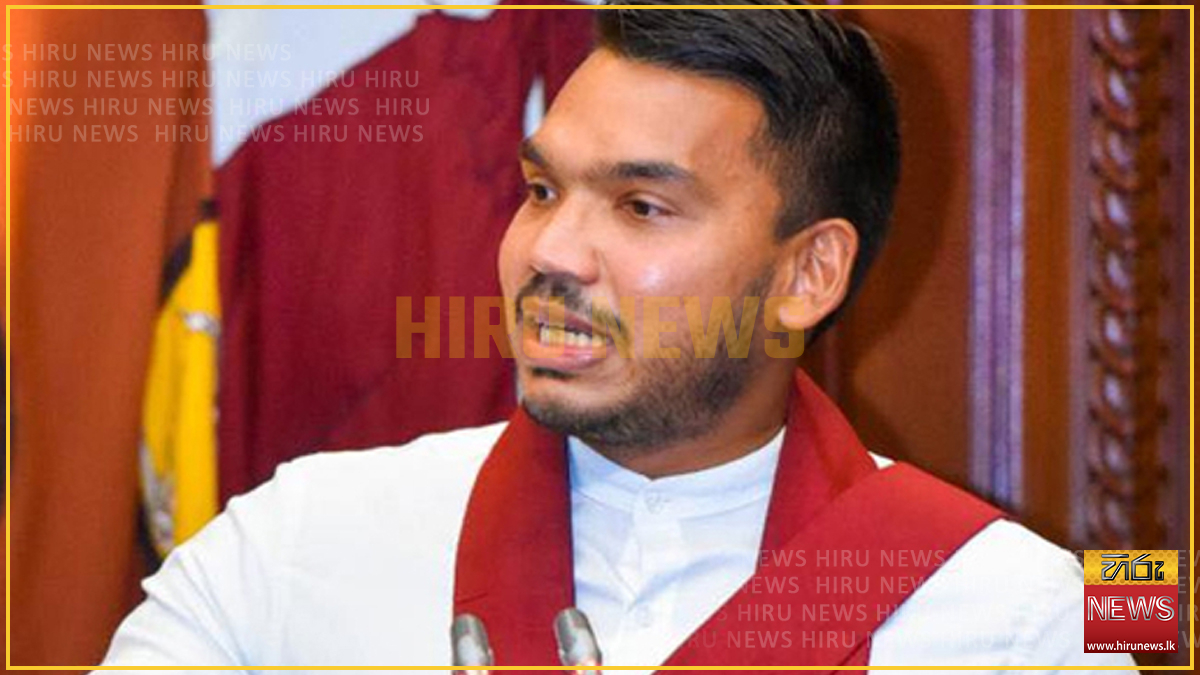
Regional countries are reducing fuel prices, but in Sri Lanka, they are increased every month, Sri Lanka Podujana Peramuna (SLPP) National Organiser Namal Rajapaksa said.
Speaking at a public meeting in Colombo on 20 June 2026, Namal Rajapaksa criticised the government’s handling of the economy, rising living costs, and fuel pricing policies.
Namal Rajapaksa noted that while many countries are reducing fuel prices in line with declining global oil prices, Sri Lankan consumers continue to face fuel price increases.
He stated that across the world, fuel prices are being reduced in response to lower global oil prices. Regional countries are cutting fuel prices, but in Sri Lanka, they are increasing almost every month because the government passes the cost of its inefficiency, corruption, and mismanagement onto the people. He added that if global prices fell, the government should reduce fuel prices instead of increasing them.
He challenged the government to be transparent about how local fuel prices are determined and called for the immediate publication of a complete breakdown of fuel import costs.
Namal Rajapaksa mentioned that if the government claims that fuel prices are subsidised, it must prove it by publishing the full cost breakdown, including import prices, taxes, levies, transport costs, and margins. He added that the people deserve facts, not slogans, and if there is a subsidy, the numbers should be shown so the public can judge.
He thanked supporters and party members for helping strengthen the political movement by bringing together people from all backgrounds, regardless of political affiliation.
He said the government became synonymous with broken promises and misleading the public, adding that comparisons between what ministers said before coming to power and what they say today clearly reveal the gap between promises and reality.
According to Namal Rajapaksa, instead of addressing youth unemployment, the rising cost of living, and the challenges facing businesses, the government increasingly resorts to suppression to conceal its failures.
He noted that whenever people raise their voices, whether graduates demanding jobs or three-wheeler operators making reasonable requests to protect their livelihoods, the government’s response is suppression rather than solutions.
He also raised concerns over the worsening dengue situation, accusing authorities of failing to take timely preventive measures. Namal Rajapaksa argued that local councils should focus on protecting communities through effective waste management, drainage maintenance, mosquito control, and public health interventions.
Commenting on taxation and public finances, he criticised the heavy tax burden imposed on citizens and questioned the government’s ability to safeguard public funds in light of reported cybersecurity breaches involving state institutions.
Namal Rajapaksa further alleged that corruption and mismanagement in the energy sector contributed to higher electricity generation costs and increased financial pressure on ordinary citizens.
Turning to agriculture, he called on the government to strengthen domestic food production by providing fertiliser subsidies and supporting local farmers rather than relying on imports.
He stated that instead of spending valuable foreign exchange on importing food, the country should empower farmers, increase local production, and reduce the burden on consumers.
He also urged the government to provide fuel concessions to the fisheries sector, arguing that supporting local fishermen would help reduce food costs while saving foreign exchange currently spent on imports.
Concluding his remarks, Namal Rajapaksa said many Sri Lankan families struggle to meet basic needs, with parents making personal sacrifices to ensure their children are fed.
He stated that many parents survive on one or two meals a day so their children can eat three meals, which remains the reality facing countless families today. He added that the government has a responsibility to improve their lives, but it abandoned that responsibility and focused solely on a policy of repression.
He emphasised that the government should prioritise economic relief, job creation, agriculture, fisheries, public health, and transparency instead of shifting the burden of its failures onto the people.
Speaking at a public meeting in Colombo on 20 June 2026, Namal Rajapaksa criticised the government’s handling of the economy, rising living costs, and fuel pricing policies.
Namal Rajapaksa noted that while many countries are reducing fuel prices in line with declining global oil prices, Sri Lankan consumers continue to face fuel price increases.
He stated that across the world, fuel prices are being reduced in response to lower global oil prices. Regional countries are cutting fuel prices, but in Sri Lanka, they are increasing almost every month because the government passes the cost of its inefficiency, corruption, and mismanagement onto the people. He added that if global prices fell, the government should reduce fuel prices instead of increasing them.
He challenged the government to be transparent about how local fuel prices are determined and called for the immediate publication of a complete breakdown of fuel import costs.
Namal Rajapaksa mentioned that if the government claims that fuel prices are subsidised, it must prove it by publishing the full cost breakdown, including import prices, taxes, levies, transport costs, and margins. He added that the people deserve facts, not slogans, and if there is a subsidy, the numbers should be shown so the public can judge.
He thanked supporters and party members for helping strengthen the political movement by bringing together people from all backgrounds, regardless of political affiliation.
He said the government became synonymous with broken promises and misleading the public, adding that comparisons between what ministers said before coming to power and what they say today clearly reveal the gap between promises and reality.
According to Namal Rajapaksa, instead of addressing youth unemployment, the rising cost of living, and the challenges facing businesses, the government increasingly resorts to suppression to conceal its failures.
He noted that whenever people raise their voices, whether graduates demanding jobs or three-wheeler operators making reasonable requests to protect their livelihoods, the government’s response is suppression rather than solutions.
He also raised concerns over the worsening dengue situation, accusing authorities of failing to take timely preventive measures. Namal Rajapaksa argued that local councils should focus on protecting communities through effective waste management, drainage maintenance, mosquito control, and public health interventions.
Commenting on taxation and public finances, he criticised the heavy tax burden imposed on citizens and questioned the government’s ability to safeguard public funds in light of reported cybersecurity breaches involving state institutions.
Namal Rajapaksa further alleged that corruption and mismanagement in the energy sector contributed to higher electricity generation costs and increased financial pressure on ordinary citizens.
Turning to agriculture, he called on the government to strengthen domestic food production by providing fertiliser subsidies and supporting local farmers rather than relying on imports.
He stated that instead of spending valuable foreign exchange on importing food, the country should empower farmers, increase local production, and reduce the burden on consumers.
He also urged the government to provide fuel concessions to the fisheries sector, arguing that supporting local fishermen would help reduce food costs while saving foreign exchange currently spent on imports.
Concluding his remarks, Namal Rajapaksa said many Sri Lankan families struggle to meet basic needs, with parents making personal sacrifices to ensure their children are fed.
He stated that many parents survive on one or two meals a day so their children can eat three meals, which remains the reality facing countless families today. He added that the government has a responsibility to improve their lives, but it abandoned that responsibility and focused solely on a policy of repression.
He emphasised that the government should prioritise economic relief, job creation, agriculture, fisheries, public health, and transparency instead of shifting the burden of its failures onto the people.
Latest News
Government committed to creating barrier-free society for children with special needs, says Prime Minister Dr Harini Amarasuriya
Local
20 September 2026
NBRI issues Level 3 Red landslide warnings for Kandy, Kegalle, and Nuwara Eliya
Local
20 September 2026

Sri Lanka Air Force disperses Pirith water via aircraft
Local
20 September 2026

Indonesia rescue agency recovers another victim from capsized ship, authorities say
Local
20 September 2026

Udugama records highest rainfall of 132.5 mm as active monsoon triggers heavy showers
Local
20 September 2026
CAA takes legal action against 104 parties over improper lunch sheet labelling and free plastic bags
Local
20 September 2026

Shafali’s century sends India into Asian Games final
Local
20 September 2026

Aswesuma welfare fraud at Norwood Divisional Secretariat estimated at nearly Rs. 30 million
Local
20 September 2026
Israel’s president pardons a combat medic whose shooting of a Palestinian attacker caused debate
Local
20 September 2026

Nobel laureate Narges Mohammadi says Iranians paying the price for war and repression
Local
20 September 2026








