



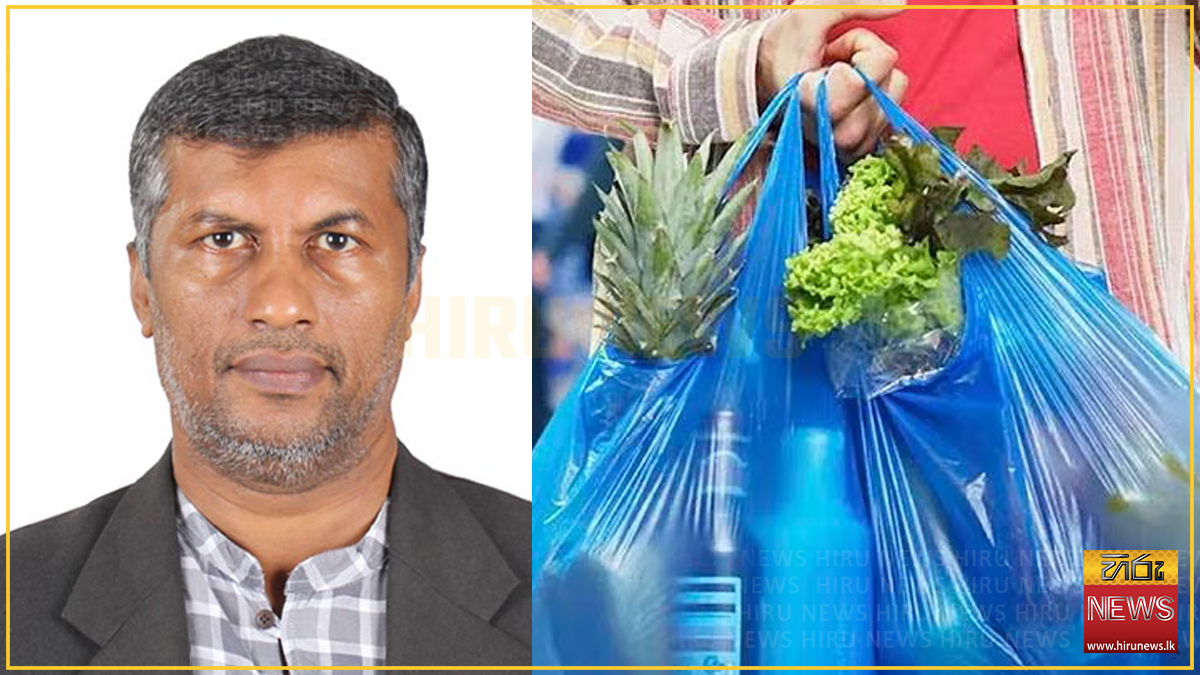


Due to the ban on the free issue of lightweight polythene shopping bags by supermarkets to customers to tackle environmental pollution, supermarkets are saving over Rs. 50 million per month.
Food First Information & Action Network of Sri Lanka (FIAN) Executive Director Thilak said that with the implementation of the government's ban and the Central Environmental Authority's regulations on the free issue of polythene bags, supermarkets are saving a huge amount of money.
Supermarkets were in the habit of issuing free polythene bags to customers, but with the ban they started charging Rs. 3, Rs. 5 and upwards for each polythene bag.
"This is because they now get paid by customers for polythene bags that were earlier issued free of charge."
He said that through this move they estimate that all supermarket chains and their branches together are making savings of around Rs. 50 million a month.
"Actually, this is an additional income of around Rs. 50 million for them as well."
While supermarkets have saved the expense of issuing free polythene bags, they now earn around Rs. 50 million a month from customers by charging for bags that were previously given free of charge.
He said this was a good move as the country is facing a huge quantity of plastic waste for which there is still no proper solution.
Sri Lanka is not alone in restricting polythene, as several African countries have also followed suit. Countries such as Kenya, Ethiopia and South Africa have imposed restrictions, and flights to some of these countries require passengers not to carry polythene bags into the country.
While Bangladesh was the first country to ban plastic bags in 2002, its recent crackdown is designed to overcome decades of weak enforcement.
Even in Bangalore and several other Indian states, polythene is totally banned.
Bangladesh has launched a strict renewed enforcement of its polythene and single use plastic bag ban, initially targeting supermarkets in October 2024 and expanding to fresh food markets in November.
More than 130 countries have fully or partially banned polythene and single use plastic bags to combat global pollution.
Today Rwanda is known as one of the world's most plastic free countries. Since 2008, all polythene bags and single use plastic items have been strictly prohibited.
Kenya introduced one of the world's strictest bans in 2017. Manufacturing, importing or using polythene carrier bags is illegal. Both Kenya and Rwanda impose severe penalties, including prison terms of up to four years or heavy fines.
"Sri Lankans should try to change their lifestyles and carry a bag when they go shopping. Then this will be no issue." (Shirajiv S.)
Latest News
EU seeks China curbs on hybrid car exports to avert trade row

Yemenis take to boats to flee as Middle East war spreads

Kash Patel defends FBI’s new policy on bestiality at Senate hearing

ASPI of the Colombo Stock Exchange closes after losing 109.98 points

Sri Lanka secures 7.5% weighting in J.P. Morgan frontier bond index

Court sets November 10 for defense evidence in case against parliamentarian Arjuna Ramanathan

Hilton retains Sri Lanka’s No. 1 workplace position

Colombo Motor Show marks 20th anniversary with 4 days from Nov. 20 at BMICH
Army commandos retrieve body of a youth from Mini World's End

King Charles to urge AI leaders to protect humanity