Share Post


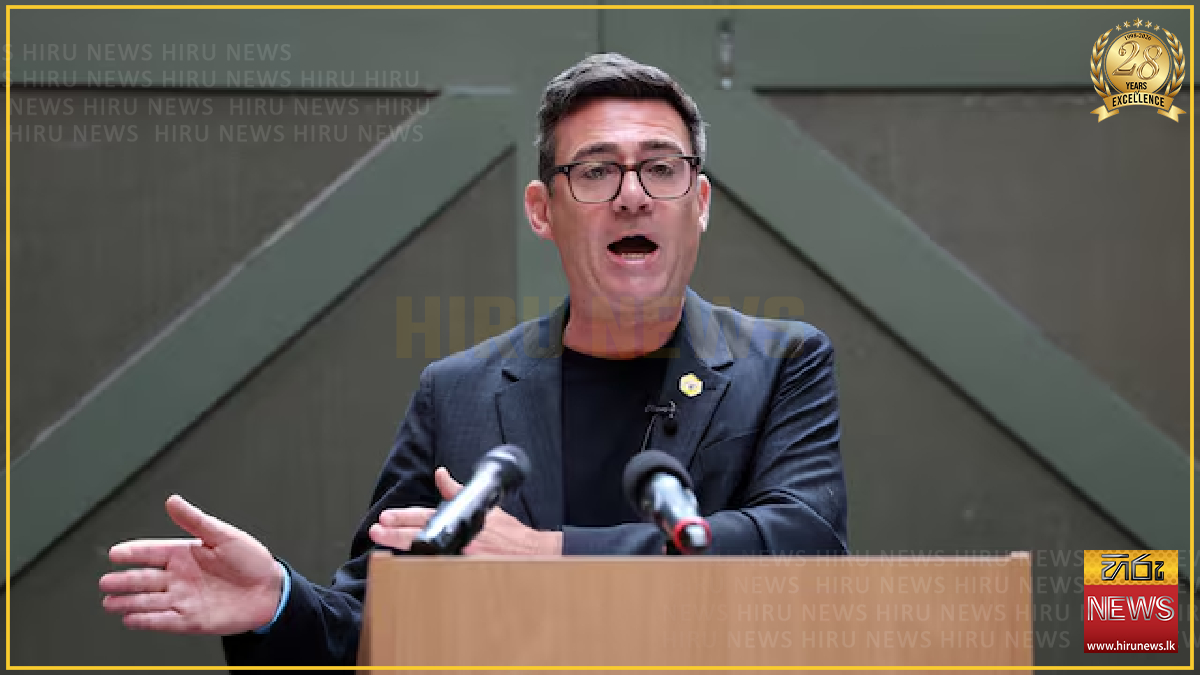
Andy Burnham will have to find an additional £4.7 billion ($6.2 billion) to close a defence funding gap, either through deeper spending cuts or higher taxes, when he takes over as British prime minister in a handover expected later this month.
Keir Starmer has said he will step down as prime minister once his Labour Party picks his successor, and no other candidates have challenged Burnham, a former mayor of Manchester elected to parliament last month.
As one of his final acts in office, Starmer announced a long-delayed defence plan on Tuesday aimed at making Britain's depleted armed forces war-ready amid rising security threats and warnings that Russia could attack a NATO member as soon as 2030.
However, the plan's commitment to spend an additional £15 billion came under scrutiny within hours of its release, after documents showed that a third of that funding still needed to be found in a budget later this year.
DIFFICULT CHOICES
Burnham has not spoken publicly about the defence spending plan, although Dan Jarvis, the defence secretary in the outgoing cabinet, suggested the leader-in-waiting supported it.
"I absolutely have the assurance that, as prime minister, Andy Burnham will make sure that we've got the investment coming into defence that's good for our nation, good for our national security," Jarvis told reporters.
Adding to the potential future headache for Burnham, the £15 billion in extra funding was well below the £28 billion military chiefs had said they needed over the next four years. The plan also relies on defence efficiencies of £10.7 billion being found by 2030.
Starmer defended it, calling it the biggest sustained increase in defence funding for 45 years, and saying it was usual for governments to expect some proportion of funding for long-term plans to come from future budgets.
He also highlighted work by his government to stabilise the public finances, noting that the budget includes £22 billion of "headroom" that could be used for future needs. Economists have said that inflation and slowing economic growth will have reduced that figure markedly.
"The very reason for the headroom is to have the credibility to take decisions outside the budget and outside the spending review," he said.
The plan was also criticised by opposition politicians and former military chiefs for failing to set out when defence spending would reach 3% of GDP, on the way to meeting Britain's NATO commitment to spend 3.5% of GDP by 2035.
Starmer had already said that much of the £15 billion would come from reallocating spending from other government departments, drawing criticism from local politicians as funding was cut for road and energy projects.
"Defence spending will likely remain one of the biggest fiscal pressures facing the UK in the medium term," the Institute for Fiscal Studies think tank said, adding that reaching 3.5% in 2035 would require an additional £25 billion a year.
-Reuters
Keir Starmer has said he will step down as prime minister once his Labour Party picks his successor, and no other candidates have challenged Burnham, a former mayor of Manchester elected to parliament last month.
As one of his final acts in office, Starmer announced a long-delayed defence plan on Tuesday aimed at making Britain's depleted armed forces war-ready amid rising security threats and warnings that Russia could attack a NATO member as soon as 2030.
However, the plan's commitment to spend an additional £15 billion came under scrutiny within hours of its release, after documents showed that a third of that funding still needed to be found in a budget later this year.
DIFFICULT CHOICES
Burnham has not spoken publicly about the defence spending plan, although Dan Jarvis, the defence secretary in the outgoing cabinet, suggested the leader-in-waiting supported it.
"I absolutely have the assurance that, as prime minister, Andy Burnham will make sure that we've got the investment coming into defence that's good for our nation, good for our national security," Jarvis told reporters.
Adding to the potential future headache for Burnham, the £15 billion in extra funding was well below the £28 billion military chiefs had said they needed over the next four years. The plan also relies on defence efficiencies of £10.7 billion being found by 2030.
Starmer defended it, calling it the biggest sustained increase in defence funding for 45 years, and saying it was usual for governments to expect some proportion of funding for long-term plans to come from future budgets.
He also highlighted work by his government to stabilise the public finances, noting that the budget includes £22 billion of "headroom" that could be used for future needs. Economists have said that inflation and slowing economic growth will have reduced that figure markedly.
"The very reason for the headroom is to have the credibility to take decisions outside the budget and outside the spending review," he said.
The plan was also criticised by opposition politicians and former military chiefs for failing to set out when defence spending would reach 3% of GDP, on the way to meeting Britain's NATO commitment to spend 3.5% of GDP by 2035.
Starmer had already said that much of the £15 billion would come from reallocating spending from other government departments, drawing criticism from local politicians as funding was cut for road and energy projects.
"Defence spending will likely remain one of the biggest fiscal pressures facing the UK in the medium term," the Institute for Fiscal Studies think tank said, adding that reaching 3.5% in 2035 would require an additional £25 billion a year.
-Reuters
Latest News
Vance says negotiations with Iran going ‘extremely well’
Local
01 July 2026

CENTCOM leads security meeting with reps from 12 countries in Bahrain
Local
01 July 2026

Crew member missing after US naval helicopter conducts emergency landing in Arabian Sea
Local
01 July 2026

Omani, Dutch FMs discuss Strait of Hormuz
Local
01 July 2026

Iran concludes meetings with Qatari, Pakistani officials
Local
01 July 2026

Is Israel killing the US-Iran MoU by staying in Lebanon?
Local
01 July 2026
Iran’s Pezeshkian insists supreme leader did not bar negotiations
Local
01 July 2026

Paramount+ develops limited series on the murder of JonBenét Ramsey
Local
01 July 2026

Kathy Griffin claims she was ‘banned’ from ‘The Tonight Show’
Local
01 July 2026

Netflix orders Harlan Coben’s ‘Myron Bolitar’ series as ‘I Will Find You’ becomes a hit
Local
01 July 2026