


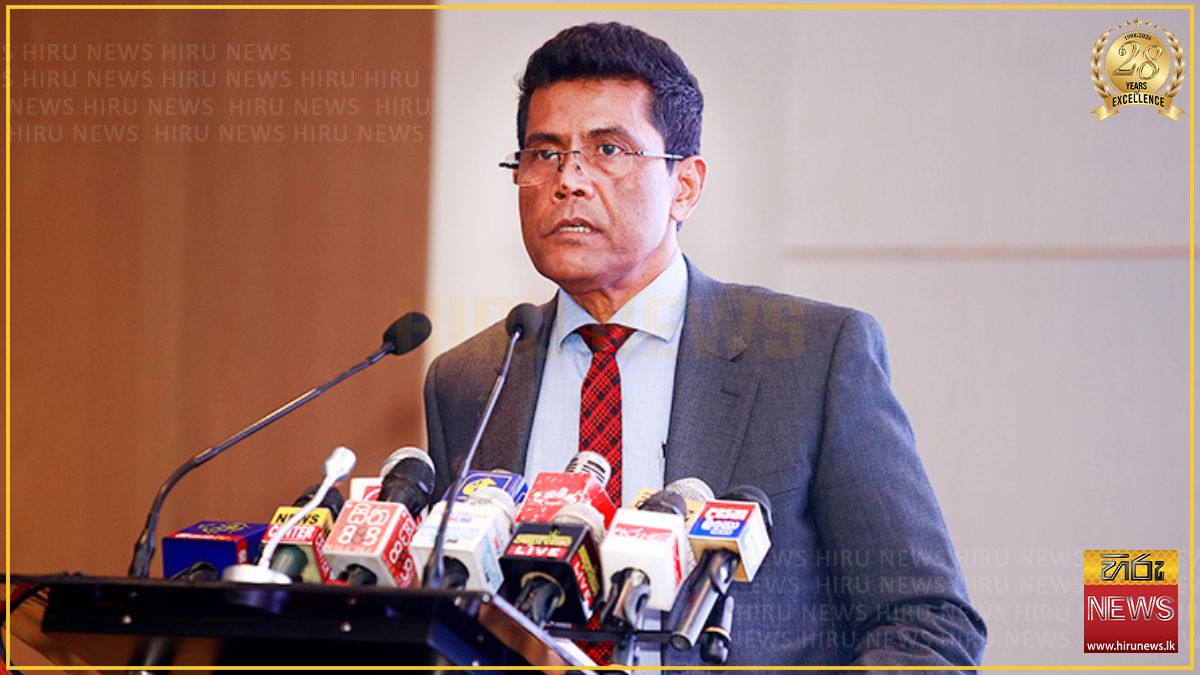


Sri Lanka is missing valuable opportunities to attract much-needed foreign exchange by failing to fully promote re-export activities, despite having the infrastructure required to support such operations, according to the President of the Free Trade Zone Manufacturers’ Association, Dhammika Fernando.
Fernando said that while traditional exports remain important, re-exports should also be encouraged as a means of generating additional foreign exchange, especially during challenging economic conditions.
He noted that re-export earnings currently account for only around 2% of Sri Lanka’s merchandise export revenue, arguing that this represents income the country is not losing after earning, but rather refusing to earn due to regulatory restrictions.
According to Fernando, activities such as knitting, bundling, repacking, consolidation, and other value-added trading operations should be permitted within existing business premises.
Existing infrastructure already in place
Fernando said many export companies in Sri Lanka already possess the facilities and systems needed to support re-export operations, including bonded warehouses, customs supervision, ASYCUDA systems, skilled labour, international buyers, and years of compliance records.
However, he said companies are often restricted to the specific manufacturing activities approved under their agreements, limiting their ability to undertake additional value-added trading activities.
“Today, many of our export companies already have the infrastructure, bonded facilities, customs supervision, ASYCUDA (Automated System for Customs Data), skilled workers, international customers, and decades of compliance history. However, they are restricted mainly to the specific manufacturing activity approved in their agreements.
Therefore, they are limited by the value addition criteria of 35% or whatever percentage has been agreed upon. When an overseas buyer asks a Sri Lankan factory to receive components from another country, combine them with local production, repack, bundle and ship a consolidated consignment to another market, our companies often have to decline.
As a result, the business moves to countries such as Vietnam, Singapore, Dubai, Malaysia, or Mauritius, where re-export activities are facilitated. This is foreign exchange that Sri Lanka is not losing after earning; it is foreign exchange Sri Lanka is refusing to earn because the necessary permissions have not been granted.”
Vietnam’s re-export model offers lessons
Fernando pointed to Vietnam as an example of a country that successfully expanded its export earnings by allowing export processing enterprises to engage in trading and re-export activities.
“In 2018, Vietnam’s exports were around USD 243 billion. By 2025, they had increased to approximately USD 475 billion, almost doubling within seven years.
One important reason was that Vietnam allowed export processing enterprises to conduct purchasing, sales, and trading activities from their existing premises. As a result, their export-related activities increased by more than 50%, while Sri Lanka’s re-export contribution remains at only around 2%.
The factories did not change, the workers did not change, and the geography did not change. What changed was the permission granted. Of course, Vietnam’s growth was also supported by global supply chain shifts and investment flows. But that is the lesson for Sri Lanka. When opportunities emerged, Vietnamese enterprises were legally able to capture them. In Sri Lanka, the opportunity is knocking, but our own regulations are keeping the doors closed.”
Current re-export framework too limited
Fernando said discussions on expanding re-export activities have taken place for years among successive governments, business communities, and the Board of Investment (BOI), but existing systems remain too restrictive.
He explained that while some re-export operations currently take place through centrally licensed bonded warehouses, the model has failed to generate significant growth.
“This issue has been discussed for a long time among many governments, business communities, and the BOI. Some limited re-export activities already exist through centrally licensed bonded warehouses. However, after nearly two decades, re-exports still account for less than 2% of Sri Lanka’s merchandise exports.
This shows that the current model is too narrow. No country has built a serious re-export economy through only a handful of central warehouses. Countries such as Singapore, Dubai, and Vietnam allow businesses to operate from where they already are.
For Sri Lanka, the solution is practical and low risk. The zones are already there, bonded premises are already available, customs controls are already in place, ASYCUDA digital monitoring exists, and BOI audits are already conducted. What is needed is a clear policy decision and regulatory approval for eligible and compliant BOI enterprises to engage in value-added trading from their existing bonded facilities.”
No major investment needed, only policy changes
Fernando urged the government to remove unnecessary restrictions and allow Sri Lankan exporters to compete more effectively in global supply chains.
He stressed that enabling re-export activities would not require major government spending, new infrastructure, or significant legislative changes.
“This does not require government funding. It does not require new buildings, a new agency, or major new legislation. What is required is for the government to unlock the facilities that are already available within our free trade zones.
If properly facilitated, Sri Lanka can generate new foreign exchange within months, attract new trading and logistics investors, improve zone occupancy, create more employment, and help existing manufacturers move up the value chain from manufacturing into regional supply chain management and high-value services.
Sri Lanka does not need to spend a rupee to open this door. It only needs to remove the lock.”
Latest News
Man City sign winger Monga from Leicester

China evacuates over one million as Typhoon Bavi nears
Turkey orders detention of 36 suspects in bribery probe
Sri Lanka is missing foreign exchange opportunities by restricting re-exports, says Dhammika Fernando
Typhoon Bavi grounds nearly 20 flights in Singapore
World Cup quarterfinal resale prices drop
Sri Lanka should maintain 5% inflation target, says economist Sirimevan Colombage
Over 67,000 battling with dengue, 47 dead

Wanyonyi breaks 1,000m world record on debut in Monaco
Government using youth arrests to distract from economy - Namal