Share Post


Sri Lanka recorded one of the biggest improvements in the world in how it communicates with international investors.
That's according to the Institute of International Finance, the global association of banks and financial institutions, which released its annual Investor Relations and Debt Transparency Report this month.
The report scores 57 emerging and developing economies on how openly they share debt, fiscal and policy information.
Sri Lanka scored just under 44 points out of 50, placing it 14th overall, and well above the survey average of 37.
More striking is the movement.
Sri Lanka's score rose by more than 6 points in a single year, the fourth-largest gain of any country assessed.
Only Vietnam, Belize and Mozambique improved faster.
Sri Lanka scored full marks in several areas, including the availability of forward-looking policy information and access to senior policymakers.
But the report identifies gaps, chiefly in investor outreach.
Sri Lanka scored poorly on non-deal roadshows, on keeping an active investor contact list, and on publishing archives of investor presentations.
The report's central argument is what it calls the "transparency dividend", the idea that clear, predictable disclosure lowers borrowing costs by reducing uncertainty.
But it cautions that transparency cannot repair weak fundamentals.
Where a country's fiscal position is fragile, the report says, open disclosure will expose that weakness rather than hide it.
Globally, the number of countries running formal investor relations programmes has risen to 41, up from just 8 when the assessment began in 2005.
That's according to the Institute of International Finance, the global association of banks and financial institutions, which released its annual Investor Relations and Debt Transparency Report this month.
The report scores 57 emerging and developing economies on how openly they share debt, fiscal and policy information.
Sri Lanka scored just under 44 points out of 50, placing it 14th overall, and well above the survey average of 37.
More striking is the movement.
Sri Lanka's score rose by more than 6 points in a single year, the fourth-largest gain of any country assessed.
Only Vietnam, Belize and Mozambique improved faster.
Sri Lanka scored full marks in several areas, including the availability of forward-looking policy information and access to senior policymakers.
But the report identifies gaps, chiefly in investor outreach.
Sri Lanka scored poorly on non-deal roadshows, on keeping an active investor contact list, and on publishing archives of investor presentations.
The report's central argument is what it calls the "transparency dividend", the idea that clear, predictable disclosure lowers borrowing costs by reducing uncertainty.
But it cautions that transparency cannot repair weak fundamentals.
Where a country's fiscal position is fragile, the report says, open disclosure will expose that weakness rather than hide it.
Globally, the number of countries running formal investor relations programmes has risen to 41, up from just 8 when the assessment began in 2005.
Latest News
Court sentences former IGP to death
Local
31 July 2026
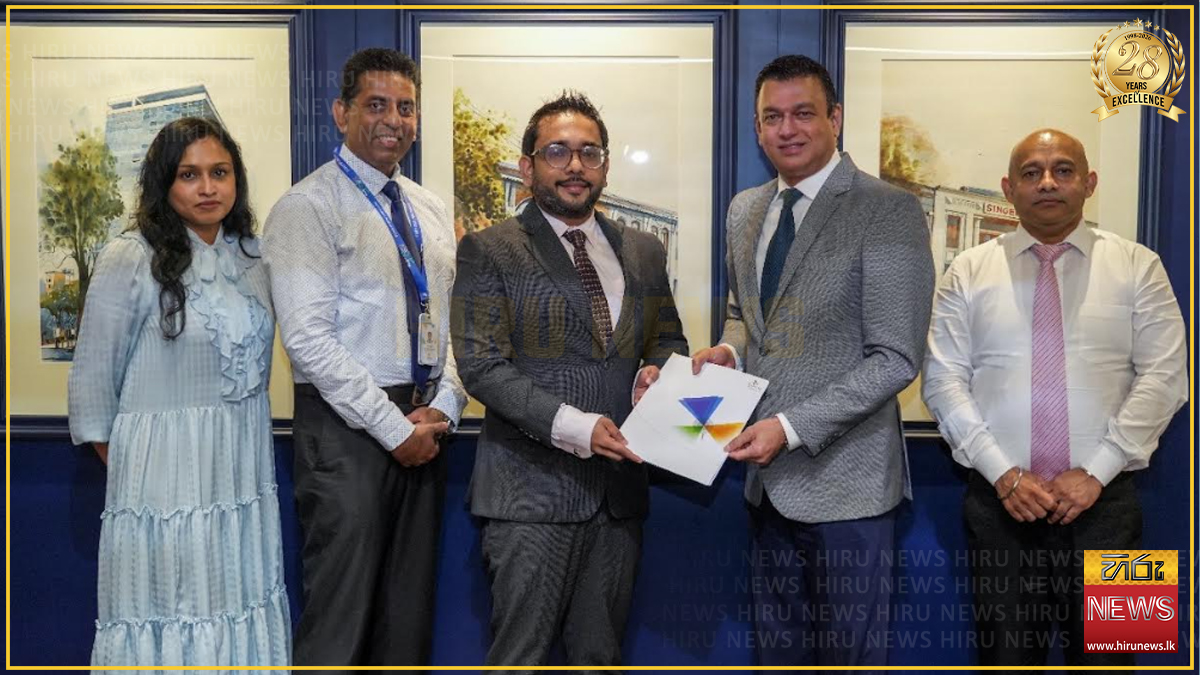
Singer Sri Lanka and Fairfirst Insurance launch first In-Store Motor Insurance
Local
31 July 2026
Singapore space agency to launch new satellite operations centre in 2027, plans new hires
Local
31 July 2026

Sri Lanka Women secure six-wicket T20 victory, Imesha Dulani records maiden century
Local
31 July 2026

Celeste appoints Dayan Pandithasekera as CEO
Local
31 July 2026

Construction PMI expands in June 2026
Local
31 July 2026

David Pieris Automobiles unveils BAIC X3e as first Asian market
Local
31 July 2026

China launches new communication technology test satellites
Local
31 July 2026

Fuel prices remain unchanged for August
Local
31 July 2026

CSE indices drop by 19.50 units
Local
31 July 2026