Share Post


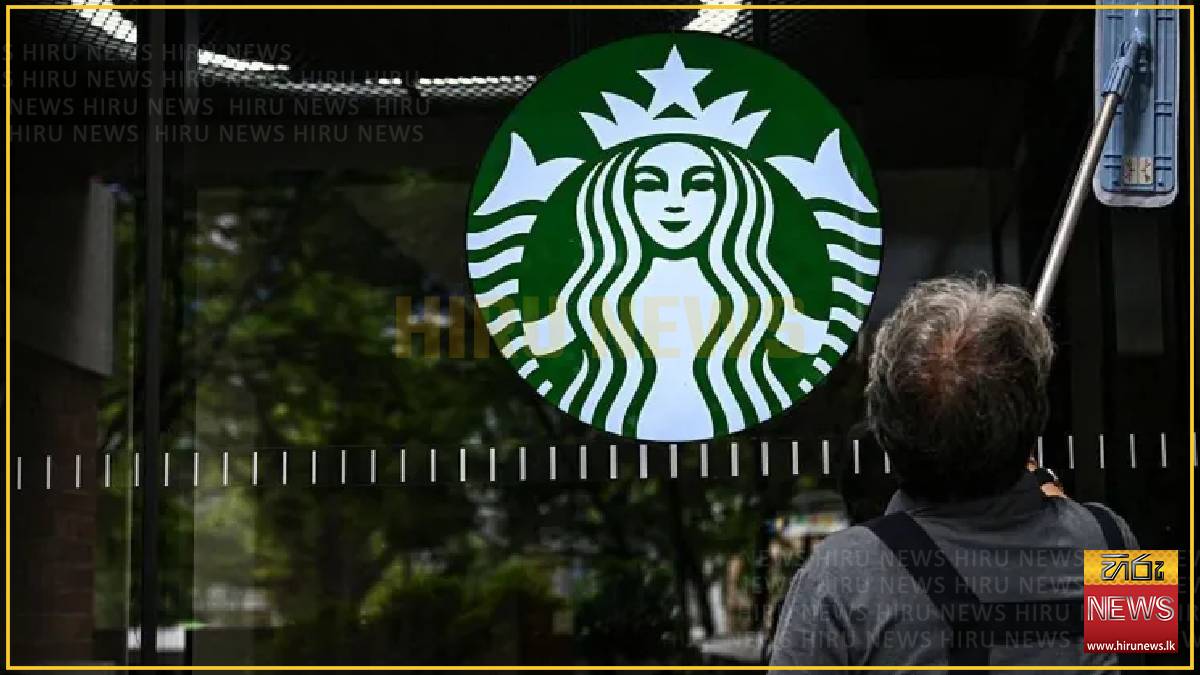
South Korean police have raided the national headquarters of Starbucks over defamation claims surrounding a controversial marketing campaign.
Starbucks Korea had in May launched a coffee tumbler promotion called "Tank Day" on the anniversary of the 1980 Gwangju Uprising, where hundreds were believed to have been killed by military forces.
Many felt the "tank" was a reference to vehicles deployed to crush pro-democracy protesters and the promotion sparked a mass boycott movement.
Starbucks quickly rolled it back, saying it was unintentional but civic groups filed a criminal complaint against the company, demanding the police investigate it for defaming victims of the military dictatorship.
Shinsegae Group, which operates Starbucks in Korea, said it had launched an internal investigation into the campaign and concluded that the mistake was unintentional.
It added the team that had planned the promotion did not draw the connection to the historical event, and the upper management had failed to spot it as well.
In June, Starbucks stores across the country closed for half a day to allow staff to attend history lessons.
Shinsegae apologised for the "inappropriate marketing" and said that the Tank Day controversy had led to serious decline in Starbucks sales in South Korea - one of the coffee chain's largest markets.
Reports estimate that hundreds were killed by the forces of military dictator Chun Doo-hwan, on what is now remembered as a day of national trauma for South Koreans - and a day held sacred by many in the country.
In addition, promotional material for the tumbler used the phrase "tak on the table!", mimicking the sound of an object being slapped on a surface.
But "tak" was also the word used in a controversial statement given by police in 1987, describing the death of a student activist in custody.
South Korea's president Lee Jae Myung was among those who criticised the campaign, saying it "insults the victims and the bloody struggle" of Gwangju residents.
The scandal, which broke during the local elections season, also became a prominent talking point between the two major parties.
While the internal ministry under Lee announced a government-level boycott of Starbucks, the opposition leader responded by holding up a Starbucks cup during a speech and accusing the government of overreach.
Since then, Starbucks cups have been embraced by right-wing pundits as a symbol of opposition to the Lee Jae-myung government. It has also made appearances in right-wing rallies and livestreams.
-BBC
Starbucks Korea had in May launched a coffee tumbler promotion called "Tank Day" on the anniversary of the 1980 Gwangju Uprising, where hundreds were believed to have been killed by military forces.
Many felt the "tank" was a reference to vehicles deployed to crush pro-democracy protesters and the promotion sparked a mass boycott movement.
Starbucks quickly rolled it back, saying it was unintentional but civic groups filed a criminal complaint against the company, demanding the police investigate it for defaming victims of the military dictatorship.
Shinsegae Group, which operates Starbucks in Korea, said it had launched an internal investigation into the campaign and concluded that the mistake was unintentional.
It added the team that had planned the promotion did not draw the connection to the historical event, and the upper management had failed to spot it as well.
In June, Starbucks stores across the country closed for half a day to allow staff to attend history lessons.
Shinsegae apologised for the "inappropriate marketing" and said that the Tank Day controversy had led to serious decline in Starbucks sales in South Korea - one of the coffee chain's largest markets.
Reports estimate that hundreds were killed by the forces of military dictator Chun Doo-hwan, on what is now remembered as a day of national trauma for South Koreans - and a day held sacred by many in the country.
In addition, promotional material for the tumbler used the phrase "tak on the table!", mimicking the sound of an object being slapped on a surface.
But "tak" was also the word used in a controversial statement given by police in 1987, describing the death of a student activist in custody.
South Korea's president Lee Jae Myung was among those who criticised the campaign, saying it "insults the victims and the bloody struggle" of Gwangju residents.
The scandal, which broke during the local elections season, also became a prominent talking point between the two major parties.
While the internal ministry under Lee announced a government-level boycott of Starbucks, the opposition leader responded by holding up a Starbucks cup during a speech and accusing the government of overreach.
Since then, Starbucks cups have been embraced by right-wing pundits as a symbol of opposition to the Lee Jae-myung government. It has also made appearances in right-wing rallies and livestreams.
-BBC
Latest News
Three in five Americans favour stronger oversight of social media companies, Reuters/Ipsos poll finds A bipartisan majority of Americans support more government rules for how social media companies conduct business, including a requirement of age-verification tools to keep younger children off social media, according to a Reuters/Ipsos poll. The poll, which was conducted over the six days ending August 3, comes as companies like Meta Platforms and Google's YouTube face mounting legal pressure over their treatment of young users. A trial is expected to begin on Wednesday over allegations by state prosecutors that Meta designed its products to addict young users. Meta, which denies the allegations, says it could face up to $1.4 trillion in penalties if the states prevail. A New Mexico state court on Thursday separately ordered Meta to pay $567 million into a teen mental health fund and change how its platforms function for young users, after finding the company is to blame for harming children's wellbeing. Tech companies are also under increasing scrutiny by lawmakers across the U.S. for their effect on youth. More than a dozen states have passed laws regulating minors' social media access, saying it is needed to bolster their safety online. NetChoice, a trade group backed by social media giants such as Meta, TikTok and Snap, has sued to stop laws requiring apps verify the ages of their users. It argues such laws violate free speech protections. Some 61% of poll respondents - including 71% of Democrats and 62% of Republicans - said social media companies need firmer oversight. Support among independents was lower as many of them said they were unsure where they stood. The poll also found 66% support laws that would require social media companies use age-verification tools to keep children under age 16 from accessing their platforms. Support was highest among Republicans, with 74% backing the idea, compared to 69% of Democrats. 'SOMEBODY'S GOT TO DO IT' James Bosserdet, a 60-year-old mechanical engineer from Tennessee who voted for Republican President Donald Trump in the 2024 election, said he mostly wants the U.S. government to have a smaller role in Americans' lives, but that cracking down on social media companies is an exception. "Somebody's got to do it," he said, referring to setting restrictions on social media for kids. "Is it the government's job? I don't want it to be. I think maybe it should be." The U.S. Congress has so far not passed legislation aimed at protecting kids on social media. An overwhelming majority of Americans - 85% - think social media can be addictive for children, and a similar share think its use can be harmful for their mental health, the Reuters/Ipsos poll found. Washington, D.C., resident Christopher Chen, 34, said he thinks social media companies have an outsized influence on teens, adding that the tech firms have too much control over what their users see on their apps. "I don't know what the regulation looks like, but something needs to be done by the government to protect the people," said Chen, who voted for Trump's 2024 Democratic opponent, Kamala Harris. Paula Dick, 73, said social media companies could do a better job keeping kids away from inappropriate content, adding that there should be more government oversight of the apps they use. Dick said she doesn't allow her grandchildren to use YouTube when she watches them, but they have found ways to access it anyway. Dick, who lives in Kansas, voted for Trump in 2024. "They have workarounds to get around blocks that their parents have put on their phones," she said. "They're pretty intelligent when it comes to that." USERS LIKE SOCIAL MEDIA But Americans also say they like social media a lot, with 70% saying their time spent on the platforms is fun, while only 35% say it stressed them out. People are split on whether they are overdoing it, with 52% saying they spend too much time every day on social media, and 43% saying that's not the case. The Reuters/Ipsos poll, which was conducted online, surveyed 4,505 U.S. adults and had a margin of error of 2 percentage points in either direction. -Reuters
Local
09 August 2026
Ukraine's Odesa port sustains damage from Russian attack, Zelenskiy says
Local
09 August 2026

Messi misses Miami defeat after death of father
Local
09 August 2026

Suspected crime boss Daniel Kinahan to be returned to Ireland in high-security operation
Local
09 August 2026
Michael Brennan surges into co-lead entering final round of Wyndham
Local
09 August 2026

Government prioritises raising judges’ retirement age over other issues - Sajith Premadasa
Local
09 August 2026
Talks with US won't happen while interim deal is breached, Iranian minister says
Local
09 August 2026

Detention orders obtained for SLFP Medirigiriya organiser
Local
09 August 2026

Spain checks 200 Italy arrivals in border controls after migration row
Local
09 August 2026

Perez Hilton faces long recovery after reports he self-harmed during livestream
Local
09 August 2026