



Share Post


A Chinese rocket set to launch a satellite into orbit blew-up seconds after liftoff Monday, marking the relatively rare failure for a rocket considered a workhorse of Beijing’s space programme.
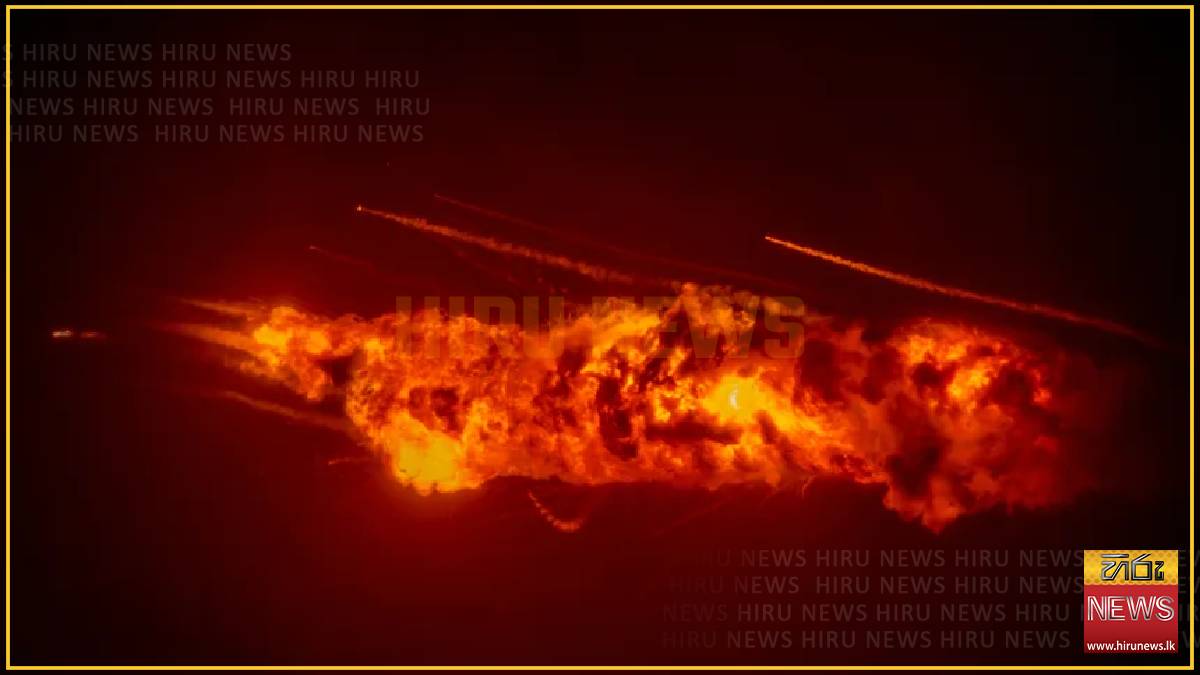
The Long March 7A rocket erupted into a massive fireball just 85 seconds after blasting off from the Wenchang Space Launch Site on the island of Hainan on Monday night, video showed.
Unlike other successful launches, the incident appears to have been downplayed on China’s state media with scant mention of the explosion.
State news agency Xinhua confirmed the failure three hours after the launch, saying “the rocket experienced an anomaly during flight.” The cause is under investigation, it added, without providing further information.
On Chinese social media, video of the launch was mainly limited to state-affiliated content, while videos posted by users appeared to be removed or deprioritized from searches on popular platforms Xiaohongshu and Douyin.
Chinese leader Xi Jinping has ambitions to make China a world leader in space science by 2050, and the country’s locked in an intense competition with the US on multiple fronts, including reusable launch technology, moon research and satellite launches.
SpaceX founder Elon Musk, who has watched a number of his own rockets explode after launch during testing, commented on X saying: “Rockets are insanely hard.”
Long March 7A is a satellite delivery rocket designed by China Academy of Launch Vehicle Technology, a subsidiary of China Aerospace Science and Technology Corporation, the main state-owned contractor for China’s space programme.
This was to be the Long March 7A’s 18th mission – it’s only failed on one previous occasion, during its maiden flight in 2020. The second attempt in March 2021 succeeded, with images showing crowds that had gathered to witness the launch.
Wenchang, home to one of China’s major rocket launch sites, is known for its space tourism. Tourists and residents often gather at Wenchang Space Launch Viewing Center and other locations to watch launches where there’s a clear view.
Gasps could be heard on one video posted online after Monday’s failed launch, as the rocket appeared to break apart midair just after 8 p.m.. The rocket was carrying the Zhongxing-4B or ChinaSat-4B, to provide radio, television and other communications services to users around the world, according to Chinese state media.
Following the failure of the Long March 7A on Monday, the much-anticipated launch of the Zhuque-3, planned for Tuesday morning at Jiuquan satellite launching station, was delayed, according to Yicai, a Shanghai-based financial news outlet citing sourced information.
The Zhuque-3, developed by Chinese private rocket company LandSpace, is the country’s first serious attempt to build a reusable launch rocket. It made its first voyage in December 2025, but the first stage of the rocket caught fire before crashing near the target recovery site.
Last month, China successfully recovered the first stage of a carrier rocket during an orbital launch test – a breakthrough for the country’s reusable rocket programme. In that test, the first-stage booster returned to a floating platform about six minutes after the separation of its first and upper stage, according to state broadcaster CCTV.
“This mission … signifies a historic breakthrough in China’s reusable rocket technology and a solid foundation for accelerating the improvement of China’s space access capabilities,” the rocket-maker China Aerospace Science and Technology Corporation said in a post to social media at the time.
Unlike the Zhuque-3, the Long March 7A is a three-stage rocket that’s not designed for re-use.
Measuring almost 200 feet (60 meters) in length, the rocket has four boosters and the capacity to send seven metric tons of payload to geostationary transfer orbit (GTO) – approximately around 22,000 miles (35,405 kilometers) above the Earth’s surface.
-CNN
The Long March 7A rocket erupted into a massive fireball just 85 seconds after blasting off from the Wenchang Space Launch Site on the island of Hainan on Monday night, video showed.
Unlike other successful launches, the incident appears to have been downplayed on China’s state media with scant mention of the explosion.
State news agency Xinhua confirmed the failure three hours after the launch, saying “the rocket experienced an anomaly during flight.” The cause is under investigation, it added, without providing further information.
On Chinese social media, video of the launch was mainly limited to state-affiliated content, while videos posted by users appeared to be removed or deprioritized from searches on popular platforms Xiaohongshu and Douyin.
Chinese leader Xi Jinping has ambitions to make China a world leader in space science by 2050, and the country’s locked in an intense competition with the US on multiple fronts, including reusable launch technology, moon research and satellite launches.
SpaceX founder Elon Musk, who has watched a number of his own rockets explode after launch during testing, commented on X saying: “Rockets are insanely hard.”
Long March 7A is a satellite delivery rocket designed by China Academy of Launch Vehicle Technology, a subsidiary of China Aerospace Science and Technology Corporation, the main state-owned contractor for China’s space programme.
This was to be the Long March 7A’s 18th mission – it’s only failed on one previous occasion, during its maiden flight in 2020. The second attempt in March 2021 succeeded, with images showing crowds that had gathered to witness the launch.
Wenchang, home to one of China’s major rocket launch sites, is known for its space tourism. Tourists and residents often gather at Wenchang Space Launch Viewing Center and other locations to watch launches where there’s a clear view.
Gasps could be heard on one video posted online after Monday’s failed launch, as the rocket appeared to break apart midair just after 8 p.m.. The rocket was carrying the Zhongxing-4B or ChinaSat-4B, to provide radio, television and other communications services to users around the world, according to Chinese state media.
Following the failure of the Long March 7A on Monday, the much-anticipated launch of the Zhuque-3, planned for Tuesday morning at Jiuquan satellite launching station, was delayed, according to Yicai, a Shanghai-based financial news outlet citing sourced information.
The Zhuque-3, developed by Chinese private rocket company LandSpace, is the country’s first serious attempt to build a reusable launch rocket. It made its first voyage in December 2025, but the first stage of the rocket caught fire before crashing near the target recovery site.
Last month, China successfully recovered the first stage of a carrier rocket during an orbital launch test – a breakthrough for the country’s reusable rocket programme. In that test, the first-stage booster returned to a floating platform about six minutes after the separation of its first and upper stage, according to state broadcaster CCTV.
“This mission … signifies a historic breakthrough in China’s reusable rocket technology and a solid foundation for accelerating the improvement of China’s space access capabilities,” the rocket-maker China Aerospace Science and Technology Corporation said in a post to social media at the time.
Unlike the Zhuque-3, the Long March 7A is a three-stage rocket that’s not designed for re-use.
Measuring almost 200 feet (60 meters) in length, the rocket has four boosters and the capacity to send seven metric tons of payload to geostationary transfer orbit (GTO) – approximately around 22,000 miles (35,405 kilometers) above the Earth’s surface.
-CNN
Latest News
Ukraine halts strikes on tankers using Russian port at US request, FT says
Local
12 August 2026

UN Global Compact launches 'Responsible Business Coalition' in SL
Local
12 August 2026

CIPM Sri Lanka and SLJI empower judges beyond the bench
Local
12 August 2026

US military strikes killed 153 civilians, reveals Department of War report
Local
12 August 2026

SL and the EU convene high-level investment dialogue in Colombo
Local
12 August 2026

Palestinian students and staff sue Columbia University alleging discrimination
Local
12 August 2026

Sri Lanka seeks private investment for Colombo state bungalows
Local
12 August 2026

Yoshitha Rajapaksa arrives at CID
Local
12 August 2026

Typhoon Dolphin's remnants brings torrential rain to Beijing
Local
12 August 2026

Government set to expand Metro transit service
Local
12 August 2026