



Share Post


Chief Prelates of the three Buddhist chapters advise the rulers of the country on various matters from time to time in terms of meaning and righteousness both verbally and in writing since ancient times, and although the practice of the rulers was to respond acknowledging the receipt of such notifications.
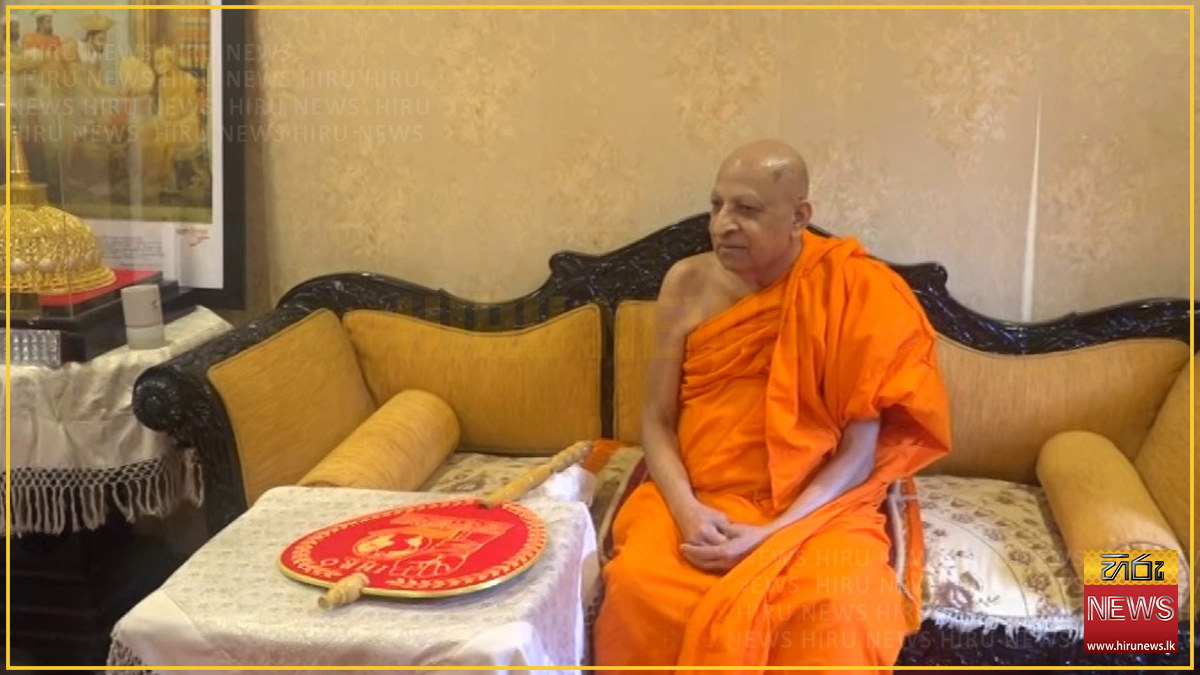
It is a regret to observe that no reply has been received so far regarding the letter in which the Chief Prelates notified the President of their opinion on extending the tenure of judges, the Chief Prelate of the Malwaththa Chapter Most Venerable Tibbatuwawe Sri Siddhartha Sumangala Thera said.
The prelate expressed these views when a delegation from the International Human Rights Organisation visited the venerable Malwaththa Chief Prelate in Kandy today (12).
Expressing further views, venerable thera stated that usually, a reply acknowledging the receipt of a letter is sent if the Chief Prelates send a letter to the President or state rulers. There is no reply to date for the letter sent mentioning the opinion of the Chief Prelates of the three Buddhist Chapters regarding the retirement age issue of these judges, and they did not notify us at least whether the letter was received, he said.
Since the days of kings, the Maha Sangha has been preaching to the state rulers in meaning and righteousness when a problem arose in the country. Giving advice and admonition is something we usually do, but what is happening now is a question to us too, the prelate mentioned, adding that they saw how certain ministers even stated in parliament that a letter was not received by the President from the Chief Prelates.
No one has made a permanent policy that suits the country for any important subject at any time so far. When policies are made on certain subject matters, the next government that comes abolishes them, which is the situation, and the country remains at the same place forever as there are no permanent policies suiting the country for any subject, and those who come do not make them either, he said. They work in the way they want to bring advantages to themselves, and none of these people do what they say when they are in the opposition after they come to power, as they forget, the prelate added.
If one looks at education in this country today, there are many problems. In the past, tuition classes existed only for the Advanced Level and Ordinary Level, but now tuition classes exist from grade one, behind every bush, and various universities are everywhere unlike the past when only government ones existed, he pointed out. It is true that one must move forward when the country and the world change, but it is not good to destroy the civilisation, morality, and culture of the country, and a proper regulation is needed regarding these education systems, the prelate stated. He mentioned that they do not even know whether teaching takes place in the higher classes of government schools today, as children are in private tuition classes, and there is no regulation for this, with the very teachers teaching in those schools sometimes teaching in private tuition classes.
Children do not go to Dhamma schools today because private tuition classes are held even on Sundays. Although they informed the responsible authorities for how long tuition classes are not necessary on Sundays or not necessary in the morning, no government paid attention to it, he said. Education is necessary to suit the new world, but a country must provide knowledge about values, morality, culture, our heritage, as well as customs and manners to the future generation of the country, the Prelate added.
Similarly, the majority of Atapirikara in the market today have no standard whatsoever. No matter how much they mentioned this to the relevant responsible authorities, nothing effective happened, and as they see it, attention focuses only on the majority of unnecessary things, he stated. Problems exist in many places today, and the farming community of the country faces serious types of problems, and the real situation of the country can be known if one speaks with them, he concluded.
The Executive Director of the International Human Rights Organisation who participated in the meeting stated that since the tenure of judges in many countries of the world extends beyond 60 years of age, there is no problem in extending that tenure in Sri Lanka as well under the prevailing situation.
It is a regret to observe that no reply has been received so far regarding the letter in which the Chief Prelates notified the President of their opinion on extending the tenure of judges, the Chief Prelate of the Malwaththa Chapter Most Venerable Tibbatuwawe Sri Siddhartha Sumangala Thera said.
The prelate expressed these views when a delegation from the International Human Rights Organisation visited the venerable Malwaththa Chief Prelate in Kandy today (12).
Expressing further views, venerable thera stated that usually, a reply acknowledging the receipt of a letter is sent if the Chief Prelates send a letter to the President or state rulers. There is no reply to date for the letter sent mentioning the opinion of the Chief Prelates of the three Buddhist Chapters regarding the retirement age issue of these judges, and they did not notify us at least whether the letter was received, he said.
Since the days of kings, the Maha Sangha has been preaching to the state rulers in meaning and righteousness when a problem arose in the country. Giving advice and admonition is something we usually do, but what is happening now is a question to us too, the prelate mentioned, adding that they saw how certain ministers even stated in parliament that a letter was not received by the President from the Chief Prelates.
No one has made a permanent policy that suits the country for any important subject at any time so far. When policies are made on certain subject matters, the next government that comes abolishes them, which is the situation, and the country remains at the same place forever as there are no permanent policies suiting the country for any subject, and those who come do not make them either, he said. They work in the way they want to bring advantages to themselves, and none of these people do what they say when they are in the opposition after they come to power, as they forget, the prelate added.
If one looks at education in this country today, there are many problems. In the past, tuition classes existed only for the Advanced Level and Ordinary Level, but now tuition classes exist from grade one, behind every bush, and various universities are everywhere unlike the past when only government ones existed, he pointed out. It is true that one must move forward when the country and the world change, but it is not good to destroy the civilisation, morality, and culture of the country, and a proper regulation is needed regarding these education systems, the prelate stated. He mentioned that they do not even know whether teaching takes place in the higher classes of government schools today, as children are in private tuition classes, and there is no regulation for this, with the very teachers teaching in those schools sometimes teaching in private tuition classes.
Children do not go to Dhamma schools today because private tuition classes are held even on Sundays. Although they informed the responsible authorities for how long tuition classes are not necessary on Sundays or not necessary in the morning, no government paid attention to it, he said. Education is necessary to suit the new world, but a country must provide knowledge about values, morality, culture, our heritage, as well as customs and manners to the future generation of the country, the Prelate added.
Similarly, the majority of Atapirikara in the market today have no standard whatsoever. No matter how much they mentioned this to the relevant responsible authorities, nothing effective happened, and as they see it, attention focuses only on the majority of unnecessary things, he stated. Problems exist in many places today, and the farming community of the country faces serious types of problems, and the real situation of the country can be known if one speaks with them, he concluded.
The Executive Director of the International Human Rights Organisation who participated in the meeting stated that since the tenure of judges in many countries of the world extends beyond 60 years of age, there is no problem in extending that tenure in Sri Lanka as well under the prevailing situation.
Latest News
Tiger Global Management cuts stakes in Big Tech, buys into SpaceX
Local
15 August 2026

Attacks on healthcare in conflict zones averaging more than four a day in 2026, World Health Organisation says
Local
15 August 2026
India cuts windfall tax on exports of petrol, diesel, aviation fuel
Local
15 August 2026

Civilian deaths in Ukraine jumped in July as Russia hit cities, UN says
Local
15 August 2026
Activists try to deliver aid to Palestinians in homes besieged by Israeli settlers
Local
15 August 2026
From Australia to Europe, countries move to curb children's social media access
Local
15 August 2026

Shakhtar want to play Champions League ties at Chelsea
Local
15 August 2026

Celtic's Engels poised for West Ham transfer
Local
15 August 2026

Trump dismisses concerns over conditions on US aircraft carrier
Local
15 August 2026

Colon dies 11 years after brain injury in fight
Local
15 August 2026