



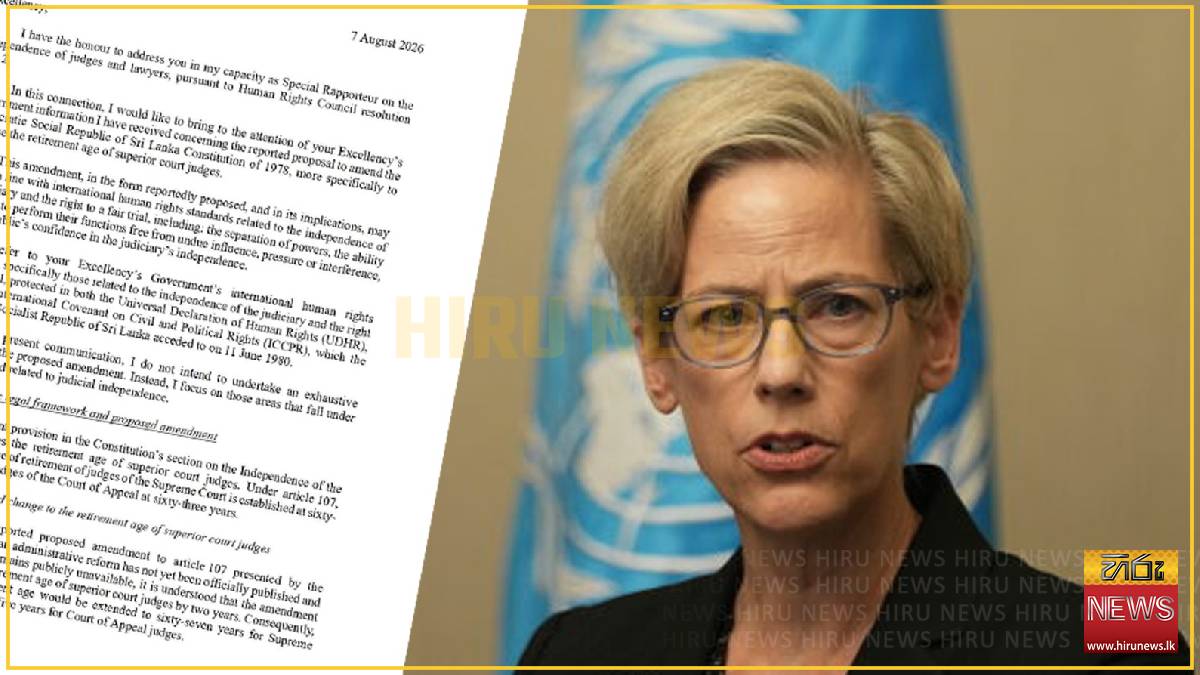


The United Nations has voiced critical concern regarding a proposed constitutional amendment by the Sri Lankan government aimed at extending the retirement age of superior court judges. In an official communication to the President, Margaret Satterthwaite, the UN Special Rapporteur on the independence of judges and lawyers, warned that the proposal threatens judicial independence, the separation of powers, and the fundamental right to a fair trial.
Introduced by the Minister of Justice as an administrative reform, the amendment proposes raising the mandatory retirement limits set under Article 107 of the Constitution—moving the cap from 65 to 67 years for Supreme Court judges, and from 63 to 65 years for Court of Appeal judges.
The primary focus of international concern centers on the scope of the proposed policy: rather than applying solely to future judicial appointees, the extension would alter the terms of currently sitting judges.
The UN expert emphasized Sri Lanka’s international commitments under the Universal Declaration of Human Rights and the International Covenant on Civil and Political Rights (ICCPR), to which the country acceded in 1980. Grounding her position on Article 14 of the ICCPR and the UN Basic Principles on the Independence of the Judiciary, Satterthwaite highlighted that secure judicial tenure is essential to insulating the judiciary from political pressures and executive interference. Applying ad hoc changes to current tenures risks creating the perception that the composition of the courts is being manipulated for immediate individual or institutional benefit.
Furthermore, the Special Rapporteur warned of severe institutional conflicts of interest. Under Article 121 of the Constitution, sitting judges extended in office by the amendment could ultimately be tasked with ruling on the constitutional validity of the legislation itself. The lack of transitional frameworks or protective safeguards to manage these potential conflicts threatens to severely undercut public trust in the judiciary's impartiality.
To safeguard the rule of law, the Special Rapporteur urged that any adjustments to judicial retirement limits occur through a transparent, inclusive, and systemic reform of the justice sector. She requested that the Sri Lankan government submit clarifications on the text of the amendment, detail the justification for applying extensions to active judges, and outline explicit measures to protect public confidence and shield the judiciary from executive overreach.
Latest News
US flags 40 economies in China’s ‘shadow transshipment network’
Solar eclipse sends Bonnie Tyler hit soaring in streams

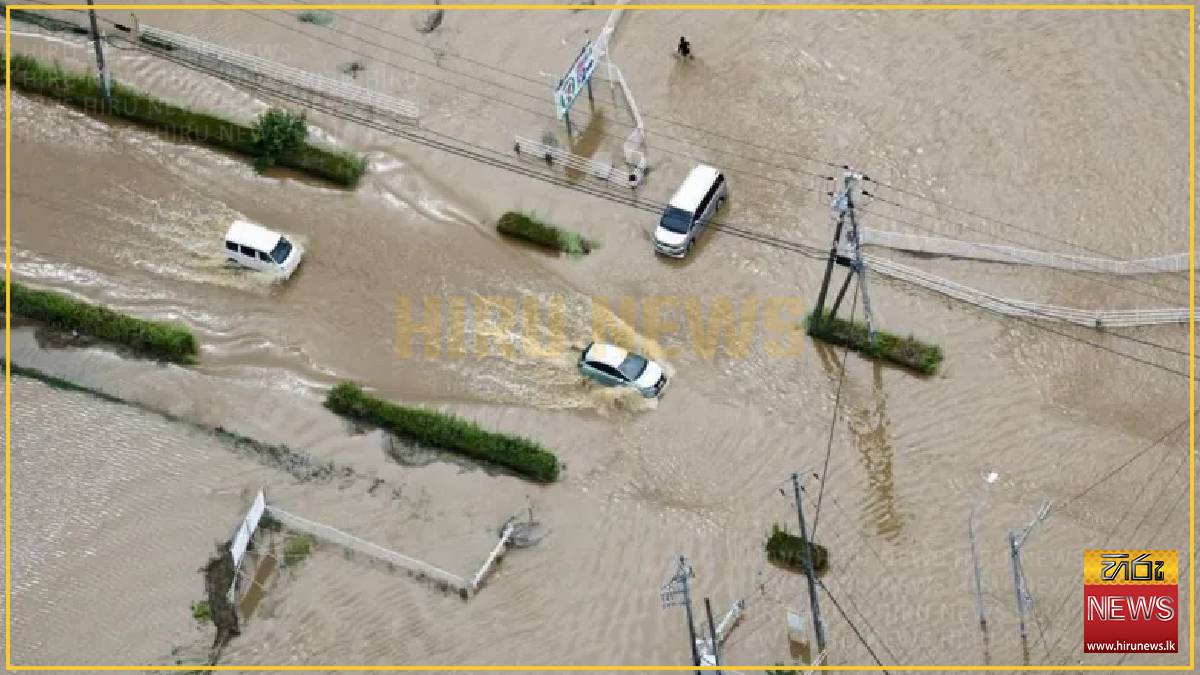
'Unprecedented' rain in Japan kills six people
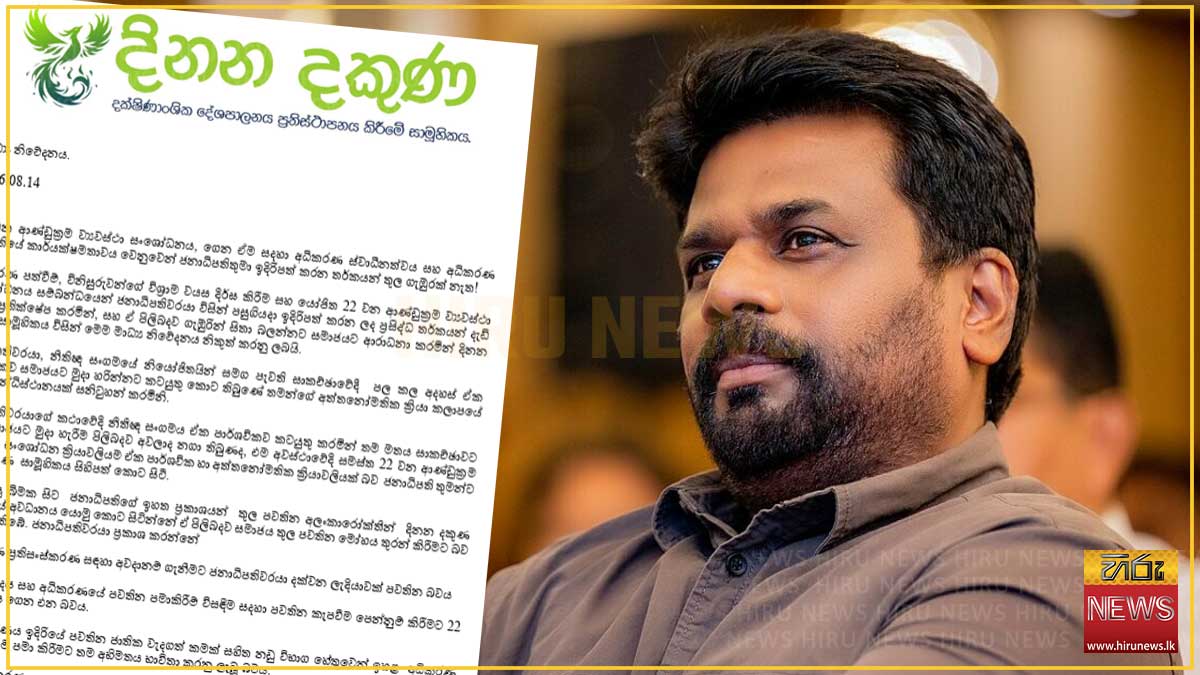
Constitutional amendments must not be used as political tools, charges Dinana Dakuna
ASG Dileepa Peiris reveals why Pujith, Hemasiri received death sentence
China calls Taiwan's annual military drills a 'wasteful charade'
Russia jails man for 23 years for spying for Poland
Senior DIG Kithsiri Jayalath assumes duties in charge of Sabaragamuwa Province
Beauty industry prepayment losses up almost 18 times to over $1.9 million in first half of 2026

'Ski Sunday' host Chemmy Alcott suffers collapsed lung after jumping into lake