Share Post


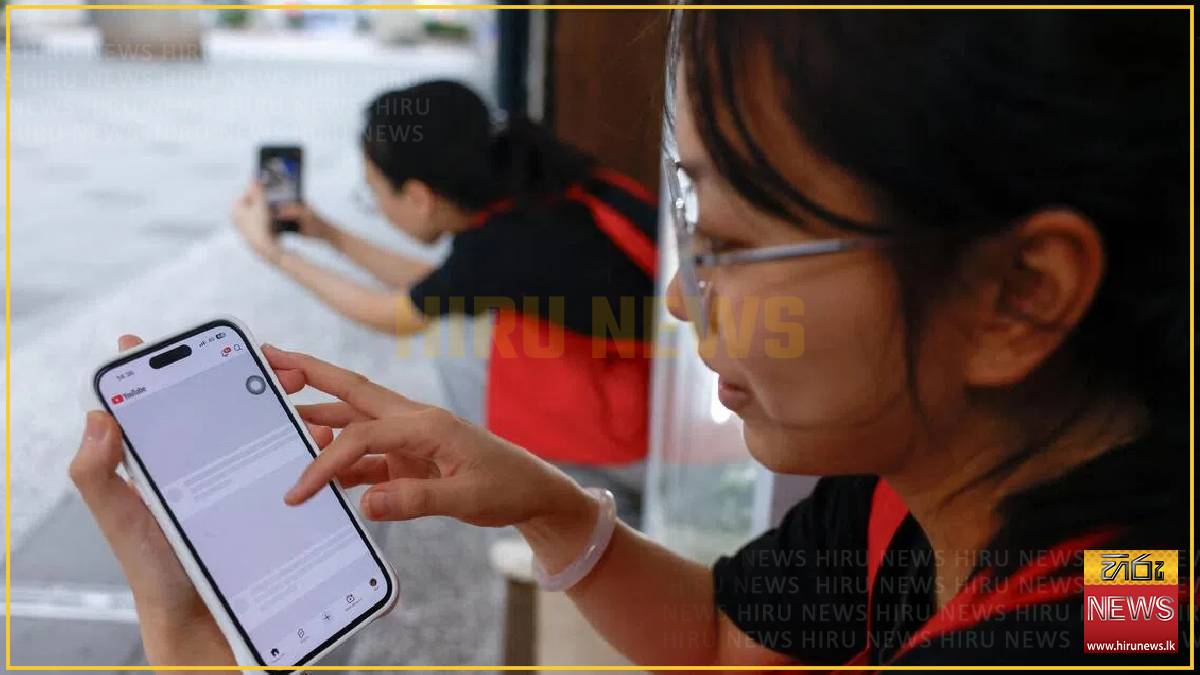
As the air raid sirens sounded above, a message flashed on my mobile phone screen.
“Due to simulated air attacks on communications infrastructure, mobile network access will be affected,” it said, reminding residents to switch to fixed-line broadband internet access or indoor Wi-Fi.
The Instagram reel I was watching stopped loading; a text conversation I was having with a friend on WhatsApp ended abruptly.
For the first time during Taiwan’s annual Han Kuang war games, the government deliberately slowed mobile Internet speeds to simulate communication disruption in the event of a natural disaster or an invasion by China, which claims sovereignty over the island.
The goal? To test the public’s psychological and logistical readiness under a potential information blockade.
For 30 minutes on Aug 13 in Taipei and other parts of northern Taiwan, many tech-dependent residents and I were forced to experience the discomfort of being temporarily knocked offline.
Public 4G and 5G download speeds plunged to 1 per cent of normal capacity, meaning that bandwidth-heavy services such as streaming, gaming and large file transfers stopped working. However, phone calls and SMS text messaging still functioned.
A similar exercise was held days earlier in central Taiwan on Aug 10.
The new mobile internet speed throttling drill was tagged onto the usual air raid and civil defence drill conducted annually, when residents are legally required to stay off the streets and seek shelter indoors and underground for a set amount of time.
During the drill, I was at Taipei Main Station, the capital’s central transport hub where hundreds of thousands of commuters and tourists transit daily.
Around 10 minutes before the drill was scheduled to start, intercom announcements playing on a loop throughout the building reminded people to begin moving to the basement levels.
As I followed the crowd downstairs, however, there was no sign that an air raid drill was about to begin.
Shops and eateries in the underground mall remained open and teenagers on their summer break continued playing arcade games. Others huddled inside karaoke boxes, belting out the latest Mandopop hits.
I was not too surprised.
Having covered these drills for the past three years, I have noticed that many people tend not to take them seriously. Air raid drills are typically set around lunchtime, and I have spotted office workers sipping on bubble tea and chatting gregariously indoors while waiting for the all-clear signal to go out.
Perhaps, having lived under the threat of a Chinese attack for so long, some Taiwanese treat civil defence routines simply as a minor inconvenience.
“My friend and I were asked to leave the cafe upstairs, but we’ll just go and find another cafe to park ourselves in the basement,” housewife Wang Ching-hua, 54, told me. “We have to follow instructions or we’ll get fined.”
The new mobile internet-slowing exercise did not appear to have much of an impact either.
People leaned against the wall watching videos already saved on their phones while others sat on the floor to wait out the 30-minute block.
But the people’s apparent lack of urgency over their connectivity being blocked is concerning because Taiwan’s network vulnerabilities are very real.
In the event of a cross-strait conflict, defence analysts have long identified cyberattacks and communications blackouts as likely opening tactics of the Chinese to paralyse infrastructure and isolate Taiwan from global support.
This would mirror battlefield environments at the start of the Ukraine war in 2022, when Russia executed a cyberattack targeting a satellite internet network which disrupted Ukrainian military command and control.
The attack also caused civilian internet outages across Ukraine and Central Europe.
And the reality is that it would not require a full-on invasion for Taiwan’s digital infrastructure to fall apart.
Taiwan is reliant on 14 international submarine cables for the vast majority of its global data traffic, and these thin cords are highly susceptible to physical sabotage and grey zone threats from nearby vessels.
-The Strait Times
“Due to simulated air attacks on communications infrastructure, mobile network access will be affected,” it said, reminding residents to switch to fixed-line broadband internet access or indoor Wi-Fi.
The Instagram reel I was watching stopped loading; a text conversation I was having with a friend on WhatsApp ended abruptly.
For the first time during Taiwan’s annual Han Kuang war games, the government deliberately slowed mobile Internet speeds to simulate communication disruption in the event of a natural disaster or an invasion by China, which claims sovereignty over the island.
The goal? To test the public’s psychological and logistical readiness under a potential information blockade.
For 30 minutes on Aug 13 in Taipei and other parts of northern Taiwan, many tech-dependent residents and I were forced to experience the discomfort of being temporarily knocked offline.
Public 4G and 5G download speeds plunged to 1 per cent of normal capacity, meaning that bandwidth-heavy services such as streaming, gaming and large file transfers stopped working. However, phone calls and SMS text messaging still functioned.
A similar exercise was held days earlier in central Taiwan on Aug 10.
The new mobile internet speed throttling drill was tagged onto the usual air raid and civil defence drill conducted annually, when residents are legally required to stay off the streets and seek shelter indoors and underground for a set amount of time.
During the drill, I was at Taipei Main Station, the capital’s central transport hub where hundreds of thousands of commuters and tourists transit daily.
Around 10 minutes before the drill was scheduled to start, intercom announcements playing on a loop throughout the building reminded people to begin moving to the basement levels.
As I followed the crowd downstairs, however, there was no sign that an air raid drill was about to begin.
Shops and eateries in the underground mall remained open and teenagers on their summer break continued playing arcade games. Others huddled inside karaoke boxes, belting out the latest Mandopop hits.
I was not too surprised.
Having covered these drills for the past three years, I have noticed that many people tend not to take them seriously. Air raid drills are typically set around lunchtime, and I have spotted office workers sipping on bubble tea and chatting gregariously indoors while waiting for the all-clear signal to go out.
Perhaps, having lived under the threat of a Chinese attack for so long, some Taiwanese treat civil defence routines simply as a minor inconvenience.
“My friend and I were asked to leave the cafe upstairs, but we’ll just go and find another cafe to park ourselves in the basement,” housewife Wang Ching-hua, 54, told me. “We have to follow instructions or we’ll get fined.”
The new mobile internet-slowing exercise did not appear to have much of an impact either.
People leaned against the wall watching videos already saved on their phones while others sat on the floor to wait out the 30-minute block.
But the people’s apparent lack of urgency over their connectivity being blocked is concerning because Taiwan’s network vulnerabilities are very real.
In the event of a cross-strait conflict, defence analysts have long identified cyberattacks and communications blackouts as likely opening tactics of the Chinese to paralyse infrastructure and isolate Taiwan from global support.
This would mirror battlefield environments at the start of the Ukraine war in 2022, when Russia executed a cyberattack targeting a satellite internet network which disrupted Ukrainian military command and control.
The attack also caused civilian internet outages across Ukraine and Central Europe.
And the reality is that it would not require a full-on invasion for Taiwan’s digital infrastructure to fall apart.
Taiwan is reliant on 14 international submarine cables for the vast majority of its global data traffic, and these thin cords are highly susceptible to physical sabotage and grey zone threats from nearby vessels.
-The Strait Times
Latest News
Global Study Expo on Sept. 5 in Kurunegala to connect students with overseas pathways
Local
18 August 2026

South Korea city deluged by almost a metre of rain, triggering deadly landslide
Local
18 August 2026
Indian-origin woman detained by ICE with ‘no warning’ after 27 years in US
Local
18 August 2026

British couple on honeymoon killed in helicopter crash on Greek island
Local
18 August 2026
Sri Lanka set target of 372 runs
Local
18 August 2026

Pony.ai’s global robotaxi pipeline tops 4,000
Local
18 August 2026

Philippines sees no impact on U.S. defence ties
Local
18 August 2026

Abeetha Perera heads of EO Sri Lanka for 2026/27
Local
18 August 2026

Cabinet grants approval to establish Education Council in Sri Lanka
Local
18 August 2026
Pasindu Sooriyabandara replaces Chandimal
Local
18 August 2026