Share Post


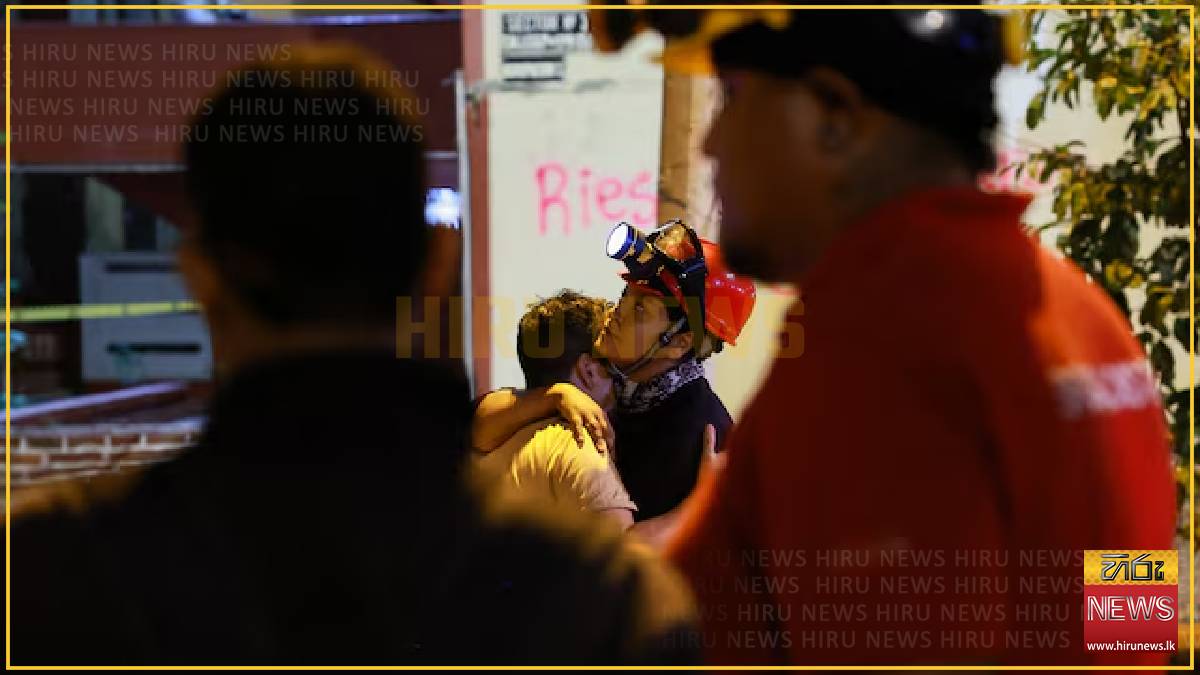
Rescuers raced against time in Colombia on Friday to free a man found alive beneath a collapsed hotel, a rare sign of hope nearly four days after one of the strongest earthquakes to hit the Andean nation in decades reduced neighborhoods to rubble and left hundreds dead or missing.
The operation in the coffee-region city of Pereira had become the main focus of a disaster response increasingly shifting from the search for survivors to the grim work of clearing debris and accounting for the missing.
"Possibly there are (still) people alive, we believe so," rescuer John Bedoya told Caracol Television from the site, where emergency crews worked through a mound of concrete, brick and twisted metal. "One or two could be alive."
The 7.4-magnitude quake struck shortly after 7:30 a.m. on Monday, with its epicenter in San Jose del Palmar in the Choco department. It toppled apartment blocks and damaged homes, schools and hospitals across western Colombia, from the Pacific port of Buenaventura to the inland cities of Cali and Pereira.
Authorities said on Friday morning that 285 people had been killed and nearly 4,000 injured. Nearly 400 others were still missing.
The government said tens of thousands of homes were damaged and many destroyed, underlining the scale of a disaster that has left many Colombians sleeping in shelters or outside unsafe buildings.
The U.N. refugee agency warned on Friday the earthquake could trigger fresh displacement in a country already grappling with conflict, migration and other humanitarian pressures.
"For internally displaced people and refugees who are already trying to rebuild their lives, this earthquake risks becoming another displacement on top of displacement," UNHCR spokesperson Eujin Byun told reporters in Geneva.
Authorities have recorded scores of aftershocks since Monday, adding to the danger for rescuers combing through unstable debris and for families reluctant to return to damaged homes.
The disaster is shaping up as the first major test for President Abelardo De La Espriella, who took office just days before the quake and has faced criticism for his initial handling of the disaster. He is set to make flying visits to five affected cities and towns on Friday, including Pereira, Cali and Quibdo.
-Reuters
The operation in the coffee-region city of Pereira had become the main focus of a disaster response increasingly shifting from the search for survivors to the grim work of clearing debris and accounting for the missing.
"Possibly there are (still) people alive, we believe so," rescuer John Bedoya told Caracol Television from the site, where emergency crews worked through a mound of concrete, brick and twisted metal. "One or two could be alive."
The 7.4-magnitude quake struck shortly after 7:30 a.m. on Monday, with its epicenter in San Jose del Palmar in the Choco department. It toppled apartment blocks and damaged homes, schools and hospitals across western Colombia, from the Pacific port of Buenaventura to the inland cities of Cali and Pereira.
Authorities said on Friday morning that 285 people had been killed and nearly 4,000 injured. Nearly 400 others were still missing.
The government said tens of thousands of homes were damaged and many destroyed, underlining the scale of a disaster that has left many Colombians sleeping in shelters or outside unsafe buildings.
The U.N. refugee agency warned on Friday the earthquake could trigger fresh displacement in a country already grappling with conflict, migration and other humanitarian pressures.
"For internally displaced people and refugees who are already trying to rebuild their lives, this earthquake risks becoming another displacement on top of displacement," UNHCR spokesperson Eujin Byun told reporters in Geneva.
Authorities have recorded scores of aftershocks since Monday, adding to the danger for rescuers combing through unstable debris and for families reluctant to return to damaged homes.
The disaster is shaping up as the first major test for President Abelardo De La Espriella, who took office just days before the quake and has faced criticism for his initial handling of the disaster. He is set to make flying visits to five affected cities and towns on Friday, including Pereira, Cali and Quibdo.
-Reuters
Latest News
Global Study Expo on Sept. 5 in Kurunegala to connect students with overseas pathways
Local
18 August 2026

South Korea city deluged by almost a metre of rain, triggering deadly landslide
Local
18 August 2026
Indian-origin woman detained by ICE with ‘no warning’ after 27 years in US
Local
18 August 2026

British couple on honeymoon killed in helicopter crash on Greek island
Local
18 August 2026
Sri Lanka set target of 372 runs
Local
18 August 2026

Pony.ai’s global robotaxi pipeline tops 4,000
Local
18 August 2026

Philippines sees no impact on U.S. defence ties
Local
18 August 2026

Abeetha Perera heads of EO Sri Lanka for 2026/27
Local
18 August 2026

Cabinet grants approval to establish Education Council in Sri Lanka
Local
18 August 2026
Pasindu Sooriyabandara replaces Chandimal
Local
18 August 2026