Share Post


To Egyptologists, the Bahariya Oasis is known as the Valley of Golden Mummies, a necropolis where archaeologists have uncovered hundreds of gilded and decorated mummies dating back to the Greco-Roman era, roughly 2,000 years ago.
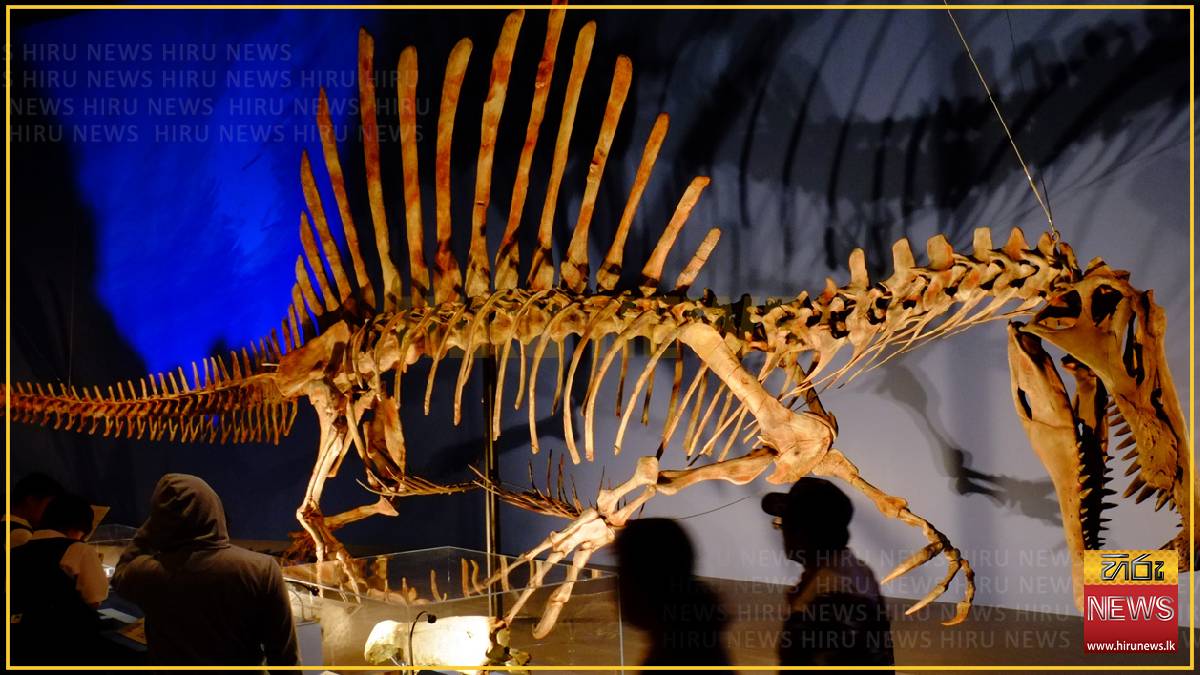
But to paleontologists, the oasis is sacred because of something far older and far more legendary: Spinosaurus. The first ever specimen of this ferocious river monster was collected here more than a hundred years ago, along with fossils of several other enigmatic dinosaurs.
Until they were lost forever, casualties of the World War II bombing that destroyed much of Munich. Swallowed by the flames, these dinosaurs essentially went extinct twice.
National Geographic Explorer Hesham Sallam, a paleontologist at the Mansoura University Vertebrate Paleontology Center in Egypt, has spent the past decade collecting clues to what the Bahariya Oasis looked like nearly 100 million years ago, long before it was buried beneath the desert.
His team is still working to rebuild what was lost when the bombs obliterated the collection. So far Spinosaurus aegyptiacus is the main missing dinosaur species to have since been reintroduced to science, though that was based on a specimen National Geographic Explorer Nizar Ibrahim found in Morocco, not the Bahariya Oasis.
But with the help of paleontologists who came before him, Sallam has begun to resurrect the beasts of Bahariya’s past from the site itself—revealing how dangerous a place it once was for plant-eaters and meat-eaters alike.
“You are not safe anywhere,” Sallam told me on a recent call. From giant carnivores and lumbering herbivores to aquatic predators and, most recently, flying reptiles, scientists have found every kind of terror in Bahariya. “Even if you’re trying to swim, there is Spinosaurus and marine reptiles—there is nowhere to hide.”
This prehistoric landscape was even wilder than the man who first excavated Bahariya Oasis had ever dreamed.
In 1911, German paleontologist Ernst Stromer arrived at the Bahariya Oasis following an eight-day, more than 200-mile trek from Cairo on camelback. There, he unearthed the first ever dinosaur bones from Egypt, and over the decades helped discover new species like the sauropod Aegyptosaurus and a parade of predators, including the theropod Bahariasaurus ingens and another one he labeled Carcharodontosaurus, a “shark-toothed” meat-eater larger than Tyrannosaurus rex (it was eventually reevaluated to be a new species named Tameryraptor markgrafi).
Stromer placed his fossils in the Bavarian State Collection of Paleontology in Munich, where some, like Spinosaurus, went on display. But during WWII, Stromer began to fear Munich would be targeted for air raids. He pleaded with the museum director, a fervent Nazi, to remove the fossils for safety. However, the museum director refused and even threatened to report Stromer, a fierce anti-Nazi.
Then, on April 24, 1944, the British Royal Air Force bombed Munich, destroying the museum and every known Bahariya dinosaur fossil collected to that point.
“The bones burned into nothingness,” said National Geographic Explorer Matt Lamanna, a paleontologist at Carnegie Museum of Natural History in Pittsburgh. “When I was growing up, Spinosaurus existed really only as pictures in books.”
Lamanna has collaborated with Sallam on finds from the oasis for more than a decade. As a young paleontologist, Lamanna was enthralled by stories of Stromer and his lost dinosaurs. While we were chatting for this story, he showed me one of his prized possessions: an original copy of Stromer’s 1934 scientific paper that named and described Bahariasaurus ingens.
“Bahariasaurus is my white whale of dinosaurs,” Lamanna told me.
In 2000, he took up Stromer’s mantle to excavate the Bahariya Oasis. There he was part of the team that uncovered the first new dinosaur from the oasis since Stromer’s era: a titanosaur fittingly named Paralititan stromeri. Still, though, Bahariasaurus eluded him.
The National Geographic Society gave Lamanna a grant to return in 2014, but because of rising tensions in the area, he instead offered the funding opportunity to Sallam, then a budding paleontologist. They figured it was safer for an Egyptian scientist to continue the work that began with Stromer and was revived with his own discovery.
“The most exciting chapter,” Lamanna told me, “is the chapter that we’re in right now, where Egyptians are leading the charge for the first time in history.”
Sallam was heading up a team through the oasis in 2018 when his students made an exciting discovery. Shorouq Al-Ashqar and Belal Salem were on their hands and knees, combing through the sand for scraps of bone, when something caught Al-Ashqar’s eye: two fossil fragments that fitted together, and then a third. “It was a dream come true,” said Al-Ashqar.
She showed the pieces to her field mentor, National Geographic Explorer Sanaa El-Sayed, who told her to wrap them up and keep looking. Salem then found a fourth fragment that connected to Al-Ashqar’s bits of bone. (Al-Ashqar still teases Salem that she was the one who found the bones first and that his fragment was smaller than hers.)
Together, their broken pieces formed a long, thin bone. Sallam pulled out his camera and started filming. He told me it was one of the most delightful moments of his career, watching the young paleontologists shout with excitement over their discovery.
“I was really happy to see the Egyptian students enjoying their heritage,” he told me.
After spending a week or so poring over the bone in the lab, Salem deduced it was not a dinosaur bone but rather a wing bone of a pterosaur—the first evidence that the flying reptiles once soared over Egypt.
The team announced their discovery earlier this summer in the journal Acta Palaeontologica Polonica. The pterosaur is just their latest find from the oasis, as in 2022 they announced the discovery of a bulldog-faced abelisaurid, a type of carnivore like T. rex but with even smaller arms.
“We have top predators existing in one place,” said Salem. “The Bahariya Oasis looks like WrestleMania.”
And with their latest discovery, he told me, “now we are adding the sky to the ecosystem of the Bahariya.”
I asked the team if they’ve uncovered any of Stromer’s lost dinosaurs, particularly Baharisaurus ingens, which hasn’t been seen since World War II.
Sallam fell silent. A coy smile crept upon his face.
“We found … stuff,” he said, not elaborating any further. “Be ready for us, and stay tuned.”
-National Geographic
But to paleontologists, the oasis is sacred because of something far older and far more legendary: Spinosaurus. The first ever specimen of this ferocious river monster was collected here more than a hundred years ago, along with fossils of several other enigmatic dinosaurs.
Until they were lost forever, casualties of the World War II bombing that destroyed much of Munich. Swallowed by the flames, these dinosaurs essentially went extinct twice.
National Geographic Explorer Hesham Sallam, a paleontologist at the Mansoura University Vertebrate Paleontology Center in Egypt, has spent the past decade collecting clues to what the Bahariya Oasis looked like nearly 100 million years ago, long before it was buried beneath the desert.
His team is still working to rebuild what was lost when the bombs obliterated the collection. So far Spinosaurus aegyptiacus is the main missing dinosaur species to have since been reintroduced to science, though that was based on a specimen National Geographic Explorer Nizar Ibrahim found in Morocco, not the Bahariya Oasis.
But with the help of paleontologists who came before him, Sallam has begun to resurrect the beasts of Bahariya’s past from the site itself—revealing how dangerous a place it once was for plant-eaters and meat-eaters alike.
“You are not safe anywhere,” Sallam told me on a recent call. From giant carnivores and lumbering herbivores to aquatic predators and, most recently, flying reptiles, scientists have found every kind of terror in Bahariya. “Even if you’re trying to swim, there is Spinosaurus and marine reptiles—there is nowhere to hide.”
This prehistoric landscape was even wilder than the man who first excavated Bahariya Oasis had ever dreamed.
In 1911, German paleontologist Ernst Stromer arrived at the Bahariya Oasis following an eight-day, more than 200-mile trek from Cairo on camelback. There, he unearthed the first ever dinosaur bones from Egypt, and over the decades helped discover new species like the sauropod Aegyptosaurus and a parade of predators, including the theropod Bahariasaurus ingens and another one he labeled Carcharodontosaurus, a “shark-toothed” meat-eater larger than Tyrannosaurus rex (it was eventually reevaluated to be a new species named Tameryraptor markgrafi).
Stromer placed his fossils in the Bavarian State Collection of Paleontology in Munich, where some, like Spinosaurus, went on display. But during WWII, Stromer began to fear Munich would be targeted for air raids. He pleaded with the museum director, a fervent Nazi, to remove the fossils for safety. However, the museum director refused and even threatened to report Stromer, a fierce anti-Nazi.
Then, on April 24, 1944, the British Royal Air Force bombed Munich, destroying the museum and every known Bahariya dinosaur fossil collected to that point.
“The bones burned into nothingness,” said National Geographic Explorer Matt Lamanna, a paleontologist at Carnegie Museum of Natural History in Pittsburgh. “When I was growing up, Spinosaurus existed really only as pictures in books.”
Lamanna has collaborated with Sallam on finds from the oasis for more than a decade. As a young paleontologist, Lamanna was enthralled by stories of Stromer and his lost dinosaurs. While we were chatting for this story, he showed me one of his prized possessions: an original copy of Stromer’s 1934 scientific paper that named and described Bahariasaurus ingens.
“Bahariasaurus is my white whale of dinosaurs,” Lamanna told me.
In 2000, he took up Stromer’s mantle to excavate the Bahariya Oasis. There he was part of the team that uncovered the first new dinosaur from the oasis since Stromer’s era: a titanosaur fittingly named Paralititan stromeri. Still, though, Bahariasaurus eluded him.
The National Geographic Society gave Lamanna a grant to return in 2014, but because of rising tensions in the area, he instead offered the funding opportunity to Sallam, then a budding paleontologist. They figured it was safer for an Egyptian scientist to continue the work that began with Stromer and was revived with his own discovery.
“The most exciting chapter,” Lamanna told me, “is the chapter that we’re in right now, where Egyptians are leading the charge for the first time in history.”
Sallam was heading up a team through the oasis in 2018 when his students made an exciting discovery. Shorouq Al-Ashqar and Belal Salem were on their hands and knees, combing through the sand for scraps of bone, when something caught Al-Ashqar’s eye: two fossil fragments that fitted together, and then a third. “It was a dream come true,” said Al-Ashqar.
She showed the pieces to her field mentor, National Geographic Explorer Sanaa El-Sayed, who told her to wrap them up and keep looking. Salem then found a fourth fragment that connected to Al-Ashqar’s bits of bone. (Al-Ashqar still teases Salem that she was the one who found the bones first and that his fragment was smaller than hers.)
Together, their broken pieces formed a long, thin bone. Sallam pulled out his camera and started filming. He told me it was one of the most delightful moments of his career, watching the young paleontologists shout with excitement over their discovery.
“I was really happy to see the Egyptian students enjoying their heritage,” he told me.
After spending a week or so poring over the bone in the lab, Salem deduced it was not a dinosaur bone but rather a wing bone of a pterosaur—the first evidence that the flying reptiles once soared over Egypt.
The team announced their discovery earlier this summer in the journal Acta Palaeontologica Polonica. The pterosaur is just their latest find from the oasis, as in 2022 they announced the discovery of a bulldog-faced abelisaurid, a type of carnivore like T. rex but with even smaller arms.
“We have top predators existing in one place,” said Salem. “The Bahariya Oasis looks like WrestleMania.”
And with their latest discovery, he told me, “now we are adding the sky to the ecosystem of the Bahariya.”
I asked the team if they’ve uncovered any of Stromer’s lost dinosaurs, particularly Baharisaurus ingens, which hasn’t been seen since World War II.
Sallam fell silent. A coy smile crept upon his face.
“We found … stuff,” he said, not elaborating any further. “Be ready for us, and stay tuned.”
-National Geographic
Latest News
Nations Trust Bank records PAT of LKR 15.6Bn
Local
16 August 2026

Softlogic Life delivers largest absolute GWP growth of Rs. 7.2 Bn
Local
16 August 2026

Porsche's Wehrlein claims second Formula E title as Barnard wins London finale
Local
16 August 2026

Bangladesh says better environment needed for India visit amid rift over ousted leader
Local
16 August 2026

Malaysian pilot nabbed in Indonesia believed to have smuggled drugs abroad since 2024
Local
16 August 2026

Trump's envoys meet mediators, Israel strikes Gaza
Local
16 August 2026

Emergency phone alert put domestic abuse victims at risk, campaigners say
Local
16 August 2026

Storm Lala leaves more than 100,000 without power
Local
16 August 2026

Arsenal rout Manchester City in Community Shield masterclass
Local
16 August 2026

In Spain's Ceuta, hundreds of migrants stage protest and demand asylum
Local
16 August 2026