Share Post


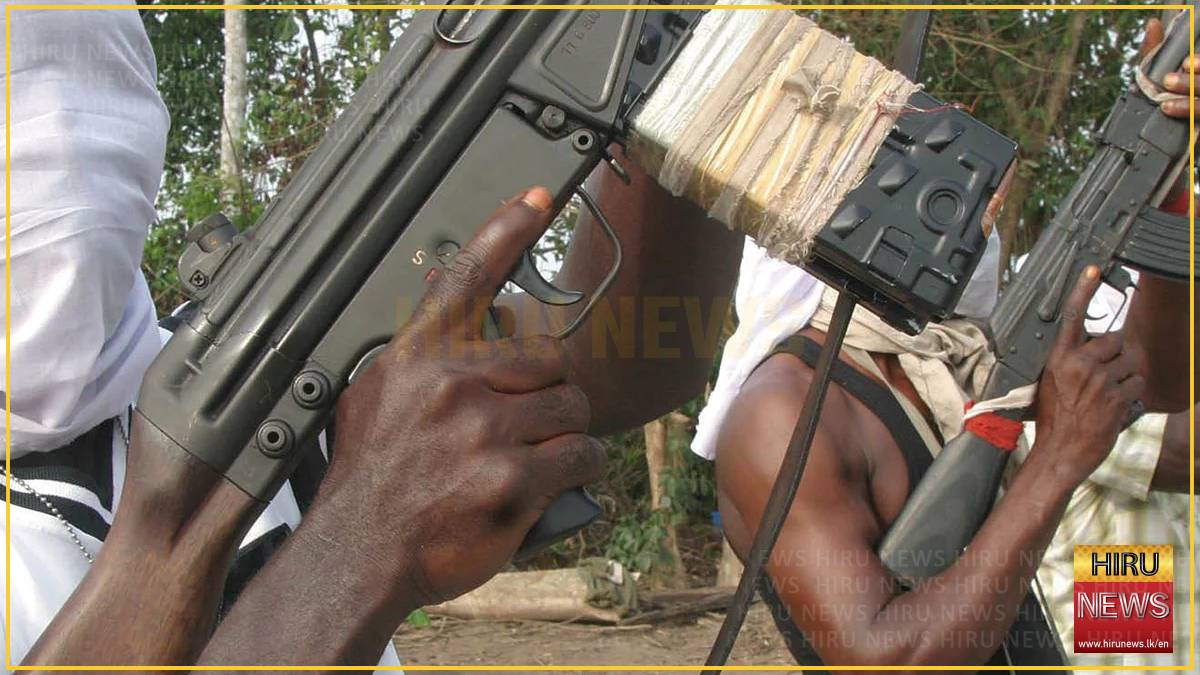
Nigerian kidnappers have collected nearly $5.8 million in ransom payments in the last year from civilian abductions, crime that is crippling education and eroding public trust in the government, a security consultancy said on Wednesday.
Nigeria's SBM Intelligence said 7,825 people were kidnapped between July 2025 and June 2026, up 66% from the year before.
At least 1,142 people were killed, and total confirmed ransom payments more than tripled to 7.78 billion naira ($5.79 million), it said.
The figures were compiled from media reports, interviews and publicly available information, and SBM said they were conservative because many ransom payments were never disclosed.
A faction of the Islamist group Boko Haram collected 90% of the recorded ransom payments from kidnappings in the northeast, but there were more incidents and victims in the northwest, according to SBM.
The findings were released as Nigeria's president ordered security forces to rescue as many as 600 civilians kidnapped last week in north-central Niger State.
The presidency and military did not immediately respond to requests for comment on the report’s findings.
The kidnap-for-ransom industry is at the center of Nigeria's expanding security crisis as gunmen target schools, villages and main roads.
Kidnappers, who include heavily armed bandits and Islamist militants, hold their victims for weeks or months until payments are made.
SBM estimated that Boko Haram, which is known as Jama'atu Ahlis Sunna Lidda'awati Wal-Jihad, received about 7 billion naira, mainly from two mass incidents where over 300 people were seized in each event.
Some 315 pupils and staff were seized from a school in Papiri, Niger state, in November.
Schools remain routinely targeted over a decade after Boko Haram's raid on a school in Borno's Chibok that brought such kidnappings to international attention.
"School abductions have resurged, with the Papiri attack reviving a tactic whose costs ripple through education, farming and public trust," the SBM report said.
Nigeria's security crisis is likely to be a central issue in the next elections in January.
When he came to power three years ago, President Bola Tinubu pledged - like his predecessors - to tackle insecurity but analysts say the recent wave of kidnappings shows the policy has failed to deliver tangible progress.
"Without a coordinated strategy that targets both the profitability of the crime and its roots, Nigeria risks entrenching kidnapping not merely as a criminal industry but as a funding mechanism for the very groups that most threaten its stability," SBM said.
-Reuters
Nigeria's SBM Intelligence said 7,825 people were kidnapped between July 2025 and June 2026, up 66% from the year before.
At least 1,142 people were killed, and total confirmed ransom payments more than tripled to 7.78 billion naira ($5.79 million), it said.
The figures were compiled from media reports, interviews and publicly available information, and SBM said they were conservative because many ransom payments were never disclosed.
A faction of the Islamist group Boko Haram collected 90% of the recorded ransom payments from kidnappings in the northeast, but there were more incidents and victims in the northwest, according to SBM.
The findings were released as Nigeria's president ordered security forces to rescue as many as 600 civilians kidnapped last week in north-central Niger State.
The presidency and military did not immediately respond to requests for comment on the report’s findings.
The kidnap-for-ransom industry is at the center of Nigeria's expanding security crisis as gunmen target schools, villages and main roads.
Kidnappers, who include heavily armed bandits and Islamist militants, hold their victims for weeks or months until payments are made.
SBM estimated that Boko Haram, which is known as Jama'atu Ahlis Sunna Lidda'awati Wal-Jihad, received about 7 billion naira, mainly from two mass incidents where over 300 people were seized in each event.
Some 315 pupils and staff were seized from a school in Papiri, Niger state, in November.
Schools remain routinely targeted over a decade after Boko Haram's raid on a school in Borno's Chibok that brought such kidnappings to international attention.
"School abductions have resurged, with the Papiri attack reviving a tactic whose costs ripple through education, farming and public trust," the SBM report said.
Nigeria's security crisis is likely to be a central issue in the next elections in January.
When he came to power three years ago, President Bola Tinubu pledged - like his predecessors - to tackle insecurity but analysts say the recent wave of kidnappings shows the policy has failed to deliver tangible progress.
"Without a coordinated strategy that targets both the profitability of the crime and its roots, Nigeria risks entrenching kidnapping not merely as a criminal industry but as a funding mechanism for the very groups that most threaten its stability," SBM said.
-Reuters
Latest News
Kalutara shooting injures one in Payagala
Local
31 August 2026
Police launch investigation after model found dead at businessman's residence
Local
31 August 2026

Three suspects arrested over Colombo Port narcotics haul
Local
31 August 2026
Argentina legend Lionel Messi announces international retirement
Local
31 August 2026

Talks focus on advancing Sri Lanka's mineral sector under 2026 policy
Local
31 August 2026

Professional organizations back BASL in opposing 22nd Amendment
Local
31 August 2026
Narcotics found at Colombo Port weigh 463 Kg
Local
31 August 2026
72 Public Health Nursing Officers received appointment letters
Local
31 August 2026

Batticaloa faces daily water cuts due to dry weather
Local
31 August 2026

Police arrest four suspects over snatch-theft series
Local
31 August 2026