



Share Post


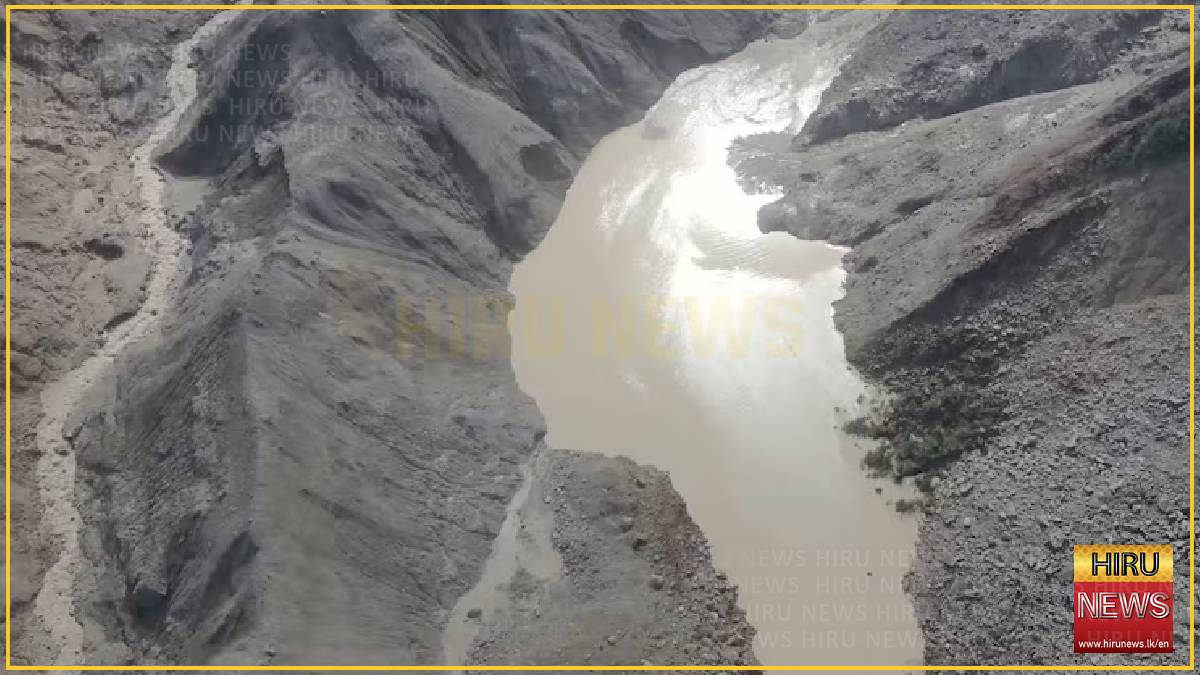
The threat of a lake formed after a glacier collapse bursting near the China-Nepal border where a devastating flood occurred earlier this week has decreased, Chinese authorities said on Saturday, as its size appears to have shrunk.
Satellite images from Thursday to Saturday morning suggest that water in the lake – straddling the China-Nepal border at the confluence of two rivers – has been slowly flowing through, decreasing the reservoir gradually, state broadcaster CCTV reported citing the Water Resources Ministry.
The ministry said satellite imagery of the surface area of the lake at Purepu Tsangpo river showed it was 99,000 sqm in size on early Saturday morning – around the size of 14 football fields combined – having shrunk by 21,000 sqm compared with images from Thursday.
A glacier collapse on Wednesday sending a powerful torrent of rock, ice, mud and debris through Himalayan mountain river systems swept away a border port complex linking China's Tibet to Nepal, killing hundreds and leaving thousands missing.
Experts and authorities have warned of the extremely high risk of secondary disasters in the valley, especially from the lake that was formed by glacier debris, potentially endangering rescue operations downstream.
State-owned engineering and rescue enterprise China Anneng, which has been monitoring the lake since Thursday, dispatched a 15-member team on Friday with reconnaissance drones, portable satellite stations and mobile surveillance cameras to gather more data about the lake.
An overflow from the lake on Friday temporarily halted rescue work before further assessment deemed the risks manageable.
Authorities have also flagged another larger body of water at the bottom of the glacier collapse.
"We estimate its area to be over 120,000 square meters, but its depth is currently unknown," said Chen Hongqi, a senior engineer at the Ministry of Natural Resources' Geological Disaster Technical Guidance Center.
Flood risks will remain until the two lakes have fully drained, an official with Nepal's Disaster Management Authority has said.
In bleak rainy weather on Saturday morning, more than 50 rescue workers combed through the grey rubble of boulders and mud looking for signs of life and calling out to any survivors, according to CCTV.
The first team of rescuers and a search-and-rescue dog had made their way to the location of the Gyirong border crossing complex on Friday afternoon, which they described as having nothing left but ruins.
Dangerous conditions at the main disaster zone, made more complex as roads and communication were cut off, continue to pose challenges to the Chinese relief efforts, state news agency Xinhua said.
China's death count from the disaster rose to seven early Saturday, with 554 still missing.
Nearly 500 villagers and construction workers, as well as all 555 tourists from the area have been evacuated, Xinhua said.
-Reuters
Satellite images from Thursday to Saturday morning suggest that water in the lake – straddling the China-Nepal border at the confluence of two rivers – has been slowly flowing through, decreasing the reservoir gradually, state broadcaster CCTV reported citing the Water Resources Ministry.
The ministry said satellite imagery of the surface area of the lake at Purepu Tsangpo river showed it was 99,000 sqm in size on early Saturday morning – around the size of 14 football fields combined – having shrunk by 21,000 sqm compared with images from Thursday.
A glacier collapse on Wednesday sending a powerful torrent of rock, ice, mud and debris through Himalayan mountain river systems swept away a border port complex linking China's Tibet to Nepal, killing hundreds and leaving thousands missing.
Experts and authorities have warned of the extremely high risk of secondary disasters in the valley, especially from the lake that was formed by glacier debris, potentially endangering rescue operations downstream.
State-owned engineering and rescue enterprise China Anneng, which has been monitoring the lake since Thursday, dispatched a 15-member team on Friday with reconnaissance drones, portable satellite stations and mobile surveillance cameras to gather more data about the lake.
An overflow from the lake on Friday temporarily halted rescue work before further assessment deemed the risks manageable.
Authorities have also flagged another larger body of water at the bottom of the glacier collapse.
"We estimate its area to be over 120,000 square meters, but its depth is currently unknown," said Chen Hongqi, a senior engineer at the Ministry of Natural Resources' Geological Disaster Technical Guidance Center.
Flood risks will remain until the two lakes have fully drained, an official with Nepal's Disaster Management Authority has said.
In bleak rainy weather on Saturday morning, more than 50 rescue workers combed through the grey rubble of boulders and mud looking for signs of life and calling out to any survivors, according to CCTV.
The first team of rescuers and a search-and-rescue dog had made their way to the location of the Gyirong border crossing complex on Friday afternoon, which they described as having nothing left but ruins.
Dangerous conditions at the main disaster zone, made more complex as roads and communication were cut off, continue to pose challenges to the Chinese relief efforts, state news agency Xinhua said.
China's death count from the disaster rose to seven early Saturday, with 554 still missing.
Nearly 500 villagers and construction workers, as well as all 555 tourists from the area have been evacuated, Xinhua said.
-Reuters
Latest News
SJB to hold protest in Colombo on September 24 against 22nd Amendment, says Sajith Premadasa
Local
13 September 2026

First long-range luxury private jet owned by a Sri Lankan lands at Ratmalana Airport
Local
13 September 2026

Who are the main actors involved in Yemen’s war?
Local
13 September 2026

Philippine ferry fire victims may take months to identify, authorities say
Local
13 September 2026
Yemen government forces say they shot down five Houthi drones
Local
13 September 2026

Why Iran seeks permanent end to war, not temporary ceasefire?
Local
13 September 2026

Projectile hits Iranian commercial vessel in Strait of Hormuz, killing one, injuring four
Local
13 September 2026

Iran, Turkey, Iraq stress need to prevent regional escalation
Local
13 September 2026

Iranian, Iraqi foreign ministers hold telephone conversation
Local
13 September 2026

US has no authority to define terrorism: Tehran
Local
13 September 2026