



Share Post


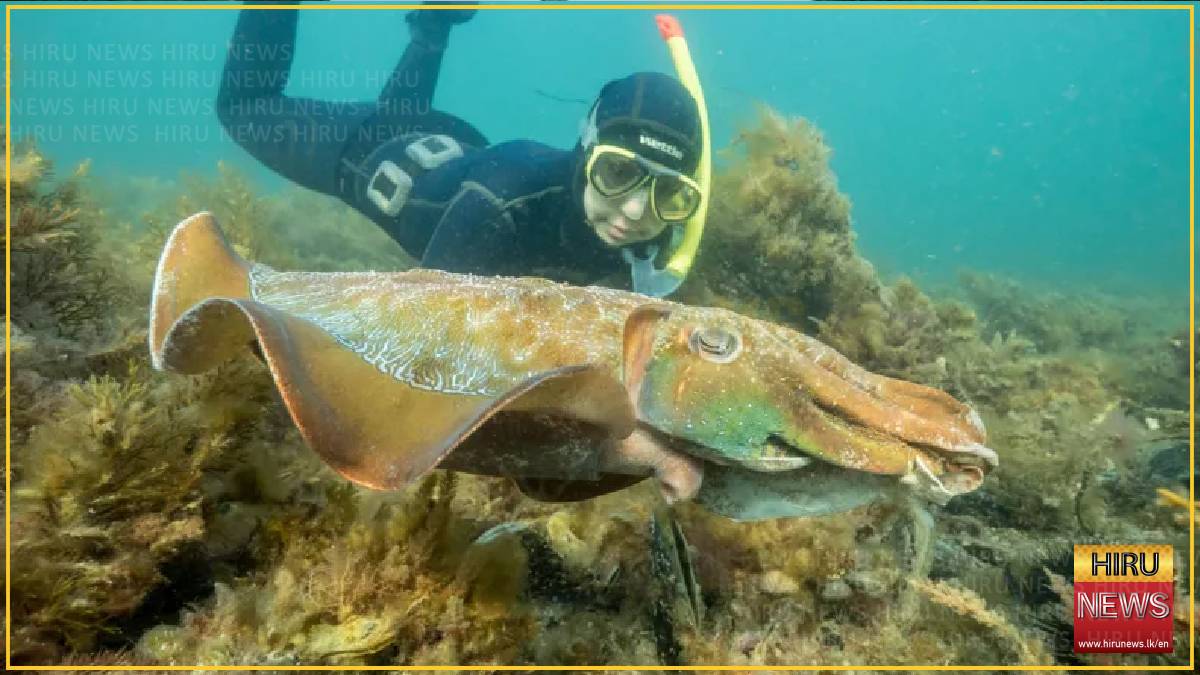
Every winter, a sliver of the South Australian coast hosts the world's largest mating event for giant cuttlefish.
Some years, hundreds of thousands of the unique marine species endemic to Australia gather along the Cuttlefish Coast for the annual mating season, bringing their colourful, shape-shifting figures to the shallow waters and attracting thousands of keen divers.
But this year, the turnout was the lowest on record, sparking concerns of a "catastrophic decline" of the species.
Official figures released this month estimate just 1,811 cuttlefish turned up to mate this year, down from 63,000 last year - a 97% drop.
The state government says a toxic algal bloom that has ravaged the state's coastline for more than 18 months may be to blame for the sharp decline.
The low figures have also prompted calls for the species to be listed as endangered.
Adult cuttlefish typically die after breeding so each mating season is crucial for the species' future, but in recent months, just 440 eggs have been counted, instead of the millions that are usually laid.
Manny Katz, 28, was one of four divers who spent hours along the coast last month to observe the annual breeding event, having been tasked by South Australia's Department of Environment and Water (DEW).
"Because there have been so few cuttlefish, DEW thought it would be worth going out and trying to do an assessment of how many eggs there currently are around the coastline to understand what the population is going to be next year."
Over two days in July, his team did eight one-hour dives, exploring the undersides of rocky reefs to count the eggs.
"Along the eight kilometres (five miles) of coastline, there would normally be millions of eggs," he said, as each female can lay dozens of egg and tens of thousands usually turn up to breed.
"[We] pretty much looked under every single rock that we could have and we only found about 440 eggs."
Crucially, adult cuttlefish only live about 12 to 18 months, Katz said, "so the success of one breeding season is going to determine the population next year".
"Under our current circumstances, with there being so few eggs along the coastline, we don't know if the population is ever going to be able to recover."
- BBC
Some years, hundreds of thousands of the unique marine species endemic to Australia gather along the Cuttlefish Coast for the annual mating season, bringing their colourful, shape-shifting figures to the shallow waters and attracting thousands of keen divers.
But this year, the turnout was the lowest on record, sparking concerns of a "catastrophic decline" of the species.
Official figures released this month estimate just 1,811 cuttlefish turned up to mate this year, down from 63,000 last year - a 97% drop.
The state government says a toxic algal bloom that has ravaged the state's coastline for more than 18 months may be to blame for the sharp decline.
The low figures have also prompted calls for the species to be listed as endangered.
Adult cuttlefish typically die after breeding so each mating season is crucial for the species' future, but in recent months, just 440 eggs have been counted, instead of the millions that are usually laid.
Manny Katz, 28, was one of four divers who spent hours along the coast last month to observe the annual breeding event, having been tasked by South Australia's Department of Environment and Water (DEW).
"Because there have been so few cuttlefish, DEW thought it would be worth going out and trying to do an assessment of how many eggs there currently are around the coastline to understand what the population is going to be next year."
Over two days in July, his team did eight one-hour dives, exploring the undersides of rocky reefs to count the eggs.
"Along the eight kilometres (five miles) of coastline, there would normally be millions of eggs," he said, as each female can lay dozens of egg and tens of thousands usually turn up to breed.
"[We] pretty much looked under every single rock that we could have and we only found about 440 eggs."
Crucially, adult cuttlefish only live about 12 to 18 months, Katz said, "so the success of one breeding season is going to determine the population next year".
"Under our current circumstances, with there being so few eggs along the coastline, we don't know if the population is ever going to be able to recover."
- BBC
Latest News
Google Maps will show 'Lake America' in US, not 'Lake Ontario'
Local
30 August 2026

Death toll in Nepal and Tibet floods exceeds 800
Local
30 August 2026
Details emerge on alleged crimes linked to Welle Saranga
Local
30 August 2026

Tension arises between three-wheeler and taxi drivers in Welimada
Local
30 August 2026

Former Central Bank Governor Arjuna Mahendran denies claim of name change
Local
30 August 2026

Sri Lanka loses Women’s Champions Trophy hosting rights: Can the setback still be reversed?
Local
30 August 2026

NPP local government member arrested over Nelliady house attack released on police bail
Local
30 August 2026

School student killed in road incident on Biyagama - Sapugaskanda road
Local
30 August 2026

Lanka Sugar Company to discuss with Labour Department over Sevanagala factory closure
Local
30 August 2026

Kirinda police sergeant reported missing
Local
30 August 2026